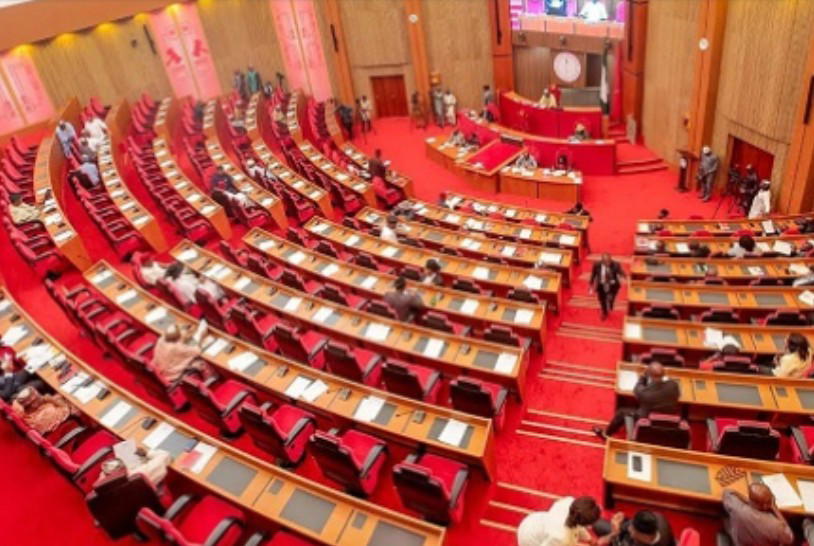
Senate
By Joseph Erunke, Abuja
The Independent Media and Policy Initiative (IMPI), a policy think tank, has urged the National Assembly to invoke the doctrine of necessity to accelerate the establishment of state police in Nigeria.
In a policy statement signed by its Chairman, Dr. Omoniyi Akinsiju, the group expressed concern over delays in the adoption of a decentralised policing structure, warning that continued postponement could undermine internal security.
IMPI argued that the Nigeria Police Force should remain the foundation of the country’s internal security architecture but stressed the need for urgent reforms to enable state policing as part of a broader security framework.
According to the group, officers recruited locally would be more effective due to their familiarity with the terrain, culture and communities they are expected to serve.
“The police force should be the foundation of the country’s internal security architecture. In consideration of this, we acknowledge efforts being made to establish state police as part of the nation’s security apparatus,” the statement read.
“Our argument is hinged on the fact that police officers must be recruited from and deployed to the local environment they are familiar with.”
The group therefore called on lawmakers to take extraordinary legislative measures to fast-track the passage of the bill establishing state police.
“We call on the National Assembly to invoke the doctrine of necessity to ensure the passage of the law creating state police without delay,” it added.
IMPI also urged state governments to deepen community participation in security management, noting that effective security requires collaboration between government institutions and local stakeholders.
It described community mobilisation as a process of engaging and empowering residents, traditional leaders, and local organisations to take ownership of security challenges within their environment.
According to the group, such participation promotes accountability, good governance, inclusive decision-making and peaceful coexistence, with security as a top priority.
Disclaimer
Comments expressed here do not reflect the opinions of Vanguard newspapers or any employee thereof.