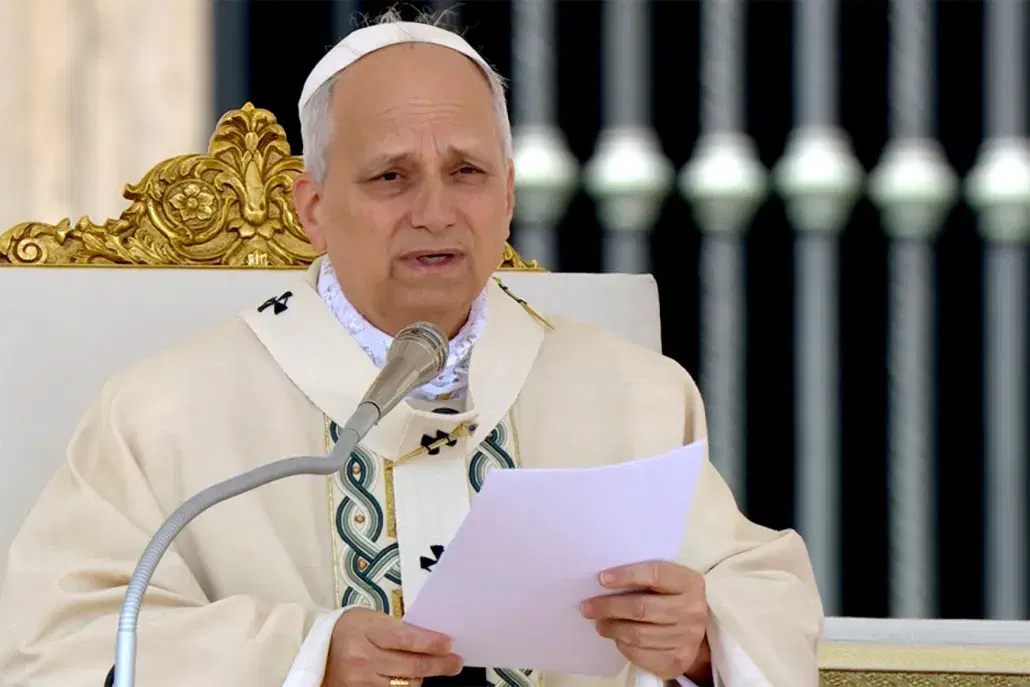
Pope Leo XIV
By Ibrahim Hassan-Wuyo
ABUJA — The Foundation for Peace Professionals (PeacePro) has called on the Pope, European governments, Arab states and other institutions that historically benefited from slavery to move beyond acknowledgments and apologies by embracing meaningful accountability for the centuries-long exploitation of enslaved people.
The organisation said that while several governments, churches and institutions have publicly recognised slavery as a crime against humanity, few have proposed concrete measures that reflect the enormous benefits accumulated from the system.
In a statement issued yesterday, Executive Director of PeacePro, Abdulrazaq Hamzat, argued that the global conversation should no longer centre solely on whether slavery was wrong but on the responsibilities owed by those who inherited its advantages.
According to him, institutions involved in or enriched by slavery must openly acknowledge not only the crime itself but also the wealth, institutional growth and geopolitical influence derived from it, the effects of which remain visible today.
“Many institutions have acknowledged slavery as a crime against humanity. That is welcome. But acknowledgment without accountability risks becoming a symbolic exercise rather than a moral reckoning,” Hamzat said.
He added: “The issue is not merely that slavery occurred. The issue is that some institutions and societies derived enormous benefits from it, while the victims and their descendants continue to bear many of its consequences. A truthful accounting requires recognition of both the crime and its benefits.”
PeacePro stressed that accountability should not be viewed only through the lens of financial reparations, noting that beneficiaries of historic injustice should be encouraged to develop and implement voluntary accountability measures.
“Accountability is most meaningful when it comes from the conscience of the beneficiary rather than the demands of the victim. The question should not be, ‘What do the victims want?’ The question should be, ‘What responsibility do we owe in light of the benefits we inherited?’” Hamzat stated.
The organisation urged governments, churches, corporations, universities, financial institutions and other entities linked to the slave trade to undertake independent historical audits of their involvement and publicly disclose the benefits accrued from slavery.
It also called on such institutions to establish accountability frameworks that could include educational initiatives, historical preservation projects, scholarship programmes, development partnerships, investments in affected communities and other measures deemed appropriate by the institutions themselves.
“There can be no genuine reconciliation without moral responsibility. The beneficiaries of historic crimes should not wait to be compelled by others. They should lead by proposing their own accountability measures as an expression of justice, integrity and historical truth,” Hamzat said.
PeacePro maintained that the global conversation on slavery must evolve from remembrance to responsibility, arguing that while acknowledgment answers the question of what happened, accountability addresses what should be done about it.
“The world has spent generations acknowledging slavery. The next generation must focus on accountability,” the organisation stated.
Disclaimer
Comments expressed here do not reflect the opinions of Vanguard newspapers or any employee thereof.