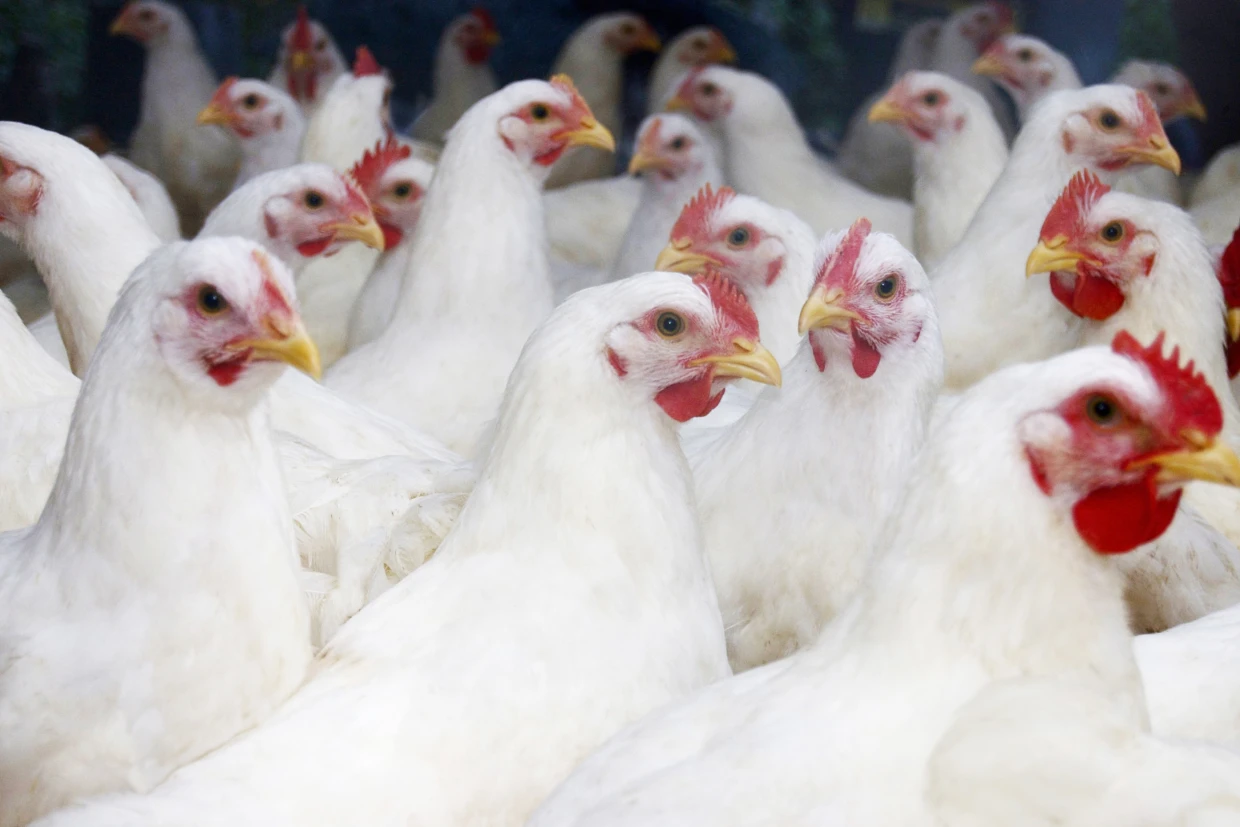
File image.
By Cynthia Alo
The Federal Government and the Food and Agriculture Organisation (FAO) have launched a $350,000 project to strengthen Nigeria’s preparedness and response to Highly Pathogenic Avian Influenza, commonly known as bird flu.
The Minister of Livestock Development, Mr Idi Mukhtar-Maiha, disclosed this on Thursday in Karu, Nasarawa State during the opening of a two-day inception workshop on the FAO-Technical Cooperation Programme (TCP) project on Strengthening Highly Pathogenic Avian Influenza (HPAI) Preparedness, Detection and Response in Nigeria.
The project will target seven pilot states including Taraba, Lagos, Kano, Plateau, Benue, Osun and Oyo, focusing on disease surveillance, laboratory capacity, biosecurity and risk communication, and rapid response mechanisms, with lessons expected to be scaled across the country.
In a statement signed by the Deputy Director, Information and Public Relations, Henrietta Okokon, confirmed that in 2026 alone, Nigeria recorded bird flu outbreaks in Kebbi, Kano, Katsina, Plateau and Bauchi States.
The Minister said the disease had remained a recurring threat since its first appearance in Nigeria in 2006.
He said: “The poultry industry remains a critical component of Nigeria’s livestock sector. However, it continues to face threats from transboundary animal diseases, particularly Highly Pathogenic Avian Influenza.
“It is threatening livelihoods, food security and international trade. We must work together to restore livelihoods, close gaps in poultry product supply and reconnect our poultry industry to international markets.”
The Permanent Secretary of the ministry, Dr. Chinyere Ijeoma Akujobi who was represented by the Chief Veterinary Officer of Nigeria, Dr Samuel Anzaku, noted that despite progress in disease control, Nigeria has continued to record HPAI outbreaks annually since 2021.
“The epidemiology of the disease has evolved, with outbreaks now affecting multiple avian species. Layer farms remain the most severely impacted segment, resulting in substantial economic losses and disruptions across poultry value chains,” she said.
Speaking on behalf of FAO, Dr. Otto Muhinda said the project would, over nine months, train 240 animal health personnel and develop predictive tools to improve preparedness and reduce future risks of HPAI in Nigeria. Representing the Office of the National Security Adviser, Dr. Patience Omokri stressed the link between public health and national security, urging for effective biosecurity measures, cross-border collaboration and public awareness to manage disease outbreaks.
On his part, President of the Nigerian Veterinary Medical Association (NVMA), Dr. Moses Arokoyo, pledged the Association’s continued support through advocacy, awareness creation and professional engagement, describing the project as a significant step towards securing the future of Nigeria’s poultry industry.
Also speaking , representative of the Veterinary Council of Nigeria (VCN), Prof. Matthew Adamu reaffirmed the Council’s commitment to strengthening animal health systems and supporting veterinary professionals in advancing livestock development and disease control efforts across the country.
The Chief Epidemiologist of the Federal Ministry of Health and Social Welfare, represented by Ahmed Dareey, stressed the need for collaboration, innovation and resource-sharing in strengthening health security and achieving sustainable disease prevention and control outcomes under the One Health approach. Similarly, Rita Azuka, representing the Federal Ministry of Environment, highlighted the environmental dimensions of HPAI control, stressing the need for improved waste management, environmental surveillance and ecosystem protection as part of a coordinated response to disease outbreaks.
Disclaimer
Comments expressed here do not reflect the opinions of Vanguard newspapers or any employee thereof.