By Chioma Obinna
Health experts and Civil Society Organisations have raised alarm over what they described as “aggressive tactics” by tobacco and nicotine companies to lure Nigerian youths into addiction through flavoured products, influencer marketing, and social media promotions.
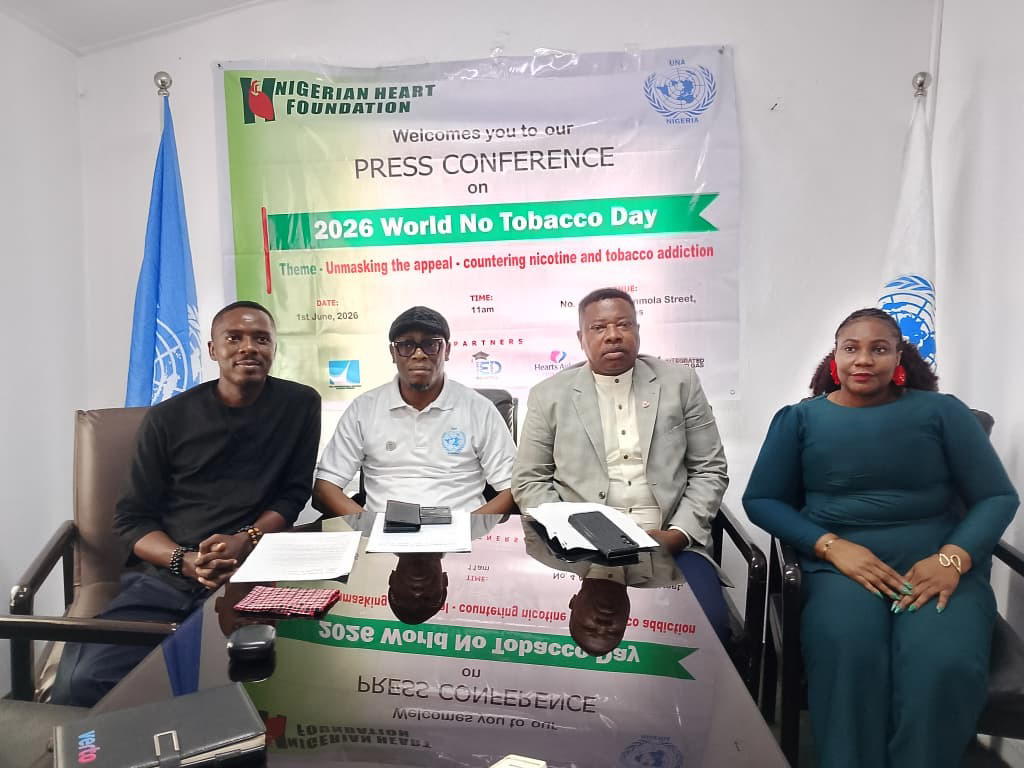
The warning came during a World No Tobacco Day 2026 press briefing organised by the Nigerian Heart Foundation, NHF, in collaboration with the United Nations Association of Nigeria, UNAN, where stakeholders called for urgent enforcement of tobacco control laws and stronger protection for children and adolescents.
Addressing journalists in Lagos, the President of the United Nations Association of Nigeria, Professor Oluremi Olutimo, said tobacco companies are deliberately repackaging nicotine products to appear modern, attractive, and harmless to young people.
According to him, products such as e-cigarettes, nicotine pouches, shisha, and synthetic nicotine devices are increasingly being marketed with sweet flavours, colourful packaging, and celebrity endorsements to recruit a new generation of smokers.
“Many of these products are designed to sustain addiction while appearing technologically advanced and less harmful. Young people are being targeted through influencers, social media, and deceptive advertising,” he said.
Olutimo disclosed that at least 40 million adolescents aged 13 to 15 globally currently use tobacco products, while millions more are already addicted to e-cigarettes.
He warned that nicotine addiction among teenagers could lead to long-term cardiovascular and respiratory diseases, adding that evidence shows youths who use e-cigarettes are more likely to transition to traditional cigarette smoking later in life.
Speaking on emerging trends, Chairman of the 2026 World No Tobacco Day Committee and Chairman, Education and Capacity Building of UNAN, Mr. Ephraim Abutu, raised concerns about balloon parties, where teenagers allegedly inhale substances through balloons. According to him, many parents remain unaware of dangerous trends exposing children to addiction and substance abuse.
“We are losing many young people gradually because these companies are targeting them aggressively. Parents must pay attention to what their children are exposed to online and socially,” he said.
Other stakeholders also blamed weak enforcement of the National Tobacco Control Act, poor parental supervision and the glamorisation of smoking by entertainers and influencers for the growing addiction crisis among Nigerian youths.
The experts called on the Federal Government to tighten regulations on tobacco advertising, ban flavored nicotine products targeting youths and enforce designated smoking areas in public places.
They also urged schools, parents, religious institutions and the media to intensify public awareness campaigns to protect future generations from tobacco and nicotine addiction.
Also speaking, a member of the United Nations Association of Nigeria, Mrs Charity Adeyemi, urged parents to become more involved in the lives of their children.
She said families remain the first line of defense against harmful behaviors, adding that parents must monitor what children watch, who they interact with and the environments they are exposed to.
They argued that stronger enforcement mechanisms, public education campaigns and consistent advocacy could help reduce tobacco use in Nigeria.
The Nigerian Heart Foundation reiterated its commitment to supporting tobacco control efforts and promoting healthy lifestyles through partnerships with government agencies, schools, civil society groups and the media.
They further urged the Federal Government to strengthen regulations on tobacco advertising, flavored nicotine products and social media promotions targeting youths.
NHF and partners also appealed to Nollywood actors, musicians and social media influencers to stop glamorizing smoking and substance use in films, music videos and online content.
“As we mark World No Tobacco Day 2026, we must strengthen advocacy, education and enforcement to stop the tobacco industry from recruiting young Nigerians into lifelong addiction,” NHF stated.
Disclaimer
Comments expressed here do not reflect the opinions of Vanguard newspapers or any employee thereof.