…Cut Reliance on Foreign Expertise
By Ibrahim Hassan-Wuyo
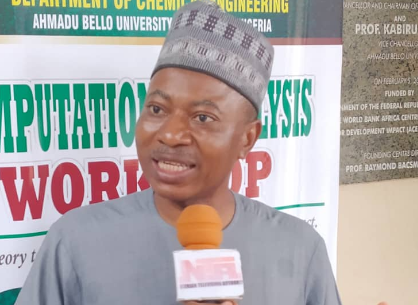
ZARIA — The Petroleum Technology Development Fund (PTDF) has commenced specialised training for 35 researchers in computational catalysis as part of efforts to strengthen indigenous capacity, reduce dependence on foreign expertise and accelerate industrial development in Nigeria.
The workshop, organised in collaboration with Ahmadu Bello University, is themed, “Computational Catalysis: Why It Matters — Opportunities for Research, Industry and National Development in Nigeria.”
Speaking at the opening ceremony at the university’s main campus in Zaria, the Executive Secretary of PTDF, Prof. Shu’aibu Shehu-Aliyu, said the programme was designed to equip researchers with the knowledge and skills needed to translate scientific discoveries into practical industrial solutions.
Represented by the PTDF General Manager, Education and Training, Hajiya Rabi Waziri, Shehu-Aliyu described computational catalysis as a critical tool for advancing research and innovation in the petroleum, petrochemical and energy sectors.
According to him, the technology enhances efficiency, accelerates innovation and offers cost-effective solutions to complex industrial challenges.
“For a country like Nigeria, where energy resources remain central to economic growth and sustainability, building capacity in advanced and specialised fields is essential,” he said.
He reiterated PTDF’s commitment to developing indigenous human capital and promoting research-driven technological advancement capable of supporting national development.
The Executive Secretary disclosed that the Fund had established PTDF Professorial Chair Programmes in six universities, including Ahmadu Bello University, to support research aimed at addressing key industry challenges and fostering innovation.
Building Local Expertise
In his remarks, the Vice-Chancellor of Ahmadu Bello University, Prof. Adamu Ahmed, described the institution as a national asset founded on the principle that homegrown expertise and indigenous knowledge are vital to national sovereignty and sustainable development.
Represented by the Deputy Vice-Chancellor (Administration), Prof. Bello Sabo, Ahmed said the workshop represents a strategic investment in Nigeria’s ability to design, understand and optimise catalytic systems that support the petroleum industry, petrochemical sector and emerging clean-energy initiatives.
“Nigeria remains the largest oil-producing nation in Africa, yet we still depend heavily on foreign technical expertise for catalyst design, process modelling and computational optimisation. This presents an opportunity for local researchers to fill a critical gap,” he said.
Participants Selected Through Competitive Process
Earlier, the PTDF Chair Professor of Chemical Engineering at ABU, Prof. Abdulazeez Yusuf-Atta, said the 35 participants were selected through a rigorous and competitive process based on research potential, innovation and commitment to advancing science and technology.
He explained that computational catalysis enables scientists to simulate and predict chemical reactions using computer models before conducting laboratory experiments, thereby reducing the time, cost and resources required for research.
According to him, participants were drawn from various institutions across Nigeria as well as the neighbouring Republic of Chad, reflecting growing regional interest in the discipline.
“We want to build a critical mass of experts who can apply computational catalysis to solve industrial problems. The participants will return to their institutions and transfer the knowledge to others, creating a multiplier effect across the country,” Yusuf-Atta said.
Participants Hail Initiative
Some participants who spoke with journalists commended PTDF for the initiative, describing it as a timely intervention capable of strengthening research, driving innovation and supporting industrialisation.
They urged the Fund to sustain and expand the programme, noting that developing local expertise in advanced scientific fields would help reduce Nigeria’s reliance on foreign technical support while enhancing the country’s competitiveness in the global energy and industrial sectors.
The workshop is expected to deepen research capacity in computational catalysis and contribute to the development of homegrown solutions to challenges in Nigeria’s petroleum, petrochemical and energy industries.
Disclaimer
Comments expressed here do not reflect the opinions of Vanguard newspapers or any employee thereof.