…lament health impact of fossil fuel pollution
By Emem Idio, Yenagoa
Civil Society Organisations, CSOs, and international partners in the United Kingdom, Canada and United States of America, USA, have called for the urgent implementation of the $12 Billion Bayelsa Recovery Fund as recommended by the Bayelsa State Oil and Environmental Commission, BSOEC, to find remediation, restoration, public health and a just transition toward renewal energy and alternative livelihoods.
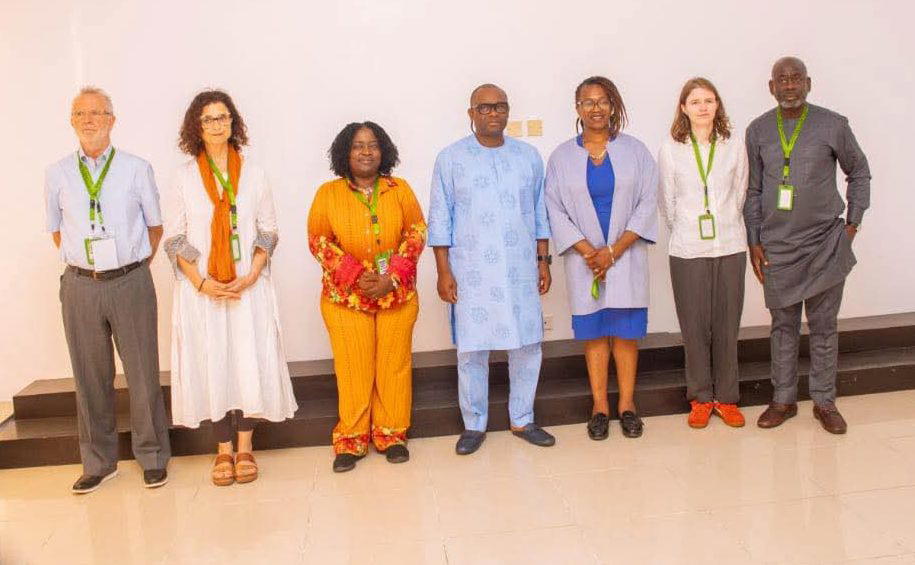
The call was made in Yenagoa, the Bayelsa State capital during a stakeholders forum organized by the International Working Group on Petroleum Pollution and Just Transition in the Niger Delta, in collaboration with Social Action (Social Development Integrated Centre) and Health of Mother Earth Foundation, HOMEF.
The forum noted that a recent toxicological audit has uncovered a silent health crisis in rural oil-bearing communities in Bayelsa State, revealing alarming statistics such as increased infant mortality, pediatric stunting, and a reduced life expectancy to just 50 years.
Additionally, the stakeholders urged the Bayelsa State Government to implement annual medical check-ups for residents in high-exposure areas and expand healthcare services to mitigate the impact of chronic oil-related illnesses.
A Professor of Environmental and Energy Law at Aberystwyth University in the United Kingdom and member of the International Working Group, IWG, Prof Engobo Emeseh, , said report of the Bayelsa State Oil and Environmental Commission, BSOEC, found a number of really devastating implications of oil pollution for the people of the State, adding that it is why the report was called an environmental genocide, because people are dying daily.
Engobo who was also a member of the Bayelsa State Oil and Gas Environmental Commission (BSOEC), said: “We submitted our report, the Bayelsa Oil and Environment Commission report in 2023, first in the UK at the House of Lords, and then in 2024 to the Bayelsa government here in Yenagoa, and finally presented to the public in November 2024.
“And we made a commitment that we are going to keep working to ensure that the findings of the report and the recommendations are implemented. There are strange diseases, there is maternal health issues, there are issues around reproductive health and so many health concerns. And what we want to do is advance the work of the report.*
In his remark, the Executive Director, Social Action and Lecturer at York University, Canada, and also a member of IWG, Dr. Isaac Osuoka, lamenting the damaging effects of pollution on the people , livelihoods and ecosystem of the the Niger Delta, declaring that it is time for action.
He said: “Every day there are alarming cases of cancer that have been reported in the hospitals. If you go to some of these communities, every weekend there are carnivals of burials and funerals because of the consequences of oil pollution. In the case of Ogoniland, we are seeing that there is some response through the HYPREP agency, but we are not seeing any action yet in Bayelsa State to address these problems. Communities are still drinking poisoned waters. People are still breathing contaminated air, even as we speak in these communities.
“We know that there are agencies of governments that have been set up to address some of these issues. What we have been discussing here is how to create synergy among the different agencies, among researchers that are interested in health.
“We have people from the universities in Nigeria represented here, people from institutions abroad, to talk about how to collaborate, to improve, to continue the research that will further establish the links between what has been observed in the environment and what people are experiencing in their bodies and even in their minds.
“It is a call on the federal government to implement the recommendations of the Bayelsa Commission report. Those recommendations are very clear. Unfortunately, we have not seen an appreciation by the federal government of the gravity of the situation.”
Disclaimer
Comments expressed here do not reflect the opinions of Vanguard newspapers or any employee thereof.