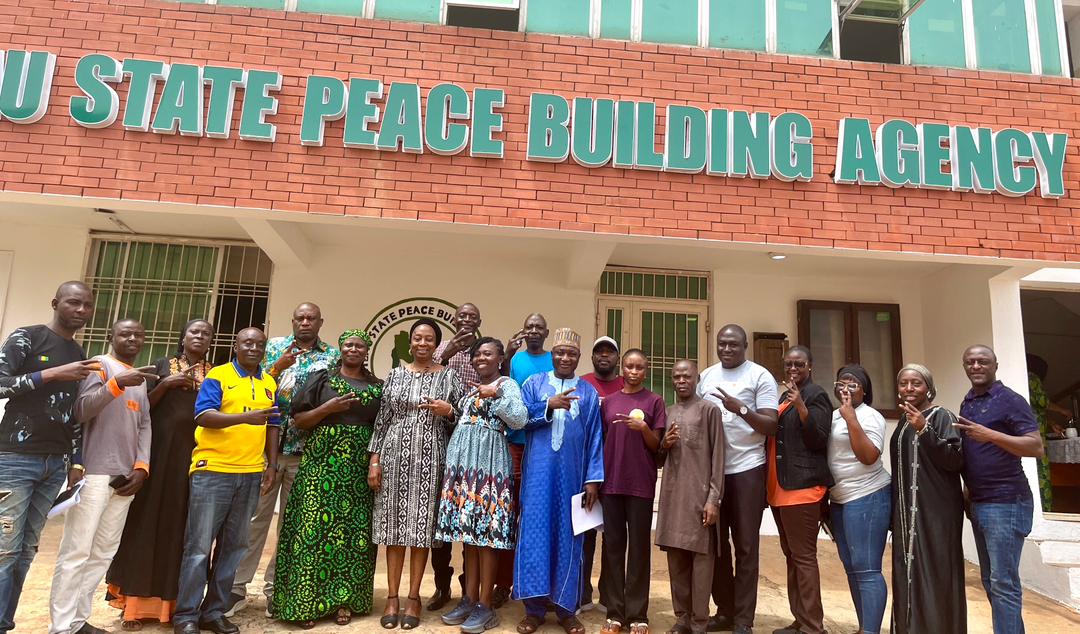
The Coordinator of Back to Base Initiative for Vulnerable People, Mrs Jennifer Yarima, has called on the Plateau State Peace Building Agency (PPBA) to strengthen support for non-conventional security actors and women peacebuilders across vulnerable communities in the State.
Yarima made the appeal on Tuesday during a visit by the group to the Director-General of the PPBA, Julie Sanda, where she highlighted the critical role being played by community volunteers in protecting lives and sustaining peace in conflict-prone areas, particularly in Nasarawa Gwong Division Jos North.
She commended the Agency for its contributions towards peacebuilding and conflict management in Plateau State, noting that its achievements had attracted attention from other States seeking to understudy and replicate its model.
According to her, the leadership of the Agency under Sanda had inspired vulnerable communities and peace ambassadors across the State.
Yarima also acknowledged the support of Plateau State Governor, Caleb Mutfwang, in promoting peace and security initiatives.
She expressed concern over the persistent attacks, killings and land grabbing affecting several communities in the State, stressing that women and children remained the most affected in the aftermath of violent attacks.
“More communities are vulnerable to these senseless attacks, leading to unbearable deaths of innocent citizens. More than ever before, native lands are being grabbed by wicked intruders,” she said.
She called for proactive measures to prevent future attacks and urged government to equip security agencies with modern tools and logistics to tackle insecurity effectively.
Yarima further advocated support for families of security personnel who lost their lives in the line of duty, while also encouraging collaboration with the international community towards finding lasting solutions to the nation’s security challenges.
Speaking on the purpose of the visit, she said the initiative sought to recognise the sacrifices of non-conventional security actors and community volunteers who often provide first response during crises.
“These are men and women who, without uniforms, salaries, or formal recognition, mobilise to protect lives, evacuate the vulnerable, and hold communities together when formal structures are overstretched,” she stated.
She linked the activities of the volunteers to the global Women, Peace and Security agenda under the United Nations Security Council Resolution 1325 of 2000, which promotes the participation and protection of women in peacebuilding processes.
Yarima noted that women in Plateau communities were already playing active roles in markets, churches, mosques and internally displaced persons camps, but lacked adequate training, equipment and formal recognition.
She identified major challenges confronting non-conventional security actors to include inadequate training, poor communication equipment, lack of legal protection and exclusion from humanitarian planning and aid distribution.
The Coordinator appealed to the PPBA to champion capacity building for community volunteers through training on early warning systems, conflict-sensitive response, first aid and human rights.
She also called for institutional recognition and possible integration of trained volunteers into community policing and vigilante coordination structures, alongside deliberate inclusion of women in peace and security decision-making processes.
“Peace is not only the absence of gunfire. It is the presence of justice, protection and dignity for every family,” she said.
Responding, Sanda acknowledged the growing importance of non-conventional security actors in community security management, saying research had shown that such groups were adding value and addressing local security needs.
“These are the people on the ground with a high stake in the security of their communities,” she said.
The PPBA Director-General stressed the need for proper organisation and coordination of non-conventional security groups, noting that their strength lay in their community-based structure and local knowledge.
“Our problem is not early warning, but early response,” she added, while urging that community youths should also be engaged in an organised manner.
Sanda observed that many communities were grossly under-policed, making it necessary for non-conventional security actors to complement conventional security agencies.
She advised community volunteers to work closely with formal security institutions for improved outcomes and commended the Back to Base Initiative for the work it was doing in vulnerable communities.
Disclaimer
Comments expressed here do not reflect the opinions of Vanguard newspapers or any employee thereof.