By Chioma Obinna
The Society of Family Physicians of Nigeria, SOFPON, has raised alarm over the acute shortage of family doctors in Nigeria, warning that worsening economic hardship, burnout and the migration of healthcare workers abroad are threatening compassionate healthcare delivery across the country.
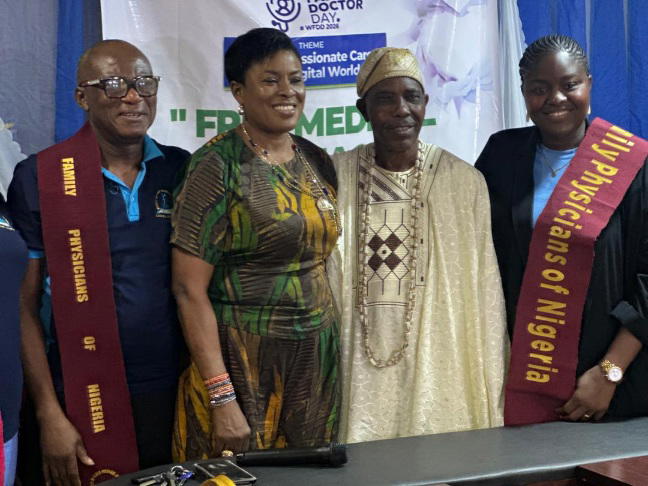
The warning came as family physicians marked the 2026 World Family Doctor Day with a call for urgent government intervention to strengthen the health workforce and ensure technology does not erode the human connection between doctors and patients.
Speaking during activities to commemorate the day in Lagos, Chairman of SOFPON Lagos Chapter, Dr Ozuomba Sixtus, said Nigeria’s healthcare system was under increasing pressure as trained doctors continued to leave the country in search of better working conditions and improved welfare.
“If Lagos does not have enough family physicians, it stands to reason that Nigeria does not have enough. A lot of doctors are being pushed to look for greener pastures because of the economic realities and poor conditions of service.”
He warned that unless urgent steps are taken to improve doctors’ welfare, the country may face a deeper healthcare crisis.
“Take care of those who take care of human lives. Doctors are human beings too. They have families, children and responsibilities. When those things are not met, it becomes difficult to demand compassion and empathy from somebody struggling to survive,” Sixtus declared
In an address delivered on behalf of SOFPON President, Dr. Blessing Chukwukelu, the association stressed that while digital technologies are transforming healthcare delivery globally, compassion must remain central to medical practice.
The address, themed: “Compassionate Care in a Digital World,” warned against allowing telemedicine, electronic medical records and artificial intelligence to weaken the doctor-patient relationship.
“Technology must never become a dangerous master that creates distance where there should be closeness,” the association stated.
“While digital tools can measure vital signs, they cannot measure fear, hope or the silent anxieties of patients. Only a compassionate physician can do that.”
SOFPON also warned that increasing dependence on digital healthcare tools was contributing to clinician burnout and “Zoom fatigue,” while making it easier to miss subtle emotional and non-verbal signs during consultations.
Sixtus explained that family physicians are specially trained to provide continuous, coordinated and comprehensive healthcare for individuals and families regardless of age, gender or disease condition.
“Every family doctor is a doctor, but not all doctors are family doctors,” he said.
“Family physicians take care of everybody in the family, father, and mother, young, old, male and female, irrespective of the illness involved.”
According to him, family physicians manage 80 per cent of people, 80 per cent of the time,” while coordinating referrals to specialists when necessary.
He disclosed that SOFPON was collaborating with the Lagos State Government to increase the number of trained family physicians in public hospitals.
“The plan is to ensure that every general hospital in Lagos has at least one family physician,” he said. “But we still do not have enough.”
Sixtus further urged healthcare professionals not to allow digital systems and electronic medical records to reduce patient interaction and empathy during consultations.
“There is the temptation to remain glued to the computer screen and miss important emotional signals from patients,” he warned. “Compassion is what makes doctors different from robots.”
SOFPON reaffirmed its commitment to patient-centred healthcare, insisting that empathy, listening and human connection must remain at the heart of medical practice despite rapid technological advancement.
As part of activities marking the celebration, SOFPON organised a health walk and free medical outreach for residents of Ajeromi, Lagos, offering free screening for hypertension, diabetes and other common illnesses, alongside consultations and medications.
Sixtus said the outreach targeted vulnerable residents who struggle to access healthcare because of poverty, poor health literacy and rising treatment costs.
“We are not just coming to look at the people; we are coming with real service,” he said. “People are suffering. Many cannot afford basic healthcare, so we decided to bring healthcare closer to them.”
Also, speaking, Deputy Medical Director of Ajeromi General Hospital, Dr Agboola Morakeke Bosede, who represented the Medical Director/CEO, Dr Sotunde Yetunde Adewunmi, commended SOFPON for bringing healthcare services closer to residents of Ajegunle.
Bosede said one of the major challenges in the community was resistance to orthodox healthcare, noting that many residents still preferred traditional treatment and only sought medical attention during emergencies or free outreaches.
“One of the things we battle with in Ajegunle is that patients do not want to access orthodox medical care,” she said. “They would rather do traditional treatment. But gradually, with family physicians engaging them through outreach programmes and health education, people are beginning to see the need for regular check-ups and proper healthcare.”
She urged the association to sustain its community interventions beyond annual celebrations, stressing that more medical outreaches were needed in vulnerable communities.
“We hope this will not be the last time you are coming,” she said. “You should keep coming into the community, not only when there is a formal programme. We want to see more outreaches because they are helping to change attitudes towards healthcare.”
Bosede also expressed readiness for collaboration between the hospital and family physicians in community-based research and healthcare interventions.
“We are open to collaborations, especially in research that can help improve healthcare delivery in Ajegunle and similar communities,” she added.
Disclaimer
Comments expressed here do not reflect the opinions of Vanguard newspapers or any employee thereof.