By Precious Enaike
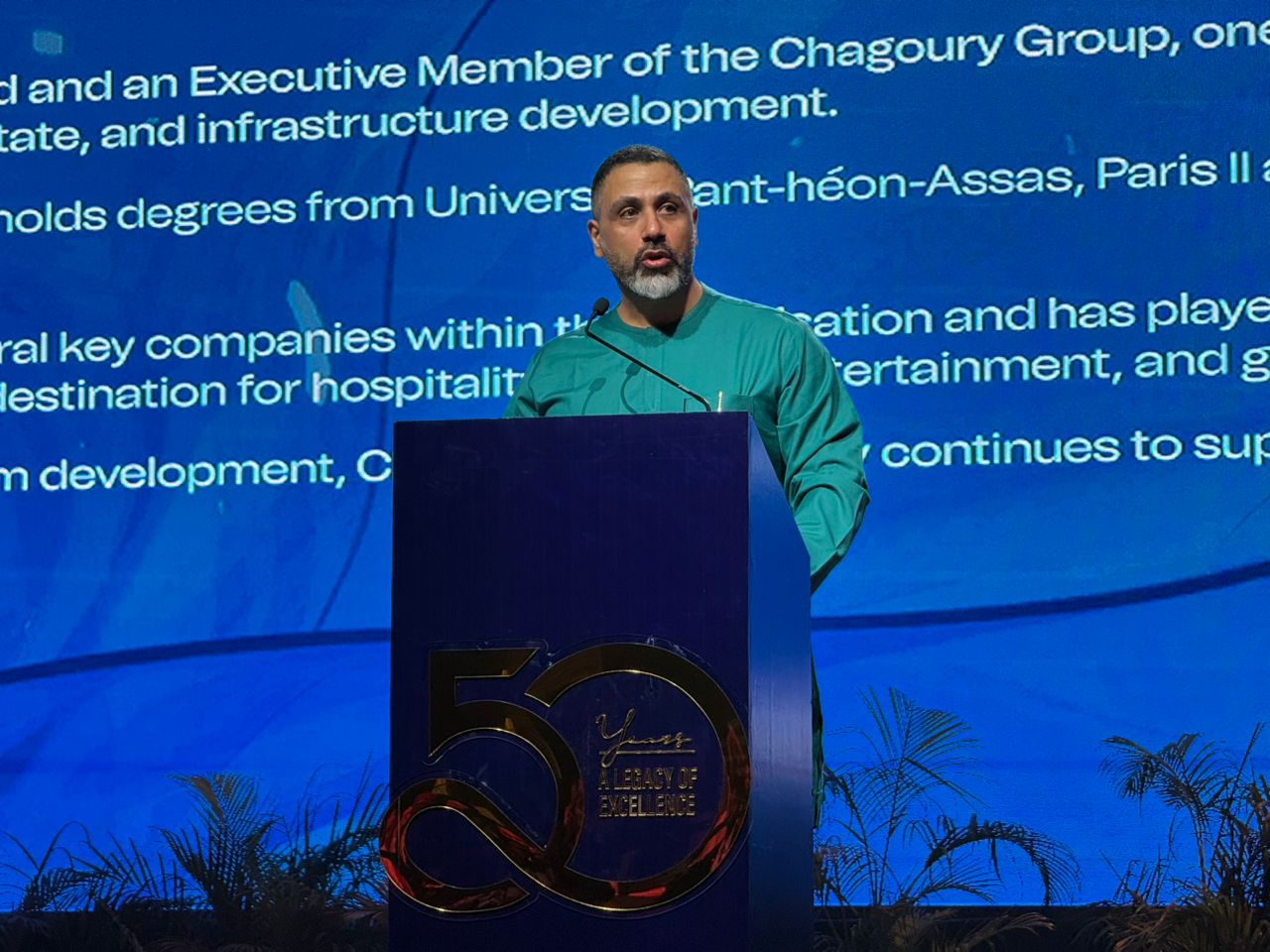
Eko Hotels & Suites marked its 50th anniversary with an Africa Legacy Summit that brought together policymakers, diplomats, tourism stakeholders, business leaders and creatives to examine the future of African culture, hospitality and tourism.
Held over two days at the Eko Convention Centre in Lagos, the summit was themed “Reimagining the Future of Culture in African Hospitality, Tourism and Travel.” Beyond celebrating the hotel’s golden jubilee, the event focused on how Africa can transform its cultural identity into economic influence and global relevance.
The summit opened on Friday with the Nigerian national anthem and a cultural performance that immediately set the tone for conversations centred on identity, innovation and African excellence.
Among dignitaries present were Lagos State Governor Babajide Sanwo-Olu, Pan-African scholar Patrick Lumumba, Honorary Consul General for Antigua and Barbuda to Nigeria Wallace Williams, Chairman of Air Peace Allen Onyema, diplomats, government officials, traditional rulers and executives from across industries.
One notable feature of the gathering was the visible participation of students and young professionals, reflecting the summit’s strong emphasis on youth inclusion and the future of African tourism and hospitality.
Throughout the event, speakers repeatedly stressed the importance of mentorship, entrepreneurship and investment in young African talent.
A central message echoed across keynote speeches and panel discussions: Africa’s culture is not merely symbolic, but a major economic asset.
Chairman of Eko Hotels, Christopher Chagoury, captured that sentiment during one of the summit’s defining moments.
“We are not gathered here merely for a conference,” he said. “We are gathered to challenge an idea — the idea that culture is ornamental rather than foundational.”
According to Chagoury, Africa’s future in tourism lies in authenticity rather than imitation. He argued that African music, cuisine, festivals, fashion, storytelling and hospitality possess the power to reshape economies and redefine the continent’s global image.
“The world is exhausted by imitation,” he said. “What people seek now is authenticity, identity, meaning and connection, and Africa remains one of the richest reservoirs of all these.”
Speakers also argued that Africa’s greatest strength lies not only in natural resources, but in its people, creativity and cultural heritage.
Chairman of Air Peace, Allen Onyema, criticised Nigeria’s dependence on oil while tourism remains underdeveloped.
“Tourism is one area that has not been toured in Nigeria. We are so dependent on oil,” Onyema said.
Comparing Nigeria with countries such as Singapore and several Caribbean nations, Onyema said the country had overlooked tourism’s potential to generate jobs, prosperity and international visibility.
He also raised concerns about poor airport infrastructure, weak transit systems and what he described as a culture of undermining indigenous businesses.
“There’s no hub infrastructure in these airports. How do you want to encourage tourism?” he asked.
Despite the criticism, Onyema defended Nigeria’s aviation sector and urged Nigerians to promote local institutions more confidently.
The summit’s broader intellectual direction was framed by Ambassador Wallace Williams, who challenged African leaders to view culture as a tool for diplomacy and influence.
“For far too long, Africa’s image has been narrated away from Africa by outsiders,” Williams said.
He argued that although Africa is often associated globally with poverty and instability, the continent has significantly influenced global fashion, music, literature, cuisine, spirituality and entertainment.
“Long before investors arrive, culture arrives,” he added.
Williams also described Lagos as a reflection of Africa’s possibilities, saying visitors could experience “36 countries for the price of one,” in reference to Nigeria’s cultural diversity.
Managing Director of Eko Hotels, Ghassan Faddoul, said the future of African hospitality would depend on innovation, sustainability and the ability of young Africans to bring fresh perspectives into the industry.
“As we mark 50 years, this is not only a celebration of the past, but a point of transition,” Faddoul said.
He stressed the importance of environmental responsibility, technology and artificial intelligence in shaping the future of hospitality while preserving African identity and heritage.
By the second day, discussions shifted from broad reflections on culture and identity to practical conversations around mentorship, tourism standards, community engagement and Pan-African tourism experiences.
One of the standout sessions featured global tourism strategist and Chief Executive Officer of Fura Collective, Stella Fubara, who urged African countries to become more intentional about tourism development.
According to Fubara, tourism extends beyond hotels and travel, functioning as an ecosystem connected to transportation, entertainment, healthcare, infrastructure and storytelling.
“You create the product, you create the narrative, and you speak the narrative in the voice of the person to whom you want to listen,” she said.
Drawing from her experience with Dubai’s tourism sector, Fubara explained that successful destinations deliberately define their identity, target audiences strategically and market themselves consistently on the global stage.
Her remarks reinforced one of the summit’s dominant themes — that Africa possesses the creativity, culture and talent needed to compete globally, but requires stronger infrastructure, investment and coordination to unlock its full tourism potential.
Beyond the speeches and policy conversations, the summit itself reflected the vision it sought to promote. Cultural performances, sustainability discussions, tourism investment sessions and presentations on Eko Hotels’ corporate social responsibility initiatives reinforced the idea that modern hospitality extends beyond accommodation into culture, entertainment and experience.
As the summit concluded, one message remained clear: African hospitality may no longer need foreign benchmarks for validation.
Perhaps, as Chagoury suggested, the benchmark itself is beginning to shift toward Africa.
Disclaimer
Comments expressed here do not reflect the opinions of Vanguard newspapers or any employee thereof.