By Osa Mbonu-Amadi
In Nigeria, especially in the Southwest, the lace fabric is a symbol of affluence. Wealthy people wear expensive lace materials as a fashion statement announcing their affluence or importance. But sometimes, struggling people sell off their properties, or borrow money to buy expensive lace materials to hide their poverty or give others the impression that they have arrived.
There have been stories of people who borrowed expensive lace clothes from their more affluent neighbours for one social event or the other. It is the latter scenario that gave rise to the proverb which says that a person wearing borrowed clothes to a party does not dance too vigorously so as not to cause damage to the fabric or even annoy the owner of the clothe who might be in the audience.
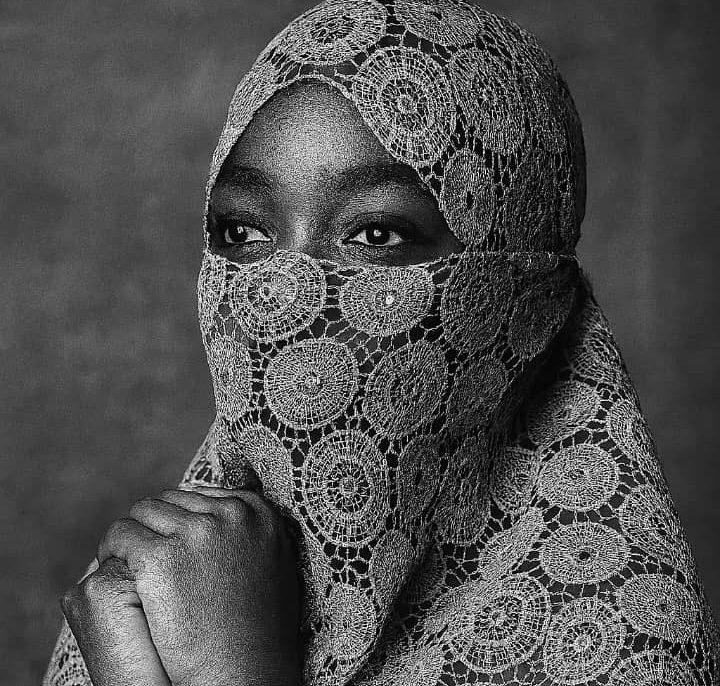
However, no matter how much a poor person may strive to conceal their poverty with expensive clothes, a careful look into their eyes will reveal the poverty, the slum and squalour lurking behind the expensive fabric. It is in this sense that the Nigerian fine art photographer, Jeffrey Igboasia’s “What the Lace Hides” should be understood.
“What the Lace Hides” is essentially a meeting between a veil of lace and tied hands in a moment of stillness. The picture of a beautiful lady clad in lace, and whose hands are bound with a rope tells the story of the social, psychological, and economic constraints the traditional African society lays on the female folk. The constraints are concealed by beautiful faces and complex layers of niceties.
The shiny and expensive lace fabric may soften the harshness of the constraint, but it does not erase it. A careful look into her uncovered eyes, the window through which the human personality can be glimpsed, is bound to reveal her misery.
This piece invites us to reflect on the silent pressures and invisible constraints that shape a woman’s life. It is a dual life where beauty and control coexist, revealing how gentleness, or even living in material affluence, and yet in bondage, can disguise the boundaries placed on her voice, her body, and her choices. To stretch it further, some women are offered a life of material abundance that come with misery and bondage.
In his artist statement, Igboasia discloses that he set out to create an image that speaks to the piles of often invisible agonies associated with womanhood, particularly in Africa. The stories of these agonising women are often shaped, minimised, or even completely silenced by forces alien to them.
“I chose lace deliberately. Lace is beautiful, intricate, celebrated, but also delicate enough to disguise its ability to obscure and restrain,” Igboasia says, forgetting to mention that the lace is also a symbol of material affluence, which further reinforces his theme of social imprisonment concealed by affluent appearance. “By using this fabric to veil her face, I wanted to show how elements of culture, expectation, and identity, though aesthetically admired, can simultaneously restrict expression.”
In “What the Lace Hides”, what is traditionally considered a fabric of adornment becomes an agent or object of inequitable concealment. Beauty and ornament become barriers or facades, creating tension that is central to the theme of the portrait.
Tying her hands with rope heightens the story and also symbolises bondage, misery, and social imprisonment. The fact that the rope binding her hands does not appear taut against her flesh shows how social constraints and other forms of limitations sometimes appear mild, just as some types of material affluence without freedom do conceal or dull the pains of bondage or misery. These social restrictions are often disguised as feminine duties or roles women are expected to fulfill traditionally.
The eyes, which has earlier been identified as the window into the human personality, is as significant and symbolic in this work as the lace fabric.
With her eyes, the subject and the artist invite viewers to look beyond the lace, the silence which is more like that of the graveyard, and whatever other distractive accoutrements that may surround her, and see her pains and deprivations. However, in all these, her attempt at raising her hand and working it out of the rope relays the message that though her voice may have been silenced, her fight for freedom continues.
“This Fine art portrait,” Jeffrey Igboasia says, “is my attempt to give visual form to that tension. It is not just an image of a woman veiled in lace and bound at the wrists; it is a reflection of the countless ways women navigate restriction while still carrying dignity, strength, and a watchful, unbroken spirit.”
Disclaimer
Comments expressed here do not reflect the opinions of Vanguard newspapers or any employee thereof.