By Esther Onyegbula
Leading corporate and occupational health provider, Medbury Healthcare, has called on organisations to prioritise psychosocial wellbeing as a critical component of workplace health, warning that unmanaged stress and poor workplace culture could negatively impact employee productivity, safety and overall organisational performance.
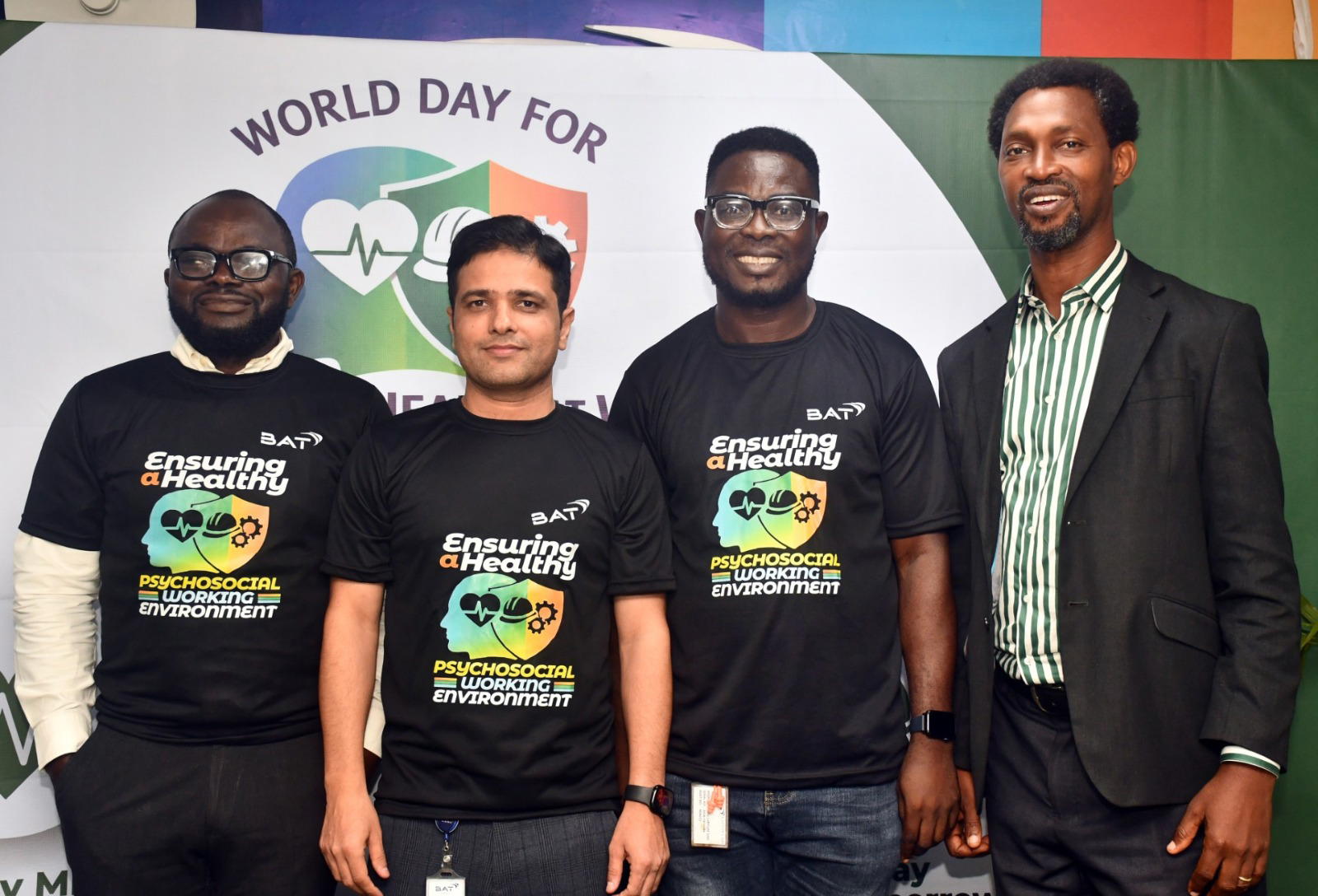
The call was made during a workplace health session organised in collaboration with British American Tobacco Nigeria, also known as BAT Nigeria, at the company’s Ibadan factory to commemorate the 2026 World Day for Safety and Health at Work.
The event, held on April 28, aligned with this year’s global theme, “Good psychosocial working environments: A pathway to thriving workers and strong organizations,” championed by the International Labour Organization.
Speaking during the session, Dr. Uba Onyenefa, Med-Advisory Manager and ICM Operations Manager at Medbury Healthcare, stressed the strong relationship between mental and physical health, noting that prolonged workplace stress often manifests through physical conditions.
According to him, “Unmanaged stress can present itself in physical symptoms such as insomnia, chronic headaches and musculoskeletal disorders. Organisations must understand that employee wellbeing goes beyond physical safety.”
He also reiterated the importance of providing employees with access to mental health support systems, including confidential counselling and professional assistance platforms.
The interactive session brought together employees and senior management of BAT Nigeria to discuss practical ways of addressing workplace mental health risks, including stress, burnout, ineffective communication and workplace pressure.
A panel discussion featuring Manufacturing Manager, Waqas Khan; Head of Supply Chain, Dele Alabi; Senior HR Business Partner, Operations, Monisola Adebayo; and Dr. Onyenefa, examined strategies for fostering healthier and safer work environments.
Speaking on the realities of operating in a high-performance manufacturing environment, Khan emphasised the need for realistic planning and transparent communication between employees and supervisors.
He said achievable timelines and open dialogue were necessary to reduce workplace pressure and build trust among teams.
Also speaking, Alabi highlighted the importance of emotional intelligence in leadership, particularly in high-pressure production environments.
According to him, self-awareness, empathy and self-regulation remain essential leadership qualities required to manage operational pressures such as production deadlines and equipment breakdowns without transferring stress to employees in a destructive manner.
He added that respectful leadership and consideration for employees’ perspectives would encourage workers to freely report risks and concerns without fear of intimidation or retaliation.
On her part, Monisola Adebayo, Area Head of Talent and Engagement, Sub-Saharan Africa, underscored the importance of role clarity and effective performance management in reducing workplace anxiety.
She noted that uncertainty in job expectations often translates to pressure and urged employees to actively seek feedback and utilise available support systems to manage workload effectively.
Adebayo further stressed that creating a psychologically safe workplace was a shared responsibility between management and employees.
The organisers noted that the event formed part of broader efforts to strengthen workplace safety culture by integrating mental, emotional and physical wellbeing into corporate operations.
A central message echoed throughout the session was the need to normalise conversations around mental health in the workplace.
Reaffirming its commitment to people-centred environmental, social and governance, ESG, principles, BAT Nigeria said it would continue to promote policies that support employees’ mental and emotional wellbeing alongside physical safety.
The session concluded with a call for continuous dialogue and support systems to ensure healthier and more resilient workplaces.
“Silence increases risk. Conversations create solutions,” participants stated during the closing reflection.
Disclaimer
Comments expressed here do not reflect the opinions of Vanguard newspapers or any employee thereof.