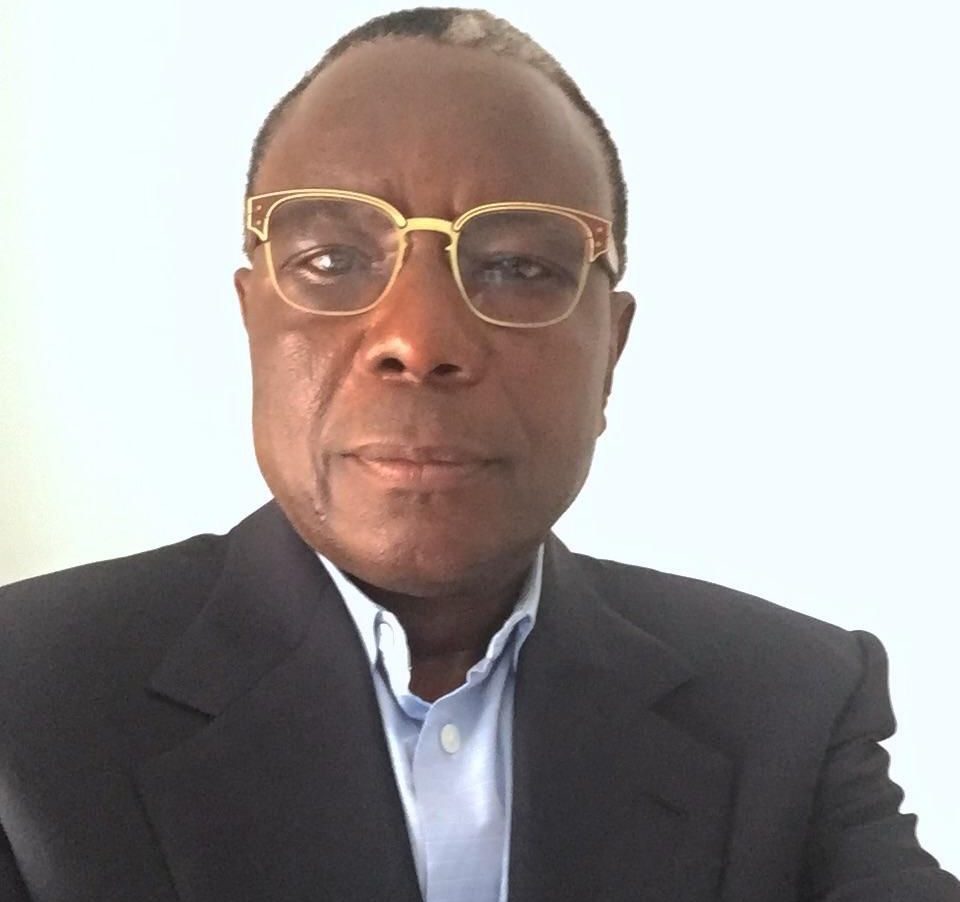
Philip Obazee
By Philip Obazee
A Campaign Is an Argument, Not a Slogan
A campaign is not simply a noise-making operation. It is not just rallies, billboards, party songs, television appearances, partisan slogans, or the choreography of crowds. A campaign is an organized sequence of persuasive acts designed to achieve a political objective. In democratic politics, especially presidential politics, a campaign must answer one central question: why should the electorate entrust this person with state power?
That question becomes more difficult when the candidate is an incumbent seeking reelection. A challenger may campaign on promise, outrage, contrast, imagination, and the claim that the country deserves a different direction. But an incumbent cannot live entirely in the framework of promise. An incumbent must campaign on a record. He may explain the record, defend the record, reinterpret the record, contextualize the record, and project the record into the future. But he cannot escape the record. The record is the burden of incumbency.
So, if I were President Bola Ahmed Tinubu’s campaign manager, the first thing I would tell him is this: do not run away from your first term. Do not pretend that Nigerians have not suffered. Do not speak as though the cost of food, transport, rent, medicine, fuel, school fees, and daily survival is a minor statistical inconvenience. Do not tell Nigerians that macroeconomic stabilization is already prosperity. Nigerians know the difference between a balance-of-payments improvement and a pot of soup. They know the difference between a fiscal deficit number and the price of garri. They know the difference between a World Bank chart and the arithmetic of household survival.
But I would also tell him this: do not apologize for reform as if reform itself were a crime. The case for 2027, if there is to be a serious case, must be that Nigeria was living inside an economic fiction, and that the first term was the painful beginning of institutional correction. Not that everything is now fine. Not that suffering is imaginary. Not that critics are enemies. Not that opposition politicians are automatically unserious. The strongest case is that Nigeria had been postponing reality for too long, and that postponement had become more dangerous than adjustment.
The Burden of Incumbency
Tinubu’s central campaign problem is therefore clear. He must campaign on a first term that involved major policy shocks. Petrol subsidies were removed. The exchange-rate system was liberalized. Inflation rose sharply. The naira came under severe pressure. Businesses faced import cost uncertainty. Households experienced a cost-of-living squeeze. Insecurity persisted in several regions. The ordinary Nigerian did not experience reform as a seminar in fiscal realism. The ordinary Nigerian experienced reform as price, pain, adjustment, and anxiety.
That is why denial would be politically fatal. A government can survive hardship if people believe the hardship has direction, fairness, and eventual payoff. It cannot survive hardship if people believe sacrifice has been privatized while benefits have been captured by elites. The campaign must therefore not insult Nigerians with excessive triumphalism. It must not say, “You are not suffering.” It must say, “You have suffered, and the question before us is whether that suffering becomes wasted pain or foundational repair.”
That is the argument Tinubu must make. The first term, in this framing, was not the prosperity phase. It was the stabilization phase. The second term must be the delivery phase. That distinction is crucial. If Tinubu campaigns as though the first term has already delivered prosperity, he will sound detached from reality. But if he campaigns by arguing that the first term stopped the deeper fiscal and monetary deterioration of the Nigerian state, he has a more defensible case.
The message must be: we did not inherit a normal economy; we inherited a postponed crisis. We did not choose hardship as an ideology; we confronted distortions that had accumulated for years. We did not remove pain from the system immediately; we began removing the sources of deeper collapse. The question now is whether Nigerians will allow the repair phase to mature into the delivery phase.
Stabilization Before Delivery
Tinubu’s strongest campaign thesis should be this: the first term was stabilization before delivery. That does not mean stabilization is enough. It means delivery without stabilization is often fiction. A state that cannot finance itself honestly cannot develop honestly. A currency defended by administrative make believe cannot become strong by decree. A subsidy regime that consumes fiscal space cannot simultaneously fund infrastructure, schools, hospitals, security, and social protection. A federation that centralizes blame in Abuja while states and local governments receive rising allocations cannot produce accountable development.
The administration’s own early language gives Tinubu some material for this argument. In his inaugural address, Tinubu defended the phase-out of the petrol subsidy by saying the regime increasingly favored the rich more than the poor, and that the funds should instead be redirected toward public infrastructure, education, health care, and jobs. In his January 2024 New Year address, he described fuel-subsidy removal and foreign-exchange reform as difficult decisions, acknowledged that they created discomfort for families and businesses, and explicitly referred to the rising cost of living and inflation.
That admission is politically useful. It should be the basis of a more mature campaign. Tinubu should not campaign as though hardship was an accidental rumor invented by the opposition. He should campaign as someone who knows hardship occurred, knows why it occurred, and knows what must follow from it.
The first-term defense must be methodical: Nigeria had to stop subsidizing consumption at the expense of investment; had to stop pretending that the naira could be stronger than the underlying productive economy; had to strengthen fiscal receipts; had to restore credibility to monetary authority; had to create a more honest price system; and had to move the federation from rent-sharing toward production.
But there is a severe warning here. Stabilization is not a meal. It is not a job. It is not school fees. It is not security on the road between two towns. It is not a clinic stocked with medicine. Stabilization only becomes politically legitimate when it becomes visible welfare. Therefore, the second-term campaign must not be a lecture on macroeconomics. It must be a contract for delivery.
Do Not Hide the Hardship
The worst campaign strategy would be to hide the hardship. Nigerians are too intelligent, too economically alert, and too wounded by recent experience to accept a campaign built on denial. They know what happened to transport costs. They know what happened to food prices. They know how exchange rate instability entered the cost structure of imported goods, medicine, machinery, school materials, spare parts, and business inputs. They know that small firms suffered. They know that salary earners lost purchasing power. They know that households adjusted consumption downward.
Tinubu should say so. He should speak not as a man asking Nigerians to forget hardship, but as a man asking Nigerians to distinguish between destructive hardship and transitional hardship. That distinction is not automatically persuasive. It has to be earned. A reform that imposes pain but does not produce institutional gain is simply cruelty with technocratic vocabulary. A reform that imposes pain, expands fiscal capacity, improves monetary credibility, restores price signals, protects the vulnerable, and then produces infrastructure, jobs, and productivity may be defensible.
The campaign must therefore be morally serious. It must say: hardship occurred, but hardship must not be wasted. The removal of distortion must be followed by the construction of alternatives. If petrol subsidies were removed, transport systems must improve. If fiscal receipts increased, public investment must be visible. If state allocations rose, state-level accountability must rise. If the exchange rate became more realistic, export capacity must expand. If monetary policy tightened, inflation must come down. If citizens sacrificed, government must show restraint, competence, and measurable delivery.
This is not simply a communication challenge. It is a governance challenge. But in politics, communication and governance are connected. A campaign message that does not correspond to administrative reality collapses under scrutiny. Therefore, Tinubu’s campaign must not only say reform will deliver; it must show where reform has already created measurable capacity and where the next phase will convert that capacity into public benefit.
Campaign Against Postponement, Not Buhari
Tinubu may be tempted to campaign against Buhari. Many Nigerians regard the Buhari years as a period of economic strain, security deterioration, fiscal stress, policy rigidity, and institutional weakness. It would be easy for a campaign to say: we inherited disaster; blame the past. But that strategy is limited. By 2027, Tinubu will have governed for nearly four years. Inheritance remains context, but it cannot be a permanent defense.
The better argument is not “Buhari failed, therefore reward Tinubu.” The better argument is: Nigeria has had a long habit of postponing hard choices, and my administration began to end that habit.
That distinction is important. A campaign against Buhari is backward-looking. A campaign against postponement is institutional. A campaign against Buhari becomes factional. A campaign against postponement becomes historical. It allows Tinubu to say that Nigeria’s problem was not simply one man’s failure, but a governing culture: subsidize what should be priced, borrow what should be financed, centralize what should be devolved, announce what should be implemented, consume what should be invested, and postpone what should be solved.
That should be the frame. Nigeria cannot become prosperous by avoiding the conditions of prosperity. It cannot want first world infrastructure with a chronically weak revenue base. It cannot want a strong currency without productive capacity, export depth, disciplined fiscal policy, and credible monetary management. It cannot want security without local governance, jobs, intelligence, border control, and rural economic reconstruction. It cannot want federalism as a constitutional slogan while Abuja remains the excuse for every state-level failure.
Tinubu should campaign against that entire system of postponement. He should say: the old politics told Nigerians that difficult choices could be avoided forever. My administration says the country must confront what it has avoided. That argument will not be painless, but it is serious.
The Moral Case for Subsidy Removal
The subsidy argument must be rebuilt morally, not just technically. Economists may understand that broad fuel subsidies can distort prices, encourage smuggling, strain budgets, weaken public investment, and disproportionately benefit those with higher fuel consumption. But citizens do not live inside models. They live inside markets. If petrol prices rise, transport fares rise. If transport fares rise, food prices rise. If food prices rise, household stress rises. A policy may be fiscally rational and socially brutal at the same time.
So, I would tell Tinubu: do not speak of subsidy removal as if it were automatically pro-poor. Speak of it as the removal of a defective instrument that must be replaced by better instruments.
That is the crucial distinction. A subsidy is not wrong simply because it is a subsidy. It is wrong if it is fiscally ruinous, poorly targeted, corruption prone, regressive, and developmentally unproductive. If the old petrol subsidy had been replaced immediately by credible transport relief, food logistics support, rural welfare transfers, primary health investment, school feeding, local road repair, and transparent state-level development funds, the politics would have been different. The anger came not only from removal, but from the gap between removal and visible compensation.
That gap is where the campaign must fight. Tinubu should say: the old subsidy subsidized petrol; the new social contract must subsidize opportunity. The old subsidy lowered pump prices unevenly; the new system must build roads, clinics, schools, jobs, power, and targeted welfare. The old subsidy rewarded consumption; the new system must reward production.
But this argument will only work if the government can trace the money. If citizens cannot see the destination of subsidy savings, then subsidy removal becomes a transfer from the poor and working class to an opaque state. That would be politically and morally disastrous.
Federalism as the Delivery Machine
This is where federalism becomes Tinubu’s strongest political economy frame. The campaign must argue that subsidy removal and revenue reform expanded the fiscal room of the federation, not simply the power of Abuja. The World Bank’s April 2026 Nigeria Development Update presentation reported that FAAC revenues rose from ₦17.1 trillion in 2024 to ₦37.4 trillion in 2025, while also noting that deductions remained sizeable. That statistic gives Tinubu a campaign opportunity, but also a campaign danger.
The opportunity is clear: he can argue that reform increased the fiscal capacity of the federation. The danger is equally clear: citizens can ask why higher fiscal capacity has not translated more visibly into lower hardship, better roads, better schools, better health systems, safer communities, and stronger local economies.
Tinubu should not avoid that question. He should use it to redefine the campaign. He should say: subsidy removal was the fiscal opening; federalism must be the delivery mechanism. Abuja cannot and should not be the sole administrator of Nigerian development. Much of what Nigerians experience as development is state and local: primary schools, primary health care, rural roads, agricultural extension, markets, sanitation, community security, local enterprise support, and land administration.
A serious second-term campaign would therefore propose a federalist delivery compact. Every state should publish what it received, what it spent, what it built, what it repaired, and what outcomes changed. Local governments should not be invisible pipes through which funds disappear. They should become development institutions. If federal allocations rise and citizens remain poor, then governors, local councils, and state bureaucracies must answer alongside the federal government.
This would be politically risky because it would expose failures inside Tinubu’s own party as well as outside it. But that is exactly why it would be powerful. Nigerians are tired of generalized governance. They want traceability. They want to know who received what, who spent what, who built what, who stole what, and who delivered what.
Tinubu should make federalism concrete. Not as theory. As a dashboard. As a scorecard. As a contract.
Security as Development Under Stress
On security, Tinubu must avoid empty reassurance. Nigerians do not need to be told that everything is under control if their farms, roads, schools, and communities say otherwise. The security argument must be sober, layered, and developmental.
Nigeria’s insecurity is not one thing. It includes insurgency, banditry, kidnapping, farmer-herder violence, separatist violence, oil theft, urban crime, rural governance collapse, illicit arms flows, and border vulnerability. Amnesty International reported in May 2025 that at least 10,217 people had been killed in attacks by gunmen in several Nigerian states during the first two years of the Tinubu government. Even where one disputes figures or classifications, the political reality is not disputable: insecurity remains one of the gravest tests of the Nigerian state.
Tinubu should therefore not campaign on security as a narrow law and order issue. He should campaign on security as development under stress. A community without roads is harder to police. A rural economy without jobs is easier for criminals to penetrate. A border without effective control becomes an artery for arms and illicit movement. A school system that fails young people becomes part of the recruitment environment for violence. A farm belt under attack becomes a food inflation problem. A justice system that fails to punish attackers becomes an incentive system for impunity.
That is the doctrine: security is not only the absence of violence; it is the presence of state capacity. It is police, intelligence, army, courts, borders, roads, schools, jobs, farms, and trust. Tinubu should say that the next phase of security policy will link military action to rural governance, youth employment, food security, border management, and local intelligence.
He should say: a road into a farming community is security. A functioning school is security. A job program is security. A reliable local intelligence network is security. A credible prosecution system is security. A working border regime is security. A productive rural economy is security.
That message would move the security debate beyond press releases and troop deployments. It would frame insecurity as a state building problem.
The Naira and the Cost of Economic Truth
Tinubu also has a monetary policy argument, but it must be made carefully. Ordinary voters do not vote for central bank orthodoxy. They vote on price, income, hunger, confidence, and hope. Still, a serious campaign must explain why Central Bank reform matters.
The old foreign-exchange order was not costless. Multiple rates created arbitrage opportunities. Administrative allocation of foreign exchange favored those with access. A currency defended by rationing rather than productivity eventually reveals the gap between official fiction and market reality. A country cannot build a credible investment climate when investors, importers, exporters, and households face a fragmented and politically managed exchange rate system.
The Central Bank of Nigeria says its reforms included unifying rates through a willing buyer, willing seller model, eliminating multiple exchange-rate windows, folding previous segments into the Nigerian Foreign Exchange Market, reducing arbitrage opportunities, and clearing verified foreign exchange obligations. That is important. But the campaign must not pretend that exchange rate adjustment was painless. It was not. Currency depreciation fed into prices. Import-dependent firms suffered. Households suffered. The naira became not just a currency but a daily anxiety.
Tinubu’s argument should therefore be blunt: we did not devalue Nigeria; we revealed the cost of years of pretending.
That sentence is hard, but it captures the issue. The official exchange rate can be administratively managed for a time, but if the underlying economy is weak, the fiction eventually breaks. The real question is not whether Nigeria can announce a strong currency. The question is whether Nigeria can build the productive, export generating, investor confident economy that sustains one.
Therefore, the second-term campaign must move from exchange rate reform to production. A country strengthens its currency by producing, exporting, refining, processing, manufacturing, earning foreign exchange, reducing avoidable import dependence, attracting capital, and building confidence in institutions. Tinubu should campaign as a production president, not only as a stabilization president.
Macroeconomic Repair Is Not Household Relief
The World Bank’s assessment captures Tinubu’s dilemma: Nigeria’s economy is expected to remain resilient, with growth projected around 4.2 percent for 2026–2028, but faster poverty reduction requires broader growth and lower inflation. That is both a defense and an indictment.
The defense is that macroeconomic indicators may be moving in a more sustainable direction. The indictment is that macroeconomic repair has not yet become household relief. A growth projection does not feed a child. A stronger external position does not automatically pay rent. Higher federal revenue does not automatically become a better clinic. A unified exchange rate does not automatically become a job. The translation mechanism matters.
That should become the central campaign promise: translation. Translate fiscal savings into infrastructure. Translate revenue gains into public services. Translate monetary credibility into investment. Translate agricultural policy into lower food prices. Translate security spending into safer communities. Translate federalism into local accountability. Translate reform into welfare.
Without this translation, Tinubu’s campaign will sound like a defense of aggregates against citizens. That would be a mistake. Citizens do not live as aggregates. They live as households, workers, traders, farmers, students, parents, transporters, artisans, and entrepreneurs. They judge reform by whether it changes their constraint set.
The campaign must therefore say: phase one restored the possibility of progress; phase two must deliver the experience of progress.
From Oil Dependence to Productive Federalism
Tinubu must also tell Nigerians the truth about oil. Nigeria’s oil has often functioned less as a development engine than as a political narcotic. It encouraged the illusion that the country could distribute rents without building productivity. It weakened the pressure to build a normal tax-service bargain between citizens and government. It fed the belief that national wealth comes from what is extracted rather than what is produced, organized, manufactured, learned, coded, traded, designed, and governed.
Oil became an albatross because it allowed Nigeria to confuse revenue sharing with development. It encouraged a politics of allocation rather than production. It made Abuja the center of distributive struggle. It weakened incentives for states to develop distinctive productive strategies. It allowed citizens to see government as a dispenser of national cake rather than as a contractual institution funded by taxpayers and judged by services.
Tinubu should say that the next Nigeria cannot be built on crude oil psychology. Oil revenue must become investment capital, not consumption anesthesia. If oil prices rise, Nigeria should not use windfalls to recreate the old subsidy system. It should build buffers, reduce debt pressure, support infrastructure, improve power, deepen education, strengthen health systems, secure agricultural belts, and finance the transition from rent distribution to production.
This is where federalism returns. Each state should be asked: what do you produce? What can you export? What can you process? What skills are you building? What industrial clusters are you forming? What agricultural value chains are you strengthening? What logistics bottlenecks are you removing? What tax base are you developing? What jobs are you creating?
The campaign should move Nigeria away from the politics of sharing oil rents toward the politics of productive federalism.
Pain, Repair, Delivery
If I were Tinubu’s campaign manager, I would reduce the campaign to three words: pain, repair, delivery (PRD).
Pain: acknowledge what Nigerians endured.
Repair: explain what institutional distortions were corrected.
Delivery: show what the second term will concretely produce.
This triad is stronger than propaganda because it does not insult the voter. It does not say, “You are not suffering.” It says, “You suffered because the old system was broken and reform was painful; now judge us by whether repair becomes delivery.”
The speeches should be direct. Tinubu should say:
“We removed a subsidy that had become fiscally destructive and socially unjust. But we know removal is not enough. The savings must become roads, schools, hospitals, jobs, and targeted support.”
He should say:
“We unified the exchange-rate system because Nigeria cannot build prosperity on artificial prices. But now we must build production, exports, and investor confidence.”
He should say:
“We strengthened public revenue because a country that cannot finance itself cannot develop itself. But every naira must now be traceable.”
He should say:
“We know security is still the deepest wound in many communities. We will treat security not only as a military operation, but as a developmental project involving jobs, farms, schools, roads, intelligence, justice, and local governance.”
He should say:
“The first term was about stopping deeper collapse. The second term must be about making reform visible in the lives of ordinary Nigerians.”
That is the campaign.
How Tinubu Should Answer the Opposition
Tinubu should not ignore the opposition, but he should not allow the opposition to set the intellectual terms of the campaign. Opposition parties will argue, reasonably, that Nigerians are poorer, hungrier, and less secure than they should be. They will say reform was badly sequenced. They will say subsidy removal was too abrupt. They will say exchange rate reform worsened inflation. They will say the government expanded revenue without delivering relief. They will say insecurity persists. They will say the administration asks for patience while citizens run out of endurance.
These criticisms cannot be dismissed. Some are powerful because they touch reality.
But Tinubu’s answer should not be defensive anger. It should be comparative seriousness. He should ask: what exactly would the opposition have done? Restore the subsidy? At what fiscal cost? Recreate multiple exchange rates? Who would receive the arbitrage? Finance deficits through the Central Bank? With what inflationary consequence? Promise security without local governance reform? Promise welfare without revenue? Promise jobs without production?
This is where the campaign can become analytically strong. It can say: Nigeria does not need easier promises. It needs a credible transition path. The opposition must be forced to specify its own model of adjustment. Campaigns should not be beauty contests among slogans. They should be contests among theories of the country.
Tinubu’s theory should be this: Nigeria must stop postponing reality, rebuild institutions, deepen federal accountability, secure communities, expand production, and convert fiscal repair into household relief.
A Contractual Second Term
The second term campaign must be contractual, not promissory. Nigerian politics is full of promises. Promises are cheap because they often lack enforcement. A contract is different. It states what will be done, by whom, with what resources, on what timeline, and with what measurable indicators.
Tinubu should therefore present a second term delivery contract. It should include food inflation reduction targets, farm security corridors, transparent publication of subsidy savings deployment, state-by-state infrastructure scorecards, local-government fiscal reporting, youth employment targets, technical education expansion, primary health benchmarks, power sector milestones, and security metrics.
He should say: do not simply reelect me; hold me to this contract.
That is risky. But incumbency without accountability becomes arrogance. Tinubu’s political advantage is that he can campaign as the man who took difficult decisions. His political danger is that he may be seen as the man who imposed hardship without sufficient compassion. A contractual agenda helps solve that problem. It tells Nigerians that the reformer understands that reform must now pay rent in the household economy.
The first term may be defended as institutional repair. The second term must be judged as public delivery. No serious campaign should confuse the two.
The Truth Tinubu Must Tell Nigerians
So, if I were Tinubu’s campaign manager, this is what I would tell him.
Do not campaign as if Nigerians are ungrateful. Campaign as if they are exhausted but still capable of being persuaded by seriousness.
Do not deny hardship. Interpret it honestly.
Do not hide behind Buhari. Campaign against the deeper politics of postponement.
Do not defend subsidy removal as a technocratic trophy. Defend it as the removal of a bad instrument that must now be replaced by better welfare, infrastructure, and production systems.
Do not speak of security only through the language of force. Speak of security as the reconstruction of state presence, rural economy, border control, intelligence, justice, and youth opportunity.
Do not celebrate macroeconomic stabilization as if it were already prosperity. Present it as the floor upon which prosperity must now be built.
Do not allow federalism to remain abstract. Make it the delivery architecture of the campaign.
Do not promise a painless Nigeria. Promise a productive Nigeria.
Do not say the first term solved the problem. Say the first term began the repair. Then show why the second term must deliver the results.
That is the campaign Tinubu should run. It would not convince everyone. No campaign does. But it would be serious, coherent, and intellectually defensible. More importantly, it would respect Nigerians enough to tell them the truth: a country cannot consume its way into greatness, subsidize its way into productivity, centralize its way into local development, or postpone its way into prosperity.
Nigeria’s next political argument should not be about who can shout the loudest. It should be about who can explain the country’s constraints, organize its institutions, manage its fiscal choices, secure its communities, unleash its states, and convert painful reform into visible improvement.
If Tinubu wants a second term, that is the case he must make.
_____
Philip Obazee retired as a managing director and head of derivatives from Macquarie Asset Management – a global asset management company with an office in Philadelphia, PA, USA, and currently, he is the founder and chief executive officer of Polymetrics Americas Research.
Disclaimer
Comments expressed here do not reflect the opinions of Vanguard newspapers or any employee thereof.