.unveils Ogun circular economy plan, targets jobs, safer environment
By James Ogunnaike, Abeokuta
Ogun State Governor, Dapo Abiodun, Thursday, disclosed that Nigeria generates over 500,000 tonnes of electronic waste annually, warning that indiscriminate disposal exposes citizens to hazardous substances such as lead and mercury.
The governor, however, declared that his administration is set to turn the growing environmental challenge into economic opportunity through a comprehensive circular economy strategy focused on job creation, environmental protection and sustainable industrial growth.
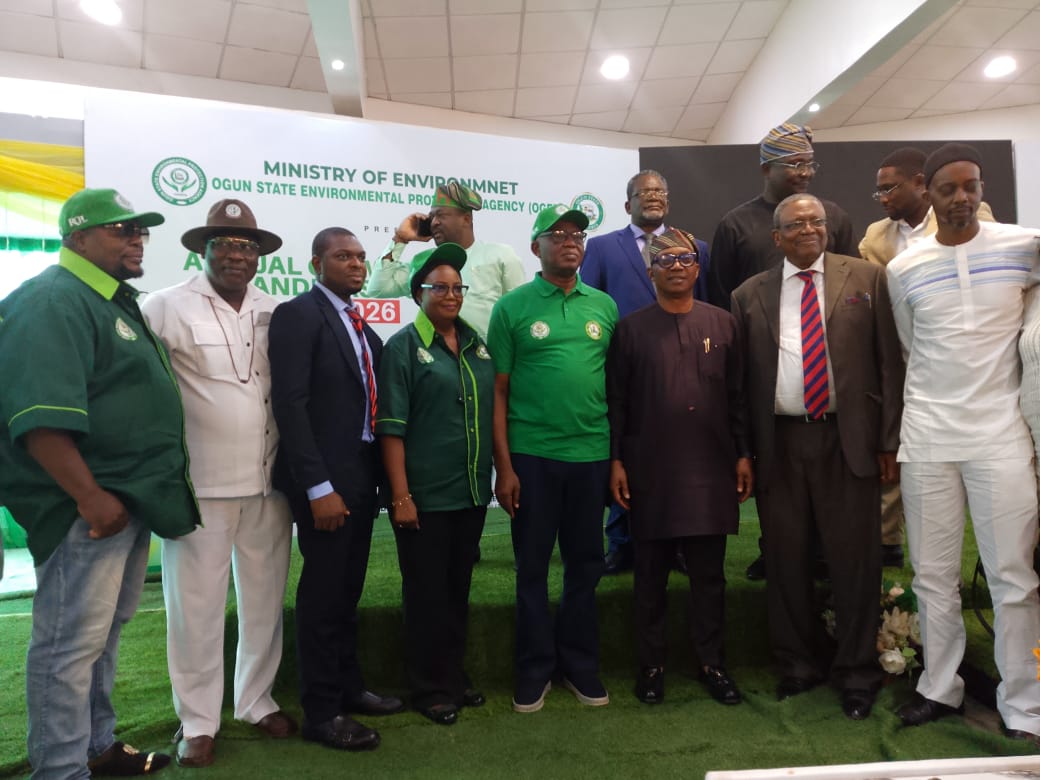
Abiodun made this known at the 4th edition of the Ogun State Environmental Protection Agency, OGEPA, Capacity Building Workshop themed “Transforming E-Waste into Opportunity: Circular Economy Solutions for Ogun State.”
Represented by the State Commissioner for Environment, Mr. Ola Oresanya, the governor stressed that the era of informal and unsafe handling of hazardous waste must come to an end.
“Ogun State is not merely Nigeria’s gateway; it is its industrial engine. But with industrialisation comes responsibility,” he said.
“What we have been discarding is, in truth, a goldmine, and Ogun State is determined to harness it responsibly.”
A major highlight of the workshop was the signing of a tripartite Memorandum of Understanding between OGEPA, E-Terra Technologies Limited and E-Waste Relief Foundation.
Describing the agreement as a “structured framework for responsible e-waste management,” Abiodun explained that it would formalise the activities of informal waste collectors, enhance revenue generation and create employment opportunities.
“Together, these entities will transform how we manage e-waste, generate jobs for our youth, and protect our environment for future generations,” he added.
The governor further outlined key environmental initiatives of his administration, including plastic recycling programmes, waste-to-fuel projects and an ambitious electric mobility drive.
According to him, Ogun State currently recycles about 2,000 metric tonnes of plastic daily, while ongoing investments in electric vehicles and solar energy are positioning the state as a leader in clean energy adoption.
“Our environmental sustainability drive is not separate from economic development; it is central to it,” he said.
Abiodun also emphasised the need to prioritise the safety of workers in the e-waste value chain, particularly those handling hazardous materials.
“Your safety is non-negotiable. No Ogun State citizen should risk their life handling e-waste,” he said, assuring that government would provide adequate protective equipment and training.
He charged stakeholders to develop a clear e-waste roadmap, establish a multi-sector task force and secure binding commitments from industry players.
“We gather not merely to discuss e-waste, but to launch a resource revolution,” the governor declared. “We will transform waste into wealth and environmental leadership into economic leadership.”
In his remarks, the Director-General of the National Environmental Standards and Regulations Enforcement Agency, NESREA, Dr. Innocent Barikor, commended the Ogun State Government for the initiative, describing it as forward-looking.
“E-waste is the fastest-growing waste stream globally, but it also presents opportunities for job creation and innovation,” he said.
“The circular economy model offers a sustainable pathway to reduce pollution while unlocking economic value.”
Barikor disclosed that NESREA has established collection centres, trained informal waste collectors and strengthened regulatory frameworks under its Extended Producer Responsibility programme.
Earlier, the Permanent Secretary, Ministry of Environment, Dr. Kafayat Lawal, who represented the commissioner, underscored the urgency of addressing e-waste challenges.
“E-waste management is no longer optional; it requires collective action,” she said, urging private sector operators to embrace certified recycling systems.
Also speaking, Chairman of the Environmental Society of Ogun State, Alhaja Jamiu Adebayo, described the initiative as “a progressive vision capable of stimulating industrial growth and generating employment.”
In his welcome address, the General Manager of OGEPA, Mr. Kehinde Bello, called for active participation from stakeholders.
“A circular economy allows us to recover value from waste and create more jobs. Let us share ideas that will make lasting impact,” he said.
Disclaimer
Comments expressed here do not reflect the opinions of Vanguard newspapers or any employee thereof.