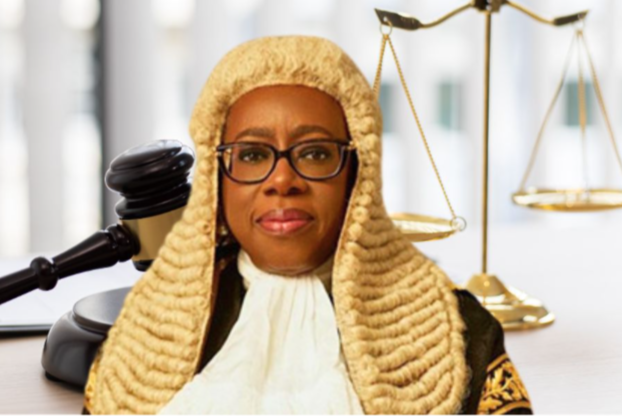
Chief Justice of Nigeria (CJN), Justice Kudirat Kekere-Ekun
By Ikechukwu Nnochiri
For the vast majority of Nigerians, justice is encountered at the grassroots level—in Magistrates’ Courts, Area Courts, Customary Courts, and other lower courts that serve as the primary interface between the judiciary and society.
These courts occupy a central place in Nigeria’s justice system, as they represent the face of the judiciary that most citizens encounter first.
It is within their walls that the bulk of everyday disputes are resolved.
Statistically, lower courts handle about 70 per cent of litigated cases—mostly involving poor and rural dwellers—in everyday matters such as tenancy disputes, debt recovery, minor civil claims, family issues, and less serious criminal offences.
Because they sit closest to the people, lower courts reduce pressure on superior courts while making justice more accessible and affordable.
This makes them central to access to justice, especially for ordinary people who cannot easily afford higher-court litigation.
By their nature, these courts—not being superior courts of record—conduct summary proceedings that ought to guarantee swift access to justice, devoid of the cumbersome practices and procedures of superior courts.
However, despite their impressive caseload-to-judge ratios and geographical spread, lower courts and matters pertaining to their operation and administration remain mostly under the radar.
Virtually across the board, initiatives to strengthen the quality of services rendered by these courts, improve their performance, and hold those who staff them truly accountable, have been nearly non-existent.
Today, hardly any lower court in the country escapes the cloak of abandonment and neglect.
Inefficiency and poor service delivery are commonplace at the lower court level.
Officials are often poorly treated compared to judicial officers at superior courts, while reforms aimed at improving their productivity and capacity remain limited in many states.
From the absence of habitable courtrooms and a dearth of basic infrastructure like decent toilets, to chronic issues of staffing shortages, underfunding, welfare neglect, and administrative inefficiency, these courts suffer profound institutional decay.
This operational dysfunction has undermined the fair and just dispensation of justice at the grassroots.
The implications of such neglect are far-reaching.
When lower courts remain underfunded and unreformed, delays proliferate, case backlogs swell, and public confidence in the justice system erodes.
Ordinary citizens, who rely most heavily on these courts for their affordability and accessibility compared to superior courts, bear the heaviest brunt.
Thus, neglecting lower courts effectively denies the common man meaningful access to justice.
The disturbing culture of near-stagnation in justice delivery at this level has long concerned litigants.
Cases often languish in these courts, rendering such delays all too common.
This state of affairs leaves court users frustrated amid a growing—and understandable—sense of litigation phobia.
Scant attention has been paid to fast-tracking justice delivery in lower courts across the country.
Aside from the fact that most users of these courts either do not know how to complain about poor treatment or feel too intimidated to do so, many lower court officials do not regard providing good service as part of their job.
Likewise, compliance by magistrates and other adjudicators at the lower rung of the judiciary with ethics and codes of conduct is rarely monitored.
The outcome manifests in pervasive corruption, abuse of discretion, political influence in decisions, the grant of irrational or frivolous arrest warrants and remand orders, and more.
Although lower courts adjudicate the majority of cases in the formal justice system, they are widely regarded as the most inefficient and inequitable in delivering justice.
Some reported service delivery issues include court staff soliciting inducements for basic services that should be free; magistrates, judges, and employees displaying open disrespect toward court users; and poor administrative performance such as the failure to notify litigants of hearing dates.
Other issues include inadequate record-keeping, which delays hearings, and the failure to accurately record court proceedings.
The lower courts, especially magistrates’ courts, often contend with executive influence, political pressure, and funding shortages controlled by the executive, which compromise judicial independence.
This has led some magistrates to abuse their power by exceeding their legal authority or misusing their discretion in ways that undermine justice.
Some of them have abused their authority by treating civil disputes as criminal matters, often in collusion with parties, which has resulted in improper remands and unwarranted prosecutions.
In 2022, the judicial landscape was jolted by news of the invasion of the Abuja residence of then Supreme Court Justice Mary Peter-Odili by armed security agents who relied on a spurious search warrant issued by a magistrate.
The said warrant was later voided by the same magistrate after the case had raised dust within the corridors of power.
The invaders were not aware that the house belonged to a high-ranking judicial officer.
Of course, the alleged culprits were ferreted out and charged to court.
There are other documented cases of corruption and abuse of power by magistrates and other adjudicators in the lower courts.
In 2025, Chief Magistrate Emmanuel Jatau was dismissed by the Nasarawa State Judicial Service Commission (JSC) for misconduct, forgery, and abuse of power.
Jatau, who previously served as Chief Magistrate II (GL 15) in Masaka, Nasarawa State, was demoted to Senior Magistrate I (GL 14) and stripped of all magisterial duties.
The punitive action followed recommendations by the Committee for Appointments, Promotions, and Discipline (CAPD) after it found merit in a petition filed by human rights lawyer, Inibehe Effiong.
Effiong had lodged the petition in August 2024, accusing Jatau of judicial overreach, falsification of legal documents, and blatant abuse of authority.
The petition drew attention to troubling irregularities in the issuance of arrest and detention warrants by the dismissed magistrate.
It was alleged that the Chief Magistrate issued fraudulent arrest and committal warrants against one Okoli Udoka Chioma, a Lagos resident.
According to Effiong, the court in Masaka bore official filing stamps from the Federal High Court (FHC) in Lagos—a clear breach of judicial protocols.
The stamps were reportedly signed by a staff member of the FHC, Lagos, identified as M. Tofowomo-Adegbite, and were dated January 8, 2024.
Effiong contended that no valid warrants were issued in Lagos, where the defendant resides, or Abuja, where the case originated.
Instead, he alleged a conspiracy between police officials and rogue elements within the Nasarawa State Judiciary to fabricate documents falsely labeled as legitimate arrest and committal warrants.
Effiong further argued that the alleged offences did not occur in Nasarawa State, nor did the defendant have any connections to the jurisdiction.
This, he stated, rendered the actions of the Nasarawa court both illegal and unconstitutional, insisting it was a case of deliberate manipulation of the judicial system to achieve nefarious ends.
Upon conclusion of its probe, the Nasarawa State JSC found the Chief Magistrate guilty and sanctioned him with both demotion and dismissal.
In August 2025, another Chief Magistrate, Isaac Yisa, and Court Registrar, Muhammad Alhaji Ahmed were found guilty of serious misconduct—including receiving gratification and improperly granting bail—by the Niger State JSC.
A judge of the Upper Sharia Court, Hon. Fatihu Hassan, was also dismissed for receiving a large sum of money in a land dispute case.
Earlier, in June 2024, the Kano State JSC took disciplinary actions against three magistrates over misconduct.
Chief Magistrate Talatu Makama, Senior Magistrate Rabi Abdulkadir, Chief Magistrate Tijjani Saleh-Minjibir, and Senior Registrar Abdu Nasir were all indicted and sanctioned.
Investigation by the Judiciary Public Complaints Committee had found that Chief Magistrate Makama, among other things, made an order directing a bank to transfer money from a petitioner’s already frozen account into her personal account.
The magistrate was said to have admitted the action in her response to a petition against her.
Moreover, Makama was found to have received a case and issued an order to the police even before the case was assigned to her.
Most recently, in February 2026, the Anambra State JSC dismissed two magistrates over various acts of misconduct.
These examples raise questions about the oversight functions of a body like the National Judicial Council (NJC), which the Third Schedule, Part I, Paragraph 21 of the 1999 Constitution (as amended) confers with primary responsibility for disciplining judicial officers, including magistrates and judges of lower courts like magistrate courts, customary courts, and Sharia Courts of Appeal.
Fortunately, it appears the rot and growing misgivings about the quality of justice available in the lower courts have gained the attention of the Chief Justice of Nigeria (CJN), Justice Kudirat Kekere-Ekun, who doubles as Chairman of the NJC.
Speaking at the opening session of a national workshop on judicial ethics—organised for judges of lower courts by the National Judicial Institute (NJI)—the CJN warned that the subject of judicial ethics is neither abstract nor merely academic.
According to her, the issue of ethics lies at the very foundation of judicial legitimacy and constitutes the moral architecture upon which public confidence in the administration of justice rests.
“Without ethical discipline, judicial authority loses its persuasive force; with it, the Judiciary commands respect even in moments of disagreement.
“These courts represent the living face of justice within our communities. They are, in many respects, the primary guardians of public confidence in the legal system.
“Since the lower courts sit closest to the people, the ethical conduct of judges who preside over them carries profound institutional significance.
“Every interaction, every ruling, and every exercise of discretion shapes public perception of fairness, integrity, and accessibility within the justice system.
“When judges of the lower courts demonstrate professionalism, impartiality, and dignity, they do more than resolve disputes; they reinforce faith in the rule of law itself,” the CJN added.
She argued that ethical self-regulation remains the judiciary’s most enduring safeguard against external pressures and internal erosion.
She said: “Judicial ethics also extends into the personal sphere. Judges are not expected to attain perfection nor to assume an air of infallibility.
“Judicial officers remain human; however, the public nature of judicial office demands a level of restraint, propriety, and self-discipline that ensures personal conduct never diminishes the dignity of the Bench.
“The distinction between private life and judicial office may exist in theory, but public perception often merges the two.
“Accordingly, integrity must remain indivisible.
“Ethical dilemmas rarely present themselves in simplistic terms. They arise in complex, practical situations involving discretion, relationships, community expectations, and competing professional obligations,” the CJN stated.
As the CJN pushes for holistic reforms in the judiciary, expectations are high that the lower courts—which have been neglected for so long—will be made more efficient and responsive to the judicial needs of ordinary citizens.
Disclaimer
Comments expressed here do not reflect the opinions of Vanguard newspapers or any employee thereof.