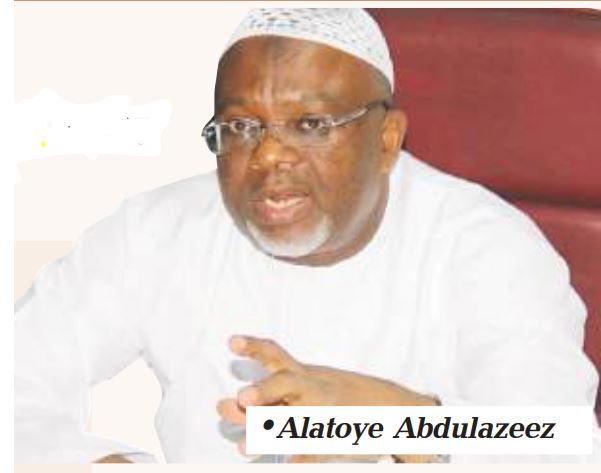
By Olayinka Latona
As Nigeria grapples with insecurity, political fragmentation, and economic uncertainty, the Amir and National Head of the Ahmadiyya Muslim Jama’at of Nigeria, Alatoye Abdulazeez, has called for unity, moral renewal, and purposeful leadership. In this interview, he speaks on religion, terrorism, governance, and why young Nigerians must rise above division ahead of the 2027 elections.
What does the Ahmadiyya Muslim Jama’at of Nigeria and its motto ‘Love for All, Hatred for None’ represent?
The Ahmadiyya Muslim Jama’at worldwide is guided by the motto “Love for All, Hatred for None,” which is deeply rooted in our faith in Almighty Allah. Religion has two broad dimensions. The first is the worship of God. Many people reduce worship to the five daily prayers, but it goes beyond that. Worship means dedicating oneself to the service of God through peaceful coexistence and service to humanity.
The Holy Qur’an teaches that Allah created and owns everything. Therefore, when you provide food, healthcare, promote peace, or assist those in distress, you are serving God. These acts collectively constitute worship, although the remembrance of Allah remains the highest form.
The second dimension is to love your neighbour as yourself. This is why the Ahmadiyya community establishes schools, hospitals, and social services for everyone, regardless of religion. Even within our workforce, you will find Christians and people of other backgrounds.
Conflicts in society, especially religious ones, often stem from ignorance. A Muslim has no reason to hate a Christian, and vice versa. Genuine love for God should translate into love for humanity. The fear of God instils wisdom, and with that wisdom comes the understanding that the world is like a garden entrusted to us. Doing good within it is service to God.
Human beings have the unique ability to choose between good and evil. We are therefore accountable. Serving God rightly means doing good to His creation. Reward and punishment, both in this life and the hereafter, are based on these choices.
Are you saying Islam is a religion of peace?
Yes, Islam is fundamentally a religion of peace. The Ahmadiyya Muslim community emphasises that Islam teaches love, knowledge, and compassion for all of God’s creation. The Holy Prophet Muhammad (SAW) was often misunderstood, but even in the face of persecution, his teachings upheld justice and peace.
Self-defence is recognised in all religions and is part of human rights, but beyond that, Islam promotes harmony. Our motto, “Love for All, Hatred for None,” reflects this core principle. There is no justification for hatred against any human being.
Islam, by definition, means peace—peace with God and peace with humanity. That is the message we continue to promote.
If Islam means peace, why do groups like Boko Haram carry out violence in its name?
Those involved in terrorism do not represent Islam. In fact, they demonstrate a lack of understanding of God and religion. If they truly understood Islam, they would know that taking innocent lives is strictly forbidden.
The Qur’an teaches that killing one person unjustly is like killing all of humanity. It also prohibits the destruction of places of worship. Yet, these groups violate these principles.
The five pillars of Islam—faith, prayer, charity, fasting, and pilgrimage—contain no instruction for violence. Terrorist groups are driven largely by economic motives and manipulation. Many of those involved are misled with promises of reward or financial gain.
There is also a broader global dimension to terrorism, often tied to political and economic interests. However, regardless of the underlying causes, violence against innocent people cannot be justified under Islam.
Our message to those involved is clear: lay down your arms and seek a better path. Lasting peace will remain difficult as long as powerful interests continue to exploit vulnerable individuals for selfish gains.
What is the way forward in addressing insecurity in Nigeria?
The government must prioritise national orientation and proper education. Subjects like history and moral instruction should be reintroduced into school curricula to help young people understand values, identity, and responsibility.
Leadership must also be driven by accountability. Public office is a trust, not an opportunity for personal enrichment. Leaders should focus on improving the lives of citizens.
Religious leaders have a role in guiding their followers away from materialism and towards the fear of God. Without moral grounding, people become driven solely by money, which often leads to corruption and crime.
At the family and community levels, there must be a renewed emphasis on values—discipline, integrity, and responsibility. These are essential for nation-building.
Do youths have a role in solving Nigeria’s challenges?
Absolutely. Young people are central to Nigeria’s future. They must organise themselves, embrace responsibility, and contribute meaningfully to national development.
They should prioritise hard work, reject fraud and violence, and believe in the country’s potential. Beyond criticism, they must actively participate in shaping the nation’s direction.
What is your view on youth activism, such as protests?
While civic engagement is important, young people must go beyond protests and focus on leadership. If they aspire to take over governance, they must identify credible leaders among themselves and support them through the electoral process.
Change will not come from demonstrations alone but from strategic participation in politics.
You mentioned figures like Adewole Adebayo. What role can such individuals play?
Leaders like Adewole Adebayo can serve as rallying points if the youth believe in their vision and capacity. The key issue is unity.
In past elections, younger candidates failed largely because they could not build strong alliances. Meanwhile, older political structures remained dominant due to better organisation.
If young Nigerians can unite across ethnic and religious lines, resist vote-buying, and support credible candidates, they can reshape the political landscape.
What must youths do differently ahead of the 2027 elections?
The youths must reject division—whether ethnic, religious, or regional. Nigeria cannot progress if citizens continue to identify primarily along these lines. Young people should also resist inducement. Vote-buying undermines democracy and perpetuates poor leadership. Integrity must guide their choices.
It is important to build a shared national identity. Nigeria is still evolving through stages of development. At present, the country remains divided along regional lines. To move forward, there must be a transition to a unified national outlook.
Only then can Nigeria reach a stage where it functions effectively as a cohesive and productive nation.
Do you encourage members of your community to participate in politics?
Yes, we do. Participation in politics is essential. Those who choose to stay away cannot expect change without involvement.
However, political engagement must be guided by service, not self-interest. The goal should be to serve God by serving humanity, using public office to improve society rather than to accumulate wealth.
Final thoughts?
Nigeria’s future depends on unity, moral values, and responsible leadership. The youth, in particular, have a critical role to play. If they organise, reject division, and act with integrity, they can redefine the nation’s trajectory. The time to act is now.
Disclaimer
Comments expressed here do not reflect the opinions of Vanguard newspapers or any employee thereof.