By Peter Duru, Makurdi
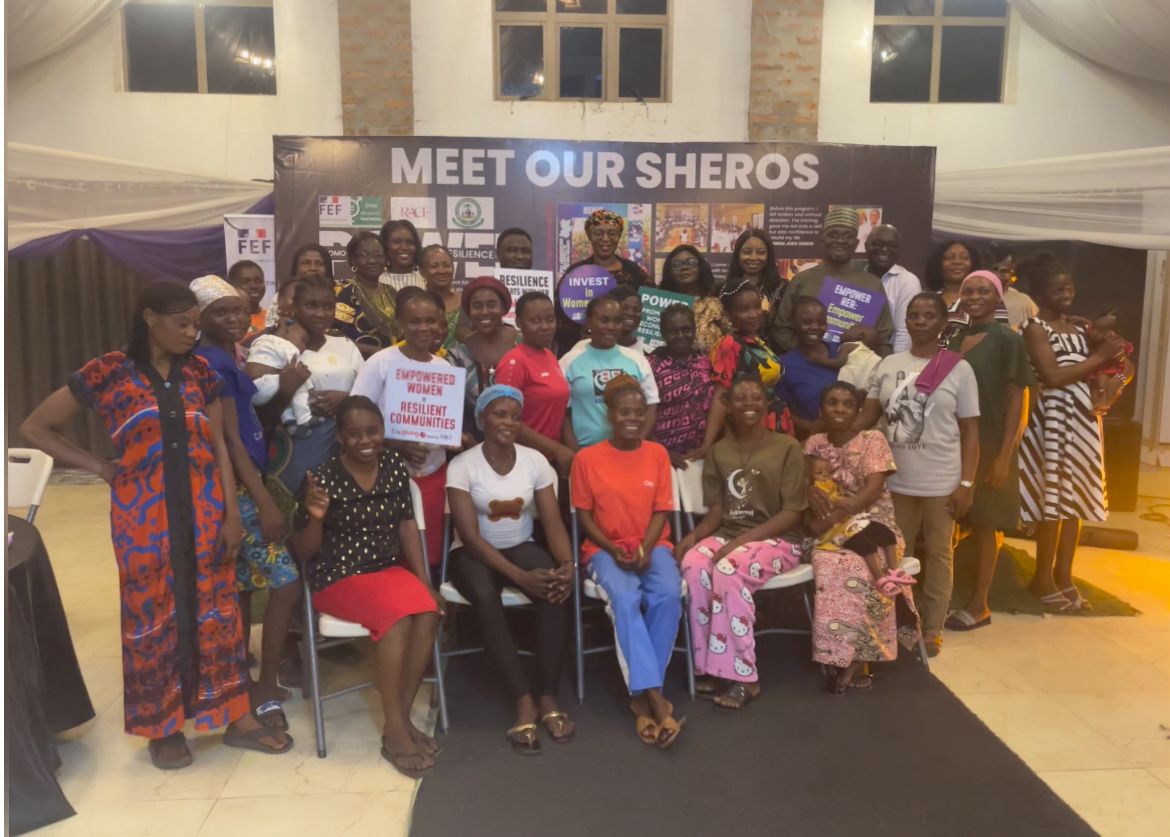
The Centre for Redefining Alternative Civic Engagement for Africa (RACE) has marked a significant milestone in empowering internally displaced women in Benue State, with the launch of sustainable structures under the Promoting Women’s Economic Resilience (POWER) project.
Speaking at a stakeholders’ meeting on the project’s dissemination and sustainability, the Executive Director, Evelyn Ugbe highlighted the achievements of the past 10 months, including equipping 50 women with vocational and business management skills. The initiative has since expanded, benefiting 200 women through the TAHAV Women Cooperative Society, a social enterprise designed to enhance economic opportunities for women and girls in IDP communities.
“Today, we celebrate the establishment of the TAHAV Women Cooperative Society and the TAHAV Women Community Development Initiative, the first community-led organization driven by women IDPs. These structures are critical for ensuring the sustainability of the project and empowering women long-term,” Ugbe said.
She emphasized that the meeting produced concrete commitments from key stakeholders, including the Benue State Government, which agreed to adopt the structures and integrate them into state programmes. The State Cash Transfer Agency also pledged to include cooperative members in its social register, enabling them to access conditional cash transfers and other social protection schemes.
Ugbe added that the Benue State Bureau of Statistics would ensure members are captured in government data systems to facilitate inclusion in development programmes. The Nigerian Export Promotion Council (NEPC) also promised training to help women upgrade their products for export markets.
“Through NEPC, women will receive the support they need to make their products exportable, enhancing livelihoods and business growth,” she said.
The initiative also includes a “Safe Spaces” component, providing psychosocial and legal support to women, particularly survivors of Gender-Based Violence (GBV). Ugbe explained that this component had indirectly benefited over 5,000 women and families, ensuring that economic empowerment is coupled with protection and support services.
She thanked critical partners, including the French Embassy Fund for Civil Society Organizations, the Benue State Bureau for International Cooperation and Development (BICD), and the International Organization for Migration (IOM), for their support in implementing and sustaining the initiative.
Ugbe underscored the importance of replication and scaling, noting that over 8,000 women and girls in IDP camps remain in need of support. “Starting with 50 women and now impacting 200 directly and 1,500 through Safe Spaces, we are only scratching the surface. We need more partners, technical support, and market linkages to scale this project,” she said.
According to her, “we wouldn’t have done this alone without the Gender and Environmental Risk Reduction Initiative, GERI. It is a partnership that has transformed lives. And I must say it is a passionate intervention.”
In support, Dr. Leo-Angelo Viashima, Director General of BICD, commended RACE’s work and assured continued government partnership. Mr. Emmanuel Waghbo, Programme Manager of the State Cash Transfer Unit, confirmed that women beneficiaries would be fully integrated into state programmes.
Ann Adulugba, representing NEPC, praised RACE for aligning its initiative with the council’s non-oil export mandate. “We will support these women to expand their businesses, improve their products, and access international markets,” she said, adding that continued training would ensure sustainable economic growth for the beneficiaries.
Stakeholders at the event collectively pledged to sustain support for RACE’s initiative, describing the TAHAV model as a pioneering approach to empowering women in displacement, with strong potential for replication across Nigeria.
Disclaimer
Comments expressed here do not reflect the opinions of Vanguard newspapers or any employee thereof.