By Ebunoluwa Sessou
Stakeholders from government, civil society, and academia have called for the urgent integration of gender-responsive budgeting into Nigeria’s blue economy framework, stressing that women’s contributions and needs must be fully reflected in public financial planning and policy implementation.
The call was made at a stakeholder dialogue organised by the Center for Gender Economics in Africa in Abeokuta, Ogun State, to commemorate International Women’s Day 2026.
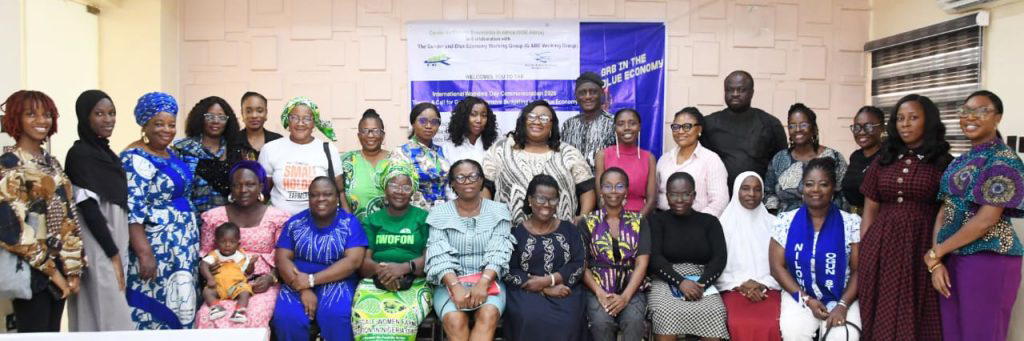
The event, themed “A Call for Gender-Responsive Budgeting in the Blue Economy,” brought together policymakers, researchers, civil society actors, and representatives of women-led organisations.
Discussions at the forum underscored the growing need to align public funding with inclusive development priorities, particularly in sectors such as fisheries, aquaculture, coastal trade, and other water-dependent livelihoods where women play critical, yet often under-recognised, roles.
Delivering opening remarks on behalf of the Ogun State Government, the Permanent Secretary, Ministry of Budget and Planning, Adetona Bayo, described the blue economy as a key driver of sustainable development, job creation, and economic growth. He cautioned, however, that without deliberate policy interventions, women risk being excluded from the sector’s benefits.
“Women are vital contributors to fisheries and coastal economies, yet their roles are often overlooked in planning and resource allocation. Gender-responsive budgeting provides a practical pathway to close this gap and promote inclusive growth,” he said.
In her remarks, the Executive Director of CGE Africa, Uchenna Idoko, emphasised the need to embed gender considerations across planning, budgeting, and monitoring processes within the blue economy.
She noted that inclusive budgeting is not only a matter of equity but also a strategic tool for improving sector performance and resilience.
A major highlight of the event was the launch of an advocacy brief titled “Financing the Future: Why Gender-Responsive Budgeting Is Critical to Africa’s Blue Economy.” The publication outlines actionable recommendations for policymakers on integrating gender perspectives into financial decision-making across the sector.
Participants also examined the role of civil society organisations in advancing gender inclusion in budgeting processes. Strategies identified included conducting gender-sensitive needs assessments, strengthening participation in budget consultations, and enhancing engagement with policymakers to promote transparency and accountability.
The dialogue concluded with a strong call for sustained collaboration among government institutions, civil society, and private sector stakeholders. Participants agreed that gender-responsive budgeting is essential to building a more inclusive, equitable, and resilient blue economy in Nigeria.
As the country continues to harness the vast potential of its blue economy, stakeholders stressed that inclusive financing will be critical not only for economic growth but also to ensure that no group, particularly women is left behind.
Disclaimer
Comments expressed here do not reflect the opinions of Vanguard newspapers or any employee thereof.