By Juliet Umeh
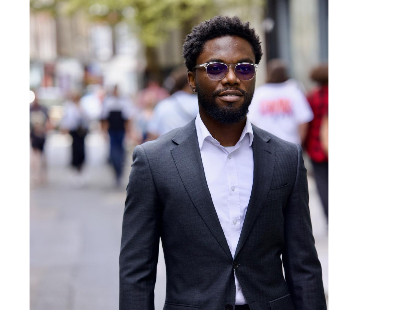
Business strategist, consultant and innovative thought leader, Damilare Davola has never been one to romanticise disruption. To Davola, artificial intelligence is not a thick shadow looming over Nigerian banks, it is both a gauntlet ahead but also light on the next evolution of banking.
“AI won’t replace bankers,” he says, “but bankers who don’t embrace AI, will be replaced.” It is an unequivocal statement that places him squarely in the eye of one of the fiercest debates raging in global finance. Is AI a threat to human work, or the most potent tool we have to improve it?
To get to Davola’s worldview, you must also appreciate the anxiety that is prevailing around Nigerian banks today. Automation has already curtailed traditional roles—tellers gone in apps, paperwork and logging gone in dashboards, and physical branches gone as customers leave banks to exist online. These shifts amplify customer anxieties among bank staff; many banking employees now wonder if they will even have a career in a decade.
However, Davola pushes back against a fatalism that takes it for granted that technology is somehow going to replace bankers. He identifies AI as a partner. “Banking is not just about transactions,” he insists, “banking is about trust, empathy, and judgement—no algorithm will find that.”
This conviction sooner or later set a glass wall between him and some of the loudest voices on technocratic echoes of the world. Elon Musk has been a long alarmist about AI, warning that it was worthy to transmute itself into human intelligence capable of destabilizing industries. Musk, as many will attest, returns his warnings with apocalyptic forecasts: jobs disappearing overnight; humankind worsening to obsolescence, with society still grappling in adapting to the new realities. Such rhetoric only feeds the banker fear that AI is not that assistant but looming competitor.
On the contrary is the case of Satya Nadella of Microsoft, who is on record calling copilot AI a force that does not replace human capability but rather enhances it. Nadella posited that the most powerful application of AI lies in embedding it into workflows that help enhance human productivity while still leaving decision-making to humans. The partnership that Nadella describes somewhat corresponds to the perspective of Davola, although whereas Nadella’s view is grounded in the perspective of a global technology player, Davola’s proposition roots itself in the realities of Nigerian banking.
In between these poles is the view of Jim Ovia-the founder of Zenith Bank and one of Nigeria’s most influential financial players. Ovia has always held that technology is not an impediment to banking but rather the force that will ensure its future. He points to Nigeria’s leap forward-from manual ledgers to electronic banking, from long branch queues to ATMs, and finally, from a cash-dominated culture to mobile transfers-as an assurance that disruption is not an entirely new thing. Each innovation wave, he reminds audiences, sent panic waves across the sector yet strengthened it in the end. An extended history lesson is important for Davola: If the Nigerian banker survived the ATM era and the mobile money revolution, these bankers should be able to bend with AI-providing they do not resist it.
Davola acknowledges the opposite voices but refuses to be paralyzed by them. He does agree with Musk on AI’s disruptive potential but calls it unfair for the Nigerian banking sector to regard it in fear. He appreciates Nadella’s optimism but warns against thinking Nigerian institutions can just take models of acceptance from the West. And he very much agrees with Ovia’s pragmatic view: technology does not eliminate bankers, it changes their relevance. “Bankers that hang to the past,” maintains Davola, “those that adapt faster will leave them behind.”
This insistence is not mere rhetoric-it is based upon lived realities across the sector. With banks in Nigeria already battling low margins, pressures from regulations, and changing customer expectations, being lax is not an option. Digital-native fintechs such as Flutterwave, Paystack, and Kuda have demonstrated how soon customers switch loyalty when impetus for innovation ceases. For Davola, it is blunt: Not AI, but rather the institutions that fail to adopt it.
He illustrates this with customer service. AI-powered chatbots can quickly handle common questions, but complex negotiations, empathetic dispute resolution, and building strong customer relationships require human bankers. Davola believes that the future bank is defined by the combination of efficient technology and human insight.
However, there are two main dangers. One is that Nigerian banks might only implement AI superficially, adding tools without fundamentally changing how things are done. The other is that bankers may resist learning new skills, assuming their existing experience is enough. To avoid these problems, Davola suggests a two-pronged approach: transforming the organization and reinventing oneself. Banks need to build systems that allow AI to handle large volumes of work, while bankers should become strategists, analysts, and relationship managers instead of just processing transactions.
We’re already seeing signs of this change. Access Bank has tested AI for engaging with customers, and Zenith is constantly expanding its online banking options. Davola points out that these aren’t just ideas for the future, they’re happening now. The key will be how quickly employees can shift from following procedures to solving problems, and from simply holding information to understanding its meaning.
His argument ultimately boils down to this: AI is not a predetermined outcome, but a path we’re choosing. Countries that use it wisely will strengthen their financial industries, while those that hesitate will be overtaken by faster competitors. For Nigeria, with its large young population and growing digital lifestyle, adopting AI is not a choice – it’s essential for staying competitive.
Davola highlights that adaptability is the new literacy, quoting futurist Alvin Toffler. “Whether machines can think is not the question,” he asserts. “It’s if we’re willing to think differently with them.” He makes it clear that those who can succeed at the nexus of AI and banking will have the future of Nigerian banking, not just bankers or AI alone.
Disclaimer
Comments expressed here do not reflect the opinions of Vanguard newspapers or any employee thereof.