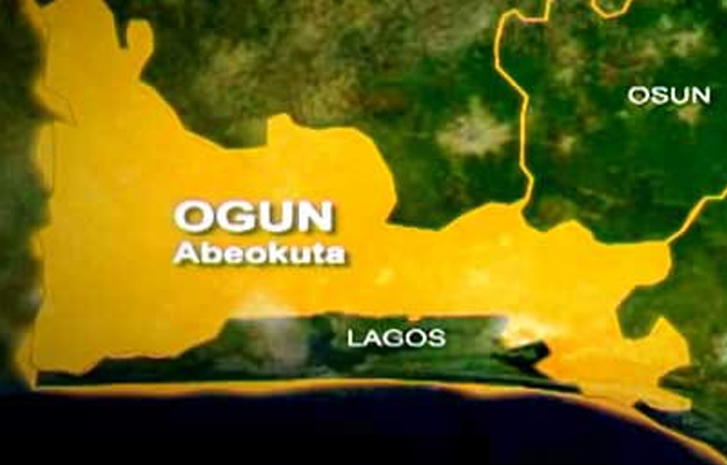
The call for greater female representation in Nigeria’s politics gained fresh urgency on Friday as Ogun State’s Deputy Governor, Noimot Salako‑Oyedele, joined other female deputy governors of the All Progressives Congress (APC) to demand deliberate steps toward the emergence of women governors ahead of the 2027 general elections.
Speaking under the banner of the Female Deputy Governors Forum, the leaders urged the APC to ensure that at least one female governor emerges in each geopolitical zone. They pressed for a structured framework guaranteeing 35 percent representation for women in elective and appointive offices, alongside measures to return first‑term female deputy governors, expand appointments for women, and prioritize female candidates during primaries.
The delegation, led by Salako‑Oyedele, met with APC National Chairman Prof. Nentawe Yilwatda in Abuja. Among those present were Senator Akon Eyakenyi of Akwa Ibom, Lady Chinyere Ekomaru of Imo, Josephine Piyo of Plateau, and Professor Ngozi Odu of Rivers.
Salako‑Oyedele praised Yilwatda’s leadership, describing him as a unifier and stabilising force at a time when political parties across the country are grappling with internal divisions. She stressed that as the APC prepares for 2027, the party must strengthen itself not only electorally but structurally and strategically.
Her remarks highlighted sobering statistics. Nigeria currently has only nine female deputy governors, four female senators, seventeen members of the House of Representatives, and forty‑eight women across State Houses of Assembly. Thirteen states have no female legislator at all, leaving overall representation at just 4–5 percent — among the lowest globally.
She drew comparisons with Rwanda, where women hold more than 60 percent of parliamentary seats, and with South Africa and Senegal, both above 40 percent. “This does not reflect a lack of capacity among Nigerian women,” she said, adding that the country is blessed with competent leaders across sectors.
Salako‑Oyedele recalled President Bola Tinubu’s candid observation at a National Executive Committee meeting that “too few women” were in attendance, describing the remark as instructive. With 32 governors in its fold, she argued, the APC is uniquely positioned to lead the push for gender equity and shape the future of Nigeria’s democracy.
The forum’s proposals include a minimum of 35 percent representation for women in State Houses of Assembly, at least one female House of Representatives member per senatorial district, and one female senator per state. They also called for a minimum of 18 female deputy governors and deliberate steps to support the emergence of female governors in each geopolitical zone.
The deputy governors insisted the proposals were not only about fairness but also strategic. Expanding women’s participation, they argued, would strengthen the party’s voter base, particularly among women and young people, while enriching governance through diverse perspectives.
Responding, Yilwatda acknowledged the imbalance, noting that women constitute about half of the party’s population yet hold less than five percent of seats in the National Assembly. He described the figures as unacceptable and pledged that the National Working Committee would take steps to improve representation. He added that federal character must go beyond geography to include gender balance, and urged the forum to submit its proposals formally for consideration in the party’s constitution amendment process.
If the emerging permutation becomes reality, Ogun and the APC may well set the pace for Nigeria’s wider democratic renewal — a shift that resonates not only within the country but with international yearnings for leadership defined by competence, inclusivity, and the courage to break old patterns.
Disclaimer
Comments expressed here do not reflect the opinions of Vanguard newspapers or any employee thereof.