By Gabriel Ewepu
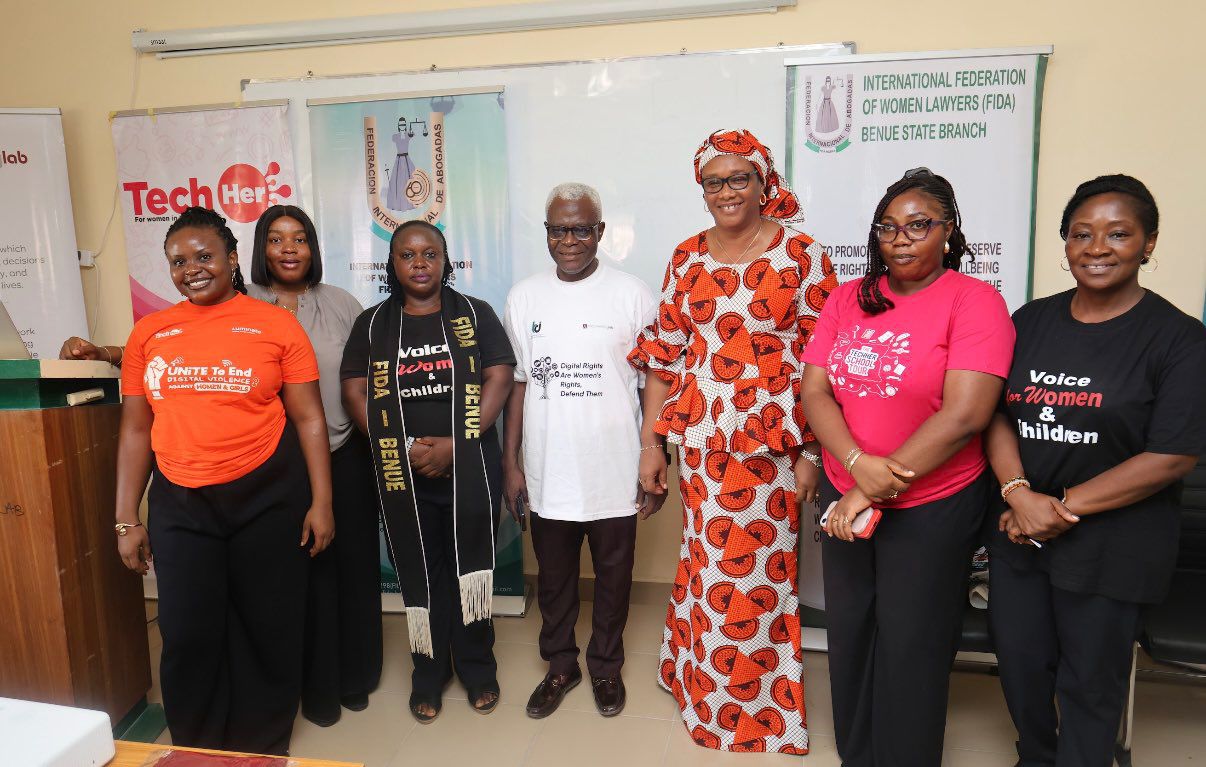
As part of ongoing efforts to strengthen digital literacy among young women, TechHer, in collaboration with Accountability Lab Nigeria and the International Federation of Women Lawyers (FIDA), Benue State Branch, successfully concluded a Campus Sensitisation and Awareness Programme on Cyber Laws and Digital Safety for 300 female tertiary students in Benue State.
The initiative reached 300 female students across two tertiary institutions in Benue State: Rev. Fr. Moses Orshio Adasu University, Makurdi (MOAUM), and Joseph Sarwuan Tarka University, Makurdi (JOSTUM).
The programme provided targeted training on online safety, cybercrime prevention, and practical legal knowledge tailored for young women.
This initiative is part of broader efforts to strengthen accountability in digital spaces, equipping citizens with the tools to recognise violations of their rights, seek redress, and effectively engage legal and reporting systems. As digital participation continues to grow in Nigeria, awareness gaps still limit both enforcement and citizen action.
Over two days, participants participated in interactive workshops, legal literacy sessions, panel discussions, and advisory clinics. Topics covered included Nigeria’s cyber laws, digital footprints, ethical online conduct, and mechanisms for reporting online threats.
In her opening remarks, Chairperson of FIDA Benue State, Blessing Ityohuun, Esq., highlighted the increasing overlap between digital spaces and human rights: “The digital space is now an extension of society. Protecting digital rights is inseparable from safeguarding human rights. Equally, responsible digital conduct is essential for social order, justice, and peaceful coexistence.”
Ityohuun commended TechHer and Accountability Lab Nigeria for fostering a digital environment centred on empowerment rather than oppression.
During the session on Cybercrime Laws and the Protection of Digital Rights, the Public Relations Officer of FIDA Benue State Ihechi Olanrewaju, Esq., explained that digital rights extend constitutionally guaranteed freedoms into cyberspace, grounded in the 1999 Constitution of the Federal Republic of Nigeria (as amended) and reinforced by frameworks such as the Cybercrimes (Prohibition, Prevention, etc.) Act.
She noted, “While cybercrime is a growing global threat requiring strong legal safeguards, enforcement must always respect fundamental rights. Everyone has a role in creating safe digital spaces.”
A highlight of the programme was the session on Technology-Facilitated Gender-Based Violence (TFGBV). Gladys Omenefu, Project Officer at TechHer, discussed how online harassment, cyberstalking, non-consensual sharing of intimate images, impersonation, blackmail, and coordinated online shaming disproportionately affect women and girls.
She emphasised that awareness and early intervention are crucial for prevention. Participants also received practical guidance on reporting digital abuse.
Esther Etokudo, Risk and Compliance Officer at TechHer, introduced Kuram, TechHer’s online reporting platform, alongside the organisation’s Volunteer Lawyer Network.
Etokudo walked students through documenting incidents and accessing legal and psychosocial support safely, stressing, “Reporting bridges the gap between being a target and becoming a survivor with an advocate. Documenting abuse and seeking support helps build the evidence needed for action and accountability.”
Alfred Ijeloesa Agu, Monitoring, Evaluation, and Learning (MEL) Officer at Accountability Lab Nigeria, reflected on the programme’s outcomes.
“We observed not just heightened awareness but a shift toward agency. When young women understand how digital harms connect to legal protections and reporting systems, they are more empowered to act. This is crucial for strengthening accountability and building evidence to inform policy and enforcement improvements”, Agu said.
Meanwhile, students shared the impact of the sessions on their understanding of digital rights and online safety.
Speaking on the impact she received, Miss Deborah, a 300-level Mass Communication student at MOAUM, remarked, “Before this programme, I didn’t realise that many behaviours we normalise online are violations of our rights. I now understand digital rights and know how to report abuse instead of staying silent.”
Miss Terver, a 200-level Computer Science student at JOSTUM, highlighted the value of learning practical reporting steps: “What stood out was learning that reporting is power. Knowing the steps to document evidence and seek support has given me confidence to protect myself and guide my friends.”
In her closing remarks, Ityohuun thanked the host institutions and emphasised the programme’s lasting impact: “By equipping young women with knowledge, confidence, and access to support systems, we are building a generation ready to demand safer and more inclusive digital spaces.”
Meanwhile, partners indicated that insights from the programme, including common reporting gaps and patterns of digital abuse, will inform ongoing advocacy, policy engagement, and the development of public-interest accountability tools.
The programme underscores the power of collaboration in advancing digital safety and legal awareness among young women.
By empowering 300 students with the knowledge and tools to navigate digital spaces responsibly, TechHer, FIDA Benue, and Accountability Lab Nigeria are nurturing a generation of informed and confident advocates for safer online communities.
Disclaimer
Comments expressed here do not reflect the opinions of Vanguard newspapers or any employee thereof.