By Henry Obetta
United Nations Children’s Fund, UNICEF, has lamented that girls living with disabilities face unique barriers, particularly when visual impairment is compounded by low levels of literacy and numeracy.
UNICEF, however, expressed hope that the ongoing implementation of the Girls Education Skills Partnership, GESP, by non-governmental organisation, NGO, Sightsavers, will serve as a practical and impactful intervention aimed at equipping girls and young women with disabilities with the skills needed to transition into sustainable livelihoods.
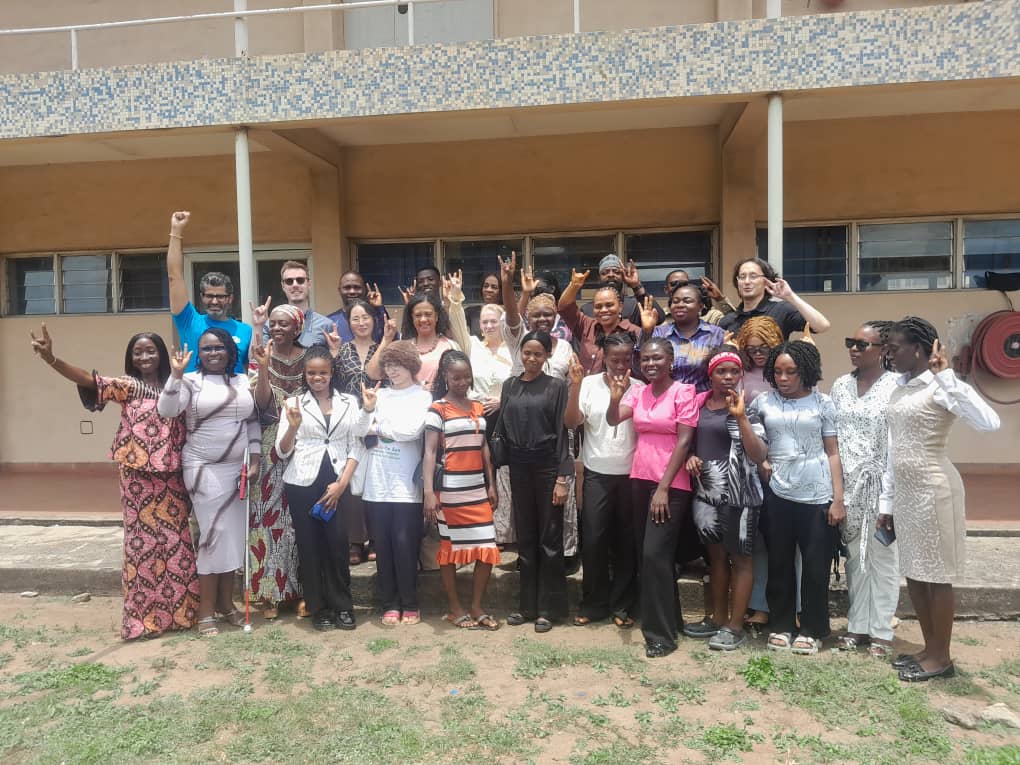
The programme, funded by the Foreign, Commonwealth and Development Office, FCDO, and implemented by Sightsavers alongside other partners under the supervision and coordination of UNICEF, targets adolescent girls and young women with disabilities through mentoring, coaching, entrepreneurship training, digital literacy, and employability support.
Speaking during a visit in Lagos, Chief of UNICEF’s Lagos Office, covering South-West Nigeria, and Lead of the Private Sector Partnerships Unit for Nigeria and Generation Unlimited Nigeria, Céline Lafourrière, said leaving no one behind remains a key priority for UNICEF.
She said: “Girls living with disabilities are particularly vulnerable. When people are living with sight impairment, it becomes extremely difficult to reach them, especially when they have low levels of literacy and numeracy.
“This programme has shown that it can be very practical and focused on real-life applications, whether it is supporting women who want to become market traders or helping young women transition into the private sector.”
Lafourrière also lauded Sightsavers for its sustained intervention and commitment to improving the lives of persons with visual impairment, particularly young women.
She said: “Sightsavers has been very effective. They have the expertise to teach young women living with sight impairment and to build strong partnerships. It is an important collaboration because it brings together different stakeholders, including the government, to ensure that girls are equipped with the skills needed to transition into dignified livelihoods.”
Also speaking, Country Director of Sightsavers Nigeria, Professor Joy Shu’aibu, described the GESP as a targeted intervention focused on adolescent girls and young women with disabilities, noting that the programme is designed to boost their confidence, expand their opportunities, and equip them for independent living.
Shu’aibu said: “There are three key objectives of this programme. First, we provide mentoring and coaching for adolescent girls with disabilities so they can become whatever they aspire to be. We aim to encourage them, boost their self-esteem, and expose them to opportunities available as they grow.
“We are also supporting young women with entrepreneurship skills. We are working with the Industrial Training Fund, ITF, to provide training on business management, bookkeeping, profitability, and a general understanding of the business environment. Our goal is to enable them to support themselves and their families.”*
Shu’aibu added that participants are also exposed to digital and employability skills through a computer-based learning platform known as Accenture, which helps them develop workplace readiness skills such as CV writing, interview preparation, and job-seeking competencies.
According to her, the organisation is also working with Organisations of Persons with Disabilities, OPDs, to ensure fair and transparent beneficiary selection.
Some beneficiaries who spoke at the event expressed appreciation for the intervention, saying the programme had equipped them with practical skills and broadened their livelihood opportunities.
Disclaimer
Comments expressed here do not reflect the opinions of Vanguard newspapers or any employee thereof.