…Call for Urgent Action
By Adeola Badru
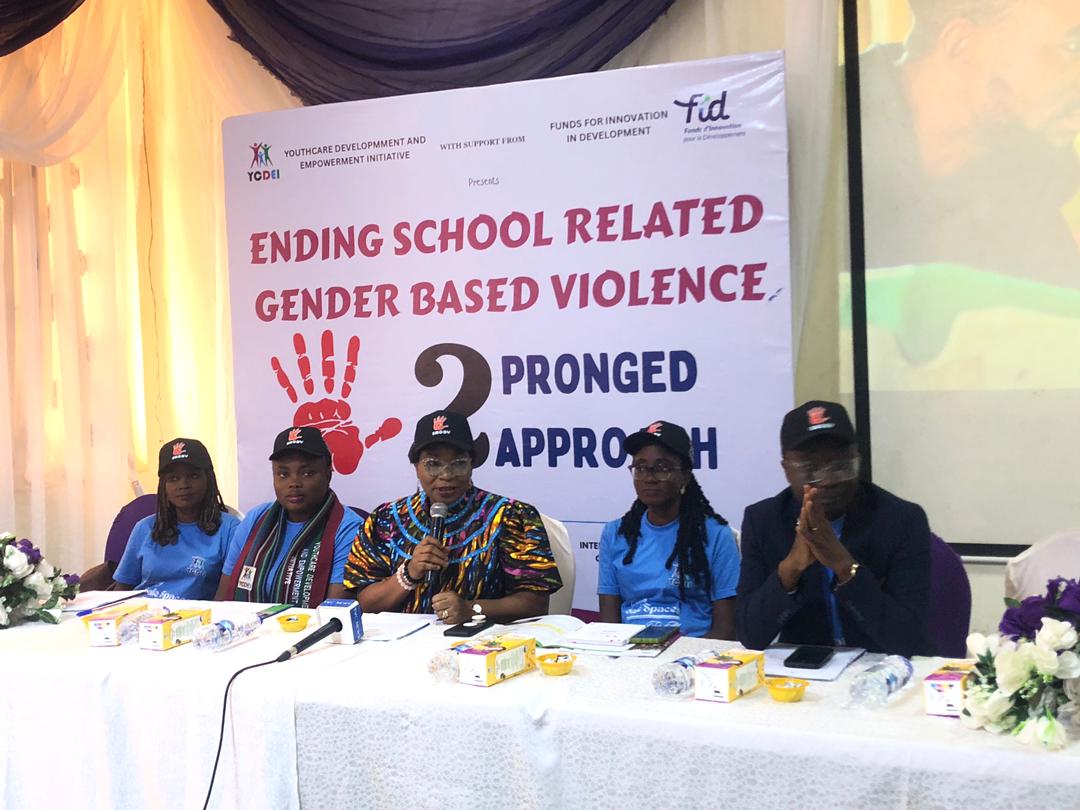
Education and child-rights advocates have urged Southwest states to take immediate and coordinated measures to tackle school-related gender-based violence (SRGBV), following a pilot study in Oyo State that revealed nearly 47 percent of pupils have experienced or been exposed to such violence.
The findings, presented at a press conference yesterday at the International Conference Centre, University of Ibadan, highlighted ongoing safety challenges in classrooms and raised concerns about the protection and wellbeing of schoolchildren.
Prof. Adefunke Ekine, Principal Investigator of the project and Executive Director of the Youth Care Development and Empowerment Initiative (YcDEI), said the initiative, titled “Ending School-Related Gender-Based Violence,” uncovered widespread bullying, harassment, and other forms of abuse in public primary schools.
“School‑Related Gender‑Based Violence is not an abstract concept. It is the daily reality of many children,” she said, explaining that SRGBV includes both physical and psychological abuse occurring in, around, or through schools, affecting both girls and boys.
Prof. Ekine noted that girls are particularly vulnerable to emotional, physical, and sexual abuse in educational settings, which can lead to absenteeism, class repetition, and school dropout.
The pilot, conducted across 45 public primary schools, involved training teachers on child protection and positive discipline, while empowering pupils to recognize unsafe behaviors and use secure reporting channels. Despite these efforts, entrenched norms such as acceptance of violent discipline, weak reporting systems, and low awareness continue to undermine school safety.
She highlighted that, at the national level, the Federal Government has demonstrated commitment to protecting children, launching Standard Operating Procedures in 2024 for prosecuting SRGBV perpetrators, ensuring every pupil can learn free from fear, intimidation, and violence.
“However, implementation across the Southwest remains uneven, particularly in resource-constrained rural and semi-urban schools,” Prof. Ekine said.
She called on state education authorities to institutionalize SRGBV training in school curricula, establish structured reporting channels, and actively engage parents and communities in prevention efforts.
“When teachers are equipped, pupils are empowered, and systems are structured, schools become safer, more accountable, and more supportive for every child,” she emphasized, urging that evidence-based interventions be scaled beyond Oyo State.
Disclaimer
Comments expressed here do not reflect the opinions of Vanguard newspapers or any employee thereof.