By Joseph Erunke, Abuja
The National Institute for Cancer Research and Treatment ,NICRAT, has taken a bold step toward strengthening cancer research in Nigeria with the inauguration of its maiden Grant Proposal Defence session and plans to establish a Grant Management Office to attract local and international funding.
The landmark event, held in Abuja on Wednesday, marked a defining moment for the institute as no fewer than 16 in-house researchers presented grant-ready proposals months ahead of schedule, signaling what stakeholders described as the birth of a stronger research culture within the young institution.
The Director-General of NICRAT, Prof. Usman Malami Aliyu, represented by the Consultant in the Department of Cancer Prevention and Control, Dr. Nandi Ishaya Tokkit, described research as the foundation of innovation, policy development, and sustainable healthcare progress.
She commended participants for their commitment to generating evidence capable of addressing real-world challenges in cancer prevention, diagnosis, and treatment.
“This forum is not just about presenting findings. It is about strengthening evidence, shaping policy, and translating research into measurable impact,” she said, urging presenters to defend their proposals with clarity and confidence while encouraging panelists to offer constructive critiques.
In her welcome address, the Head of Research and Innovation, Dr. Chinyere Okafor, declared that the session signaled more than an academic exercise
According to her, it represented the institutionalization of grant governance and accountability at NICRAT.
“Cancer remains a leading cause of morbidity and mortality. Its designation as a notifiable disease underscores the urgency of our mandate,” she said.
She noted that, “What we are witnessing today is the formal inauguration of a stronger research culture and the foundation of a robust Grant Management Office.”
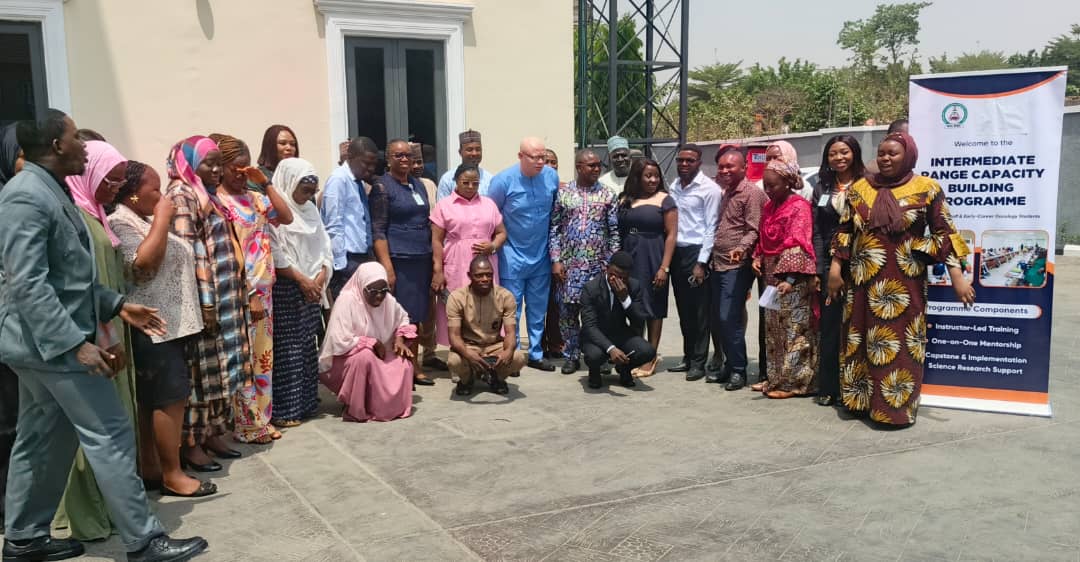
According to her, the proposals presented were products of an intermediate capacity-building programme initiated last year to equip early-career researchers across departments with essential skills in study design, oncology research, and grant writing.
In January, participants underwent intensive grant-writing training with a target to produce fundable proposals by April 2026. By early March, 16 researchers had already completed draft proposals ready for review and submission.
Dr. Okafor emphasized that the new Grant Management Office would provide structure, compliance support, and post-award stewardship to ensure promising ideas do not fail due to administrative bottlenecks.
“We cannot depend solely on federal funding. Research funding is capital-intensive. Some grants range from $50,000 to $100,000 or more. If we are intentional, we can attract collaborations with foreign agencies and expand Nigeria’s footprint in global oncology research, “she noted.
She stressed the need for translational research-projects that bridge the gap between laboratory discoveries and patient care,particularly in areas such as early detection, precision oncology, AI-enabled care pathways, clinical trials, and context-driven cancer interventions.
“Research is not confined to laboratories. It is our institutional identity. If we refine these proposals intentionally, the outcomes will extend beyond this room,into clinics, communities, and improved survival rates, “she declared.
One of the trainees, Dr. Ismail Olalere Mariam, said the initiative had been “eye-opening” for early-career oncology researchers.
“It exposed us to different types of studies and deepened our understanding of oncology care, including staging and patient assessment,” she said.
She added: “Beyond theory, we were able to practicalize our learning through proposal writing and defence. I can now confidently draft a meaningful grant proposal capable of impacting Nigeria’s scientific community.”
Recall that NICRAT, established barely three years ago, was conceived as a research-driven institution focused on advancing cancer control in Nigeria. While the institute has collaborated with external partners in the past, the new initiative aims to build strong in-house capacity and cultivate a self-sustaining research ecosystem.
Stakeholders say the move could significantly enhance Nigeria’s ability to compete for international research grants and develop homegrown solutions to the country’s growing cancer burden.
Disclaimer
Comments expressed here do not reflect the opinions of Vanguard newspapers or any employee thereof.