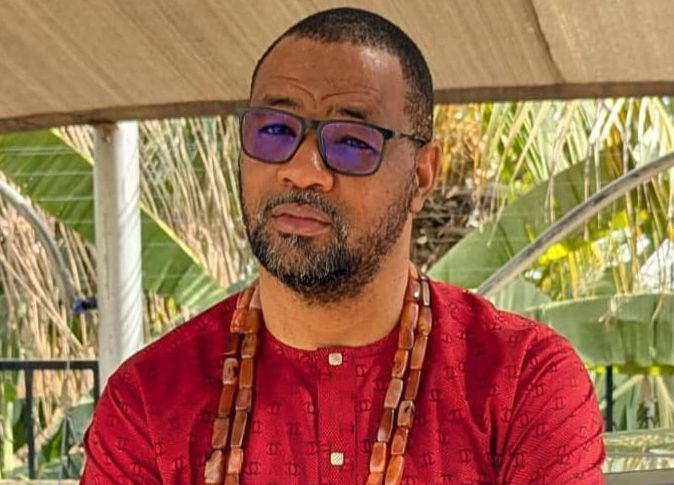
By Oboh S. Jerry
In the 21st century, security should mean stability, cooperation, and shared prosperity. Yet across continents, the language of deterrence is once again overshadowing the language of diplomacy. In an era defined by artificial intelligence, advanced medicine, and instant global communication, nations still default to military escalation as a primary instrument of policy. This contradiction lies at the heart of today’s global insecurity.
From the prolonged escalations between Ukraine and Russia, to tensions involving Iran, the United States and Israel, instability in parts of the Middle East and Africa, strategic competition in East Asia, and emerging rivalries in the Arctic, the signs are unmistakable: war is no longer viewed as an absolute last resort. Defence budgets are expanding. Military recruitment is intensifying. Strategic alliances are hardening. The global security architecture appears reactive rather than preventive.
War is a Civilisational Regression. Civilisation should not be measured by the sophistication of its missiles but by the maturity of its diplomacy. At a time when humanity has the technological capacity to eradicate extreme poverty, cure diseases, and expand educational access globally, we remain entangled in cycles of retaliation. Military budgets expand while humanitarian appeals remain underfunded. Strategic alliances deepen while trust between nations erodes.War today is not strength; it is regression. It signals the failure of preventive diplomacy, reflects the erosion of international norms and exposes the fragility of collective security.
It disrupts global food chains, destabilises energy markets, fuels forced migration, deepens poverty, and weakens already fragile economies. Civilians,including children, women, and the elderly, bear the brunt. What was once described as “collateral damage” has become a predictable outcome.But beyond the tragedy of battlefield destruction lies something deeper and more troubling; these recurring conflicts expose a fundamental lacuna within the global governance architecture.
A Crisis of Multilateralism Courage. Institutions established after the devastations of the Second World War were designed to prevent exactly this kind of instability. Yet today, their structural limitations are glaring.
The United Nations remains constrained by veto politics, selective enforcement, and Security Council paralysis. A peace institution that can be immobilised by the strategic interests of a few cannot convincingly claim neutrality. Financial dependence on powerful member states further complicates its independence. If the UN cannot act decisively during humanitarian emergencies because of geopolitical calculations, then reform is no longer optional; it is existential.
The European Union, though economically formidable, struggles to project unified strategic authority in matters of defence and hard security.The African Union continues to confront resource dependency and enforcement limitations in conflict mediation, and lacks true independece form external pressures.The Association of Southeast Asian Nations operates under consensus, a principle that, while diplomatic, can dilute urgent intervention during crises.These regional and global amalgamations were founded on noble ideals. Yet today there is a widening gap between mandate and capacity, between moral authority and political will. The world is not only witnessing wars of territory and influence; it is witnessing a crisis of multilateral credibility.
If the 21st century is to avoid becoming a theatre of perpetual conflict and global institutions are to remain relevant, then reform must move beyond rhetoric.
First, the United Nations must become genuinely independent operationally and financially. Security Council reform must reflect contemporary geopolitical realities, not the power arrangements of 1945. Funding structures should reduce disproportionate influence and guarantee neutrality. A peace body constrained by political veto cannot credibly function as a guardian of global stability.
Second, countries must begin a deliberate and phased reduction of excessive military manpower. The assumption that security lies in numerical expansion is increasingly outdated. In an interconnected world, insecurity often arises from inequality, climate stress, food shortages, and economic exclusion, not merely from insufficient troop numbers.
Redirecting even a fraction of global military expenditure toward education, public health, digital infrastructure, renewable energy, and conflict prevention would generate far greater long-term security dividends than another battalion ever could.
The alternative is clear: a world increasingly governed by unilateralism, militarisation, and transactional alliances.
Civilisation should not be measured by the sophistication of its missiles but by the maturity of its diplomacy.Humanity now possesses the technological capacity to eradicate extreme poverty, manage pandemics, and address climate change. Yet we appear more willing to fund confrontation than cooperation. Military alliances deepen while trust erodes. Weapons stockpiles expand while humanitarian appeals struggle for funding.
War today is not evidence of power. It is evidence of institutional hesitation and moral fatigue.The world stands at a decisive moment. Either we strengthen the architecture of peace with independent institutions, reduced militarisation, and principled diplomacy, or we quietly accept that the global order is drifting toward managed instability.
History will not judge this generation by its technological brilliance. It will judge whether, at a time of unprecedented capacity, we chose dialogue over destruction.
Reform is not radical. Inaction is.
Oboh S. Jerry (PhD), is an Economist and Public Affairs Analyst
Disclaimer
Comments expressed here do not reflect the opinions of Vanguard newspapers or any employee thereof.