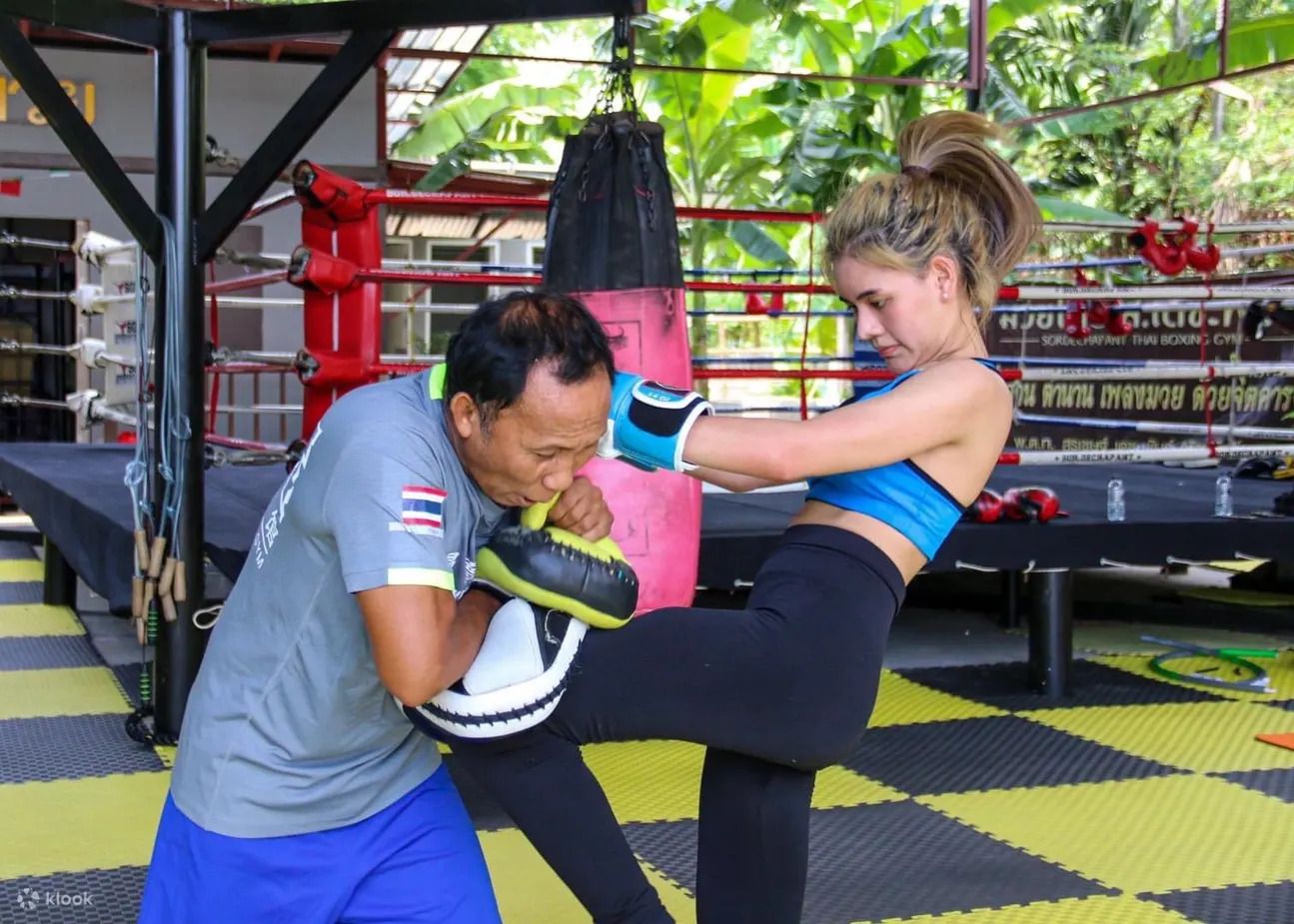
By Kru Chart
I’ve been teaching Muay Thai for over twenty years at a professional fight camp in Bangkok’s Chatuchak district at Sor.Dechapant MuayThai School. We handle visa documentation for international students through our service, Muay Thai Visa Thailand (MTVT). The camp holds a five-star professional certification from the Office of Boxing Sport Board under the Sports Authority of Thailand and the Ministry of Tourism and Sports, assessed against the Professional Muaythai Camp Standard Criteria. Our fighters have competed at Lumpinee Stadium and ONE Championship events. I say all this upfront because what I’m about to write comes from inside a gym, not from behind a laptop.
Over the past couple of years, something has shifted. More of the students walking through my door are Nigerian.
Not tourists. Not people doing a two-week holiday and fitting in some pad work between temples. These are people who’ve done the math, looked at their options, and made a decision. Thailand. Long-term. For real.
And honestly, I get it. Western visa pathways keep getting tighter. If you’re ambitious and you’re from a country where those doors are closing, at some point you stop knocking and start looking for a different door entirely. That’s what I’m seeing. Nigerians who’ve stopped asking “where can I visit?” and started asking “where can I actually build something?”
Thailand is one of the better answers to that question. And the pathway in is more structured than most people think.
What Makes Thailand Different From Other Options
Students ask me this all the time. “Kru Chart, why here? Why not Dubai, Portugal, or Malaysia?”
The short answer is your money goes further, and the infrastructure actually works. Thailand consistently ranks in the top ten globally for expat satisfaction according to the InterNations Expat Insider survey. That’s not just about cheap street food – it’s healthcare, internet, transport, the whole picture. Crowdsourced cost-of-living platforms like Numbeo back it up with real numbers, too.
On the internet specifically, Thailand ranks 13th globally for fixed broadband speed according to the Ookla Speedtest Global Index. Coworking spaces are everywhere in Bangkok and Chiang Mai. If you work remotely, you won’t be fighting dropped connections.
Healthcare is solid. Expats rate it very highly in international surveys, and the country has hospitals accredited by the Joint Commission International – places like Bumrungrad that serve medical tourists from around the world.
Geography helps too. Bangkok is in the middle of Southeast Asia. Singapore, Bali, Vietnam, Japan – all under five hours. If you’re building something across the region, you’re already positioned.
I won’t pretend everything is smooth. Setting up a Thai bank account involves real bureaucracy, especially if you’re new. But with the right documents and some patience, it’s doable. I’ve watched dozens of students get through it. Thai culture rewards effort and politeness. I’ve seen students who struggled with Western systems settle in here within months.
Two Visa Pathways That Actually Work for Long-Term Stay
Thailand has a bunch of visa categories. But if you’re not retired, not married to a Thai citizen, and not being transferred by a multinational, two pathways are the ones that matter. I see both work at my gym every week. I also see both fail when people pick the wrong one.
The Education Visa
You enroll in a certified training program – Muay Thai at a Ministry of Education-licensed school, which qualifies, and the school provides the enrollment documentation the Royal Thai Embassy needs to grant your visa. You get an initial entry of up to 90 days, then you can extend your stay through immigration inside Thailand, up to one year total. That extension depends on continued enrollment and immigration approval.
One thing to understand: immigration scrutiny on Education Visas has gone up. A lot. Thai authorities cracked down hard after years of these visas being used as cheap long-stay workarounds with no real study happening. The Bangkok Post and other Thai media have covered this extensively. So you need to actually train. Show up. Progress. That’s non-negotiable now.
The schools that work properly are registered on Thailand’s OPEC directory – that’s the Office of the Private Education Commission. These schools provide enrollment documents directly under their own Ministry of Education license. Schools offering structured Muay Thai Education Visa programs handle the admission letters in-house. No agents in the middle. That’s what immigration officials expect to see.
The Destination Thailand Visa
This one is newer, and it’s changed the game for a lot of people. Five-year validity. Multiple entries. 180 days per entry, extendable inside Thailand.
It covers two official tracks. The first is Workcation – for people working remotely for foreign employers. The second is Thai Soft Power and cultural activities, which explicitly includes Muay Thai training. Thai cooking, traditional massage, and festival participation – all qualify too. This comes from guidance by the Thai Ministry of Foreign Affairs, confirmed through a Thailand Government Public Relations Department cabinet briefing.
You need proof of around 500,000 THB in liquid funds, shown in bank statements over recent months. And I mean recent months – not a lump sum that appeared last Tuesday. Embassies can tell the difference. You also have to apply from outside Thailand, either through the Thai eVisa portal or a Royal Thai Embassy.
For the soft power track, you’ll need documentation from a recognized institution. The coordination involves the Board of Boxing Sport and related government bodies, and the exact requirements vary by embassy. Schools offering Destination Thailand Visa support for Muay Thai students prepare these documents under their own government credentials. Again – no outsourcing to third parties.
Here’s what I keep telling people: pick the category that matches your actual life. If you work remotely full-time for a foreign employer, the DTV workcation track is probably your cleaner option. If you want to train seriously every day – two sessions, six days a week – the Education Visa gives you the structure, and the school gives you the documented proof. The biggest mistake I see is people forcing themselves into the wrong lane.
Why Muay Thai Opens Doors That Language Schools Can’t
I know what you might be thinking. Why Muay Thai? Why not just sign up at a Thai language school and get an Education Visa that way?
Because that system is burned. Language school Education Visas have been used for years as long-stay workarounds. Nobody was studying. Thai authorities caught on, revoked huge numbers of improperly issued student visas, and now immigration officers look at language school enrollments with serious skepticism.
Muay Thai sits differently. Thailand’s National Soft Power Strategy Committee designated it as one of the country’s official soft power pillars – right alongside food, festivals, and film. The Thai government’s overall soft power budget has reached 5.1 billion THB, with Muay Thai as a key sector, according to the Thailand Government Public Relations Department. There are thousands of gyms across the country, and the government is actively expanding the number of officially standardized camps through the Board of Boxing Sport certification process.
The camp where I teach holds that five-star professional certification from the Office of Boxing Sport Board, plus a Ministry of Education license. Our fighters compete at the highest levels. When a school holds that kind of verifiable government certification alongside its education license, the enrollment documents carry weight with immigration. That’s not marketing talk – that’s just how the system evaluates intent.
But look, I need to say this clearly. Muay Thai is not just a visa tool. Students who come through here develop real discipline, real fitness, and a skill that’s marketable anywhere in the world – as trainers, as competitors, or just as people who carry themselves differently than they did before. Students who complete programs at Ministry-accredited schools leave with an official certificate. That credential means something if you want to teach or coach back home.
At our gym in Chatuchak, I’ve watched students from Nigeria, Brazil, Japan, and France train side by side. Nobody cares about your passport in the clinch. The gym floor is one of the most honest equalizers I know.
And then there’s the deeper stuff. Wai Khru ceremonies. Ram Muay. The relationship between teacher and student. These aren’t performances for tourists – they’re traditions that connect you to Thailand at a level no tourist visa ever reaches.
What Nigerian Applicants Specifically Need to Know
I want to be straight here because I’ve heard enough from students to know what catches people off guard.
Nigerian passport holders need a visa for long-term stays in Thailand. The Thai eVisa portal, run by the Ministry of Foreign Affairs, has modernized the process and allows online submission for certain categories. But requirements and whether you need in-person steps vary by embassy and visa type. Don’t assume. Check with the specific Thai mission you’ll be applying through.
The NDLEA clearance is the one that surprises people. Most Thai embassies and consulates require Nigerian applicants to provide a certificate from the National Drug Law Enforcement Agency. This is published in the requirements from both the Royal Thai Embassy in Abuja and the Royal Thai Embassy in London. Whether you need additional legalization steps depends on which mission you’re dealing with. If you’re based outside Nigeria, requirements might differ – confirm directly before preparing documents.
On finances – start building your documented savings early. I can’t stress this enough. Embassies look at whether your funds have been sitting in your account for several months. If the money looks like it showed up last week, that raises questions. Plan ahead.
Something my Nigerian students have told me, and it surprised me at first: several of them spend less per month in Bangkok – gym fees, rent, food, transport, everything – than they were spending in Lagos. Expat cost-of-living surveys for Thailand are consistent with what they describe. Your money genuinely goes further here.
And one more thing – probably the most important. Before you enroll anywhere, make sure the school you’re signing up with is the same institution that signs your visa documents. If those are two different entities, that’s a red flag. You can verify any Thai private school independently through Thailand’s Office of the Private Education Commission registry. You don’t need to take anyone’s word for it. At a legitimate camp, the same school that trains you is the one that prepares and signs your admission letters under its own Ministry license. No middlemen. No agents. That’s how you know it’s real.
There’s also a growing Nigerian community in Bangkok, especially among tech workers and entrepreneurs. You won’t be starting from zero.
Building a Life, Not Just Getting a Stamp
The students who do best here aren’t the ones with the most money or the strongest passports. They’re the ones who show up with a real plan and genuine intent. I’ve seen that pattern over and over.
Thailand’s government has made it clear through its visa reforms and soft power investments – they want skilled, committed long-stay visitors, and they’ve built the legal infrastructure to support that. The visa categories exist. The government-certified training programs exist. The pathway from enrollment to documented long-term stay works. When you do it right.
Muay Thai is one path among several. But it offers something most of the others don’t. A daily practice. A community. A reason to stay that goes deeper than paperwork. And part of what makes it sustainable is that your training fees support the next generation of Thai fighters. Some of our young athletes come from rural provinces with no other path forward. That matters to me. And I’ve seen it matter to Nigerian students too – they understand what it means to invest in a community that invests back in its people.
If you’re in Nigeria right now, watching doors close in one direction, I’d tell you what I tell every new student who walks into my gym.
Face forward. There are other doors.
Thailand is open. The question is whether you’re ready to show up.
Kru Chart, Senior Muay Thai Instructor of Sor.Dechapant Muay Thai School
Disclaimer
Comments expressed here do not reflect the opinions of Vanguard newspapers or any employee thereof.