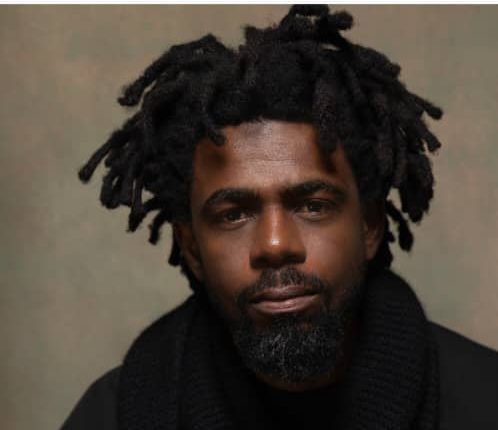
Joel ‘Kachi Benson
By Prisca Sam-Duru
In the Nigerian cinema scene where glitz, glamour, and high-powered comedies and movies often reign supreme, Joel ‘Kachi Benson is a filmmaker looking in the opposite direction. He is either digging into the IDP camps of Maiduguri, the rain-soaked streets of Ajangbadi, or the resilient households of Chibok.
For Benson, an Emmy award-winning documentary filmmaker and pioneer of Virtual Reality (VR) storytelling in Nigeria, the camera is not just a recording device—it is a mirror held up to a society that often prefers to look away.
Benson’s trajectory is as unconventional as his choice of medium. Once a creator of different kinds of video contents, including music and wedding videos, Benson found himself unfulfilled by the ephemeral nature of the work. It wasn’t until he began filming factual “grass to grace” stories of individuals that he found his calling. “I used to do different kinds of video content – wedding videos, music videos, etc. I wasn’t really happy. I had an opportunity to do a series of shots that were not documentary but factual content where I interviewed people who told their grass to grace stories. I found that so inspiring. I felt so inspired that I decided to inspire others by sharing the stories.” That pivot has since led him to the world’s most prestigious stages, from the Venice Film Festival to the Emmy Awards.
The Power of the Real
While many filmmakers are drawn to the controlled environments of a movie set, Benson focuses on the truth. “I’m very drawn to factual stories. Documentary presents windows into walls that we sometimes are not aware of or come in contact with. Factual stories are really like a mirror for society. You’re able to spotlight underserved communities and tell stories that inspire and motivate because they are founded on truth and real people. They have the potential to have a stronger impact on the viewers/audience. I want to use these stories to amplify voices and shine a spotlight on communities,” he explains.
By spotlighting underserved communities, he believes he can trigger social change. This philosophy was most recently validated by the global success of MADU, a Disney Original documentary he co-directed with Matt Ogens. The film, which won the Outstanding Arts & Culture Documentary, follows a young Nigerian boy whose ballet dance in the rain in Ajamgbadi Lagos went viral, eventually leading him to the prestigious Birmingham Royal Ballet.
For Benson, MADU was more than a viral moment; it was a story of resilience. “This is a kid who used to live in Ajamgbadi pursuing an elite career,” Benson says. “Many kids from the ghetto are now dreaming of becoming ballet dancers because of that. That’s the power of storytelling.”
From Statistics to Humans
Benson’s latest work, Mothers of Chibok, represents a deep, three-year immersion into a community that the world thinks it already knows. Following his 11-minute VR short, Daughters of Chibok—which earned him the Venice Lion in 2019—this new feature-length documentary of 86 minutes seeks to complete the picture.
Benson is acutely aware of how the Chibok tragedy has been handled by the international community. For over a decade, the narrative has been told through a Western lens, reducing the victims and their families to “data” or “statistics of insurgency.” Benson wanted to reclaim that story.
“I felt that the way the women were being portrayed wasn’t the complete picture,” he admits. “There is laughter, joy, resilience, and hope. If you don’t present that side, you risk a mono-dimensional perspective. We are multi-dimensional.”
Creating Mothers of Chibok was a labour of love and patience. Filming began in May 2021, requiring multiple trips to the region to build a foundation of trust that “anybody with a camera” is usually denied. The result is a film that refuses to offer the audience another opportunity to express the usual “pity.” Instead, Benson presents these women as heroines and “Amazons” fighting for the future of their children. “Every time someone watches the film at festivals, I’ve never heard the word pity,” he says with a hint of pride. “I’ve always heard, ‘Wow, these women are amazing.'”
Made for Communal Experience
Breaking away from the traditional path for documentaries, Benson is bringing Mothers of Chibok to the big screen. The film is set to hit cinemas on February 27, 2026. For the Docs maker, the choice of a theatrical release is intentional. He believes documentary filmmaking is an art form that deserves a communal environment, and he is determined to weave it into the “theatre culture” of Nigerians.
“I’m not going to the cinemas expecting box office hits,” he notes with refreshing sincerity. “I make my films primarily because I want people to see them and be inspired.”
Legacy and the Next Generation
Benson’s influence now extends beyond the screen. As a mentor and a technical consultant for the newly established NLNG-sponsored Nigeria Prize for Creative Arts, he is helping to shape the next generation of truth-tellers. He views the prize worth $20,000 designed for filmmakers aged 18–35, as a potential game-changer for the industry.
“Docs are truth-telling in its purest form,” he says. “My hope is that the prize becomes a launching pad. When we won the Venice Lion, I didn’t get a dime, but I know the doors that award opened for me.”
As Joel ‘Kachi Benson continues to tour the global festival circuit, picking up awards from across the world, his focus remains singular: using his lens to ensure that the stories of the marginalized are told with dignity, depth, and a relentless pursuit of the human spirit.
Disclaimer
Comments expressed here do not reflect the opinions of Vanguard newspapers or any employee thereof.