By Emmanuel Elebeke
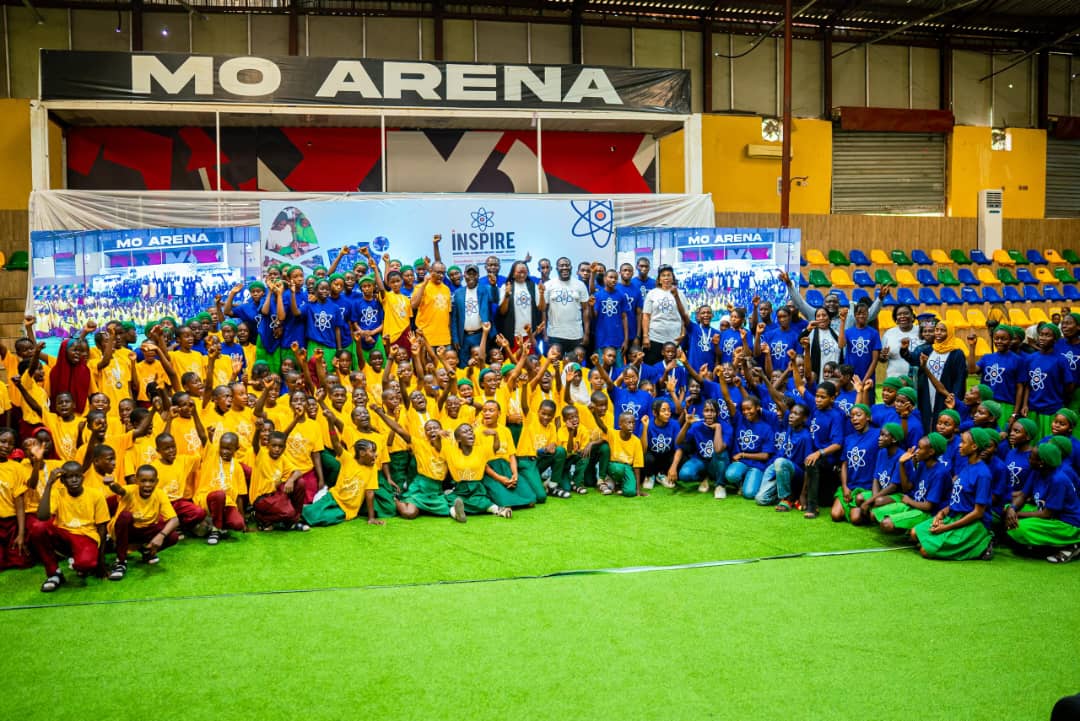
Abuja, Nigeria — The United States Ambassador has hailed the INSPIRE Innovation Showcase finals as clear evidence of what strategic investment in education and young people can achieve through strong U.S.–Nigeria collaboration.
Speaking at the National Innovation Challenge Showcase: INSPIRE Project Finals Event, the ambassador highlighted the programme’s rapid impact since its launch in May 2025 by former U.S. Ambassador Richard Mills and Dr. Aliyu Modibo Umar on behalf of Vice President Kashim Shettima.
“In less than a year, INSPIRE has reached 13,000 students, trained 105 teachers, and transformed 14 schools into innovation hubs across all six geopolitical zones of Nigeria,” he said. “This is proof of what is possible when we invest in education and empower the next generation.”
The ambassador credited the programme’s success to robust public-private partnerships, specifically acknowledging Carolyn Seaman (TechWomen alumna), PanAfricare, and the ExxonMobil Foundation. He stressed that innovation and entrepreneurship are key drivers of job creation, economic growth, and two-way trade, particularly in the energy sector.
Project Manager Tefa Akoyibo explained that INSPIRE addresses STEM gaps in secondary schools by equipping teachers with training and providing schools with robotics kits, 3D printers, AR/VR tools, and other resources. Students are currently developing clean energy prototypes tailored to local challenges, with plans to move toward commercialization.
President of the TechWomen Alumni Association, Stella Dennis, emphasised the programme’s strong gender focus, noting that 70 percent of participants are girls. She called for deeper industry collaboration to help scale student innovations into viable products and businesses.
Among the standout student innovators was 13-year-old Muhammad Alima Sadiya, who created a solar-powered security light to combat theft in her community.
Another team lead, Oyelohunnu Deborah, shared the inspiration behind her group’s project: “We are boarders and we don’t have access to hot water. We are not allowed to bring electrical materials, so we decided to provide a solution for ourselves and our classmates.”
Deborah explained the prototype uses the principle of conduction: a copper coil inside a boxed panel absorbs direct sunlight, converts it into heat energy, and transfers that heat to water passing through the coil, producing hot water.
Stakeholders at the event agreed that continued support from government and the private sector will be essential to scale INSPIRE nationwide and establish Nigeria as a hub for homegrown, sustainable innovation driven by young talent.
Disclaimer
Comments expressed here do not reflect the opinions of Vanguard newspapers or any employee thereof.