By Henry Ojelu
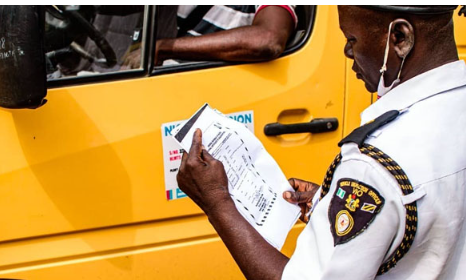
The Lagos State Government has clarified that Vehicle Inspection Service, VIS, officers remain legally empowered to operate on Lagos roads, despite a recent Court of Appeal judgment affirming restrictions on Vehicle Inspection Officers, VIO, in the Federal Capital Territory, Abuja.
In a statement issued by the Attorney-General and Commissioner for Justice, Mr. Lawal Pedro, SAN, the state government said a viral report had misrepresented the scope and effect of the judgment delivered by the Court of Appeal, Abuja Division, which upheld an earlier ruling of the Federal High Court.
Justice Evelyn Maha of the Federal High Court, Abuja, had in 2025 ruled in a fundamental rights enforcement suit that certain officials, including the Director of Road Transport and the Minister of the FCT, lacked statutory powers to stop, impound or confiscate vehicles or impose fines on motorists within the FCT.
The court consequently restrained VIO officials in Abuja from carrying out such actions. The Court of Appeal later affirmed the decision.
However, the Lagos State Ministry of Justice stressed that the judgment is not of nationwide application and does not invalidate the statutory powers granted to VIS officers under Lagos State law.
According to the statement, the ruling binds only the parties to the suit and jurisdictions without specific enabling statutes governing vehicle inspection activities, such as the FCT.
The ministry noted that Nigeria operates a federal system of government in which legislative powers are shared between the federal and state governments, adding that vehicle inspection and traffic management fall within residual matters under the purview of states.
It explained that Lagos State has a clear legal framework regulating VIS operations under the Lagos State Transport Sector Reform Law.
Citing Section 12(1) of the law, the ministry said the State Vehicle Inspection Service is empowered to inspect, regulate and ensure the roadworthiness of vehicles; conduct pre-registration inspections; issue Road Worthiness Certificates; and cooperate with relevant agencies in enforcing traffic regulations.
The ministry also referenced Section 23(1) of the law, which provides for the issuance of tickets to offenders and stipulates that fines may be paid on the spot if imposed by a mobile court or within 48 hours of ticket issuance.
It added that any offender who defaults may be formally charged before a Magistrate or Mobile Court and has the right to challenge the validity of the ticket in court and maintained that the enforcement procedures adopted by VIS officers in Lagos are lawful and constitutional.
It urged residents not to be misled by what it described as misinterpretations of the Abuja court rulings and advised motorists to cooperate with VIS officials to avoid sanctions.
The statement further assured that transport and traffic enforcement activities in the state would continue to be conducted in line with extant laws, with civility and respect for road users.
It warned that any motorist who disobeys or assaults a VIS officer while performing statutory duties would be liable to arrest and prosecution.
Disclaimer
Comments expressed here do not reflect the opinions of Vanguard newspapers or any employee thereof.