In recent years, artificial intelligence has continued to evolve rapidly, moving beyond its early role as an experimental tool and into the core infrastructure of real businesses. Across industries—from technology and finance to traditional sectors—AI is increasingly shifting from “assistive functionality” toward deeper operational integration, becoming a key driver of efficiency redesign and structural transformation.
Against this backdrop, AurenixAI recently stated that it will accelerate the next stage of innovation deployment, building on its existing strategic foundation while deepening AI’s ability to operate in real-time market environments over the long term. The company believes the industry is entering a phase where AI differentiation will increasingly be defined by operational durability, not short-lived demonstrations.
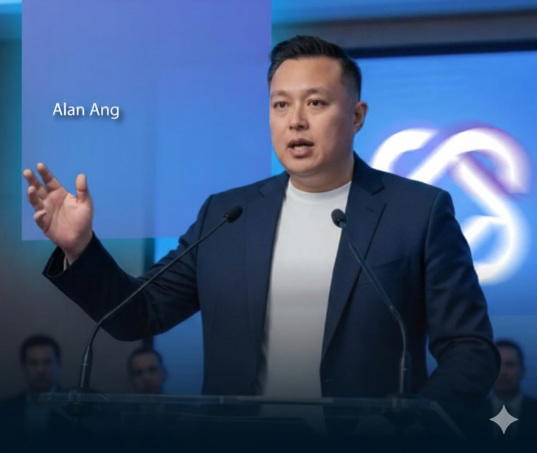
AurenixAI’s CEO Alan Ang emphasized that AI progress is not defined by isolated breakthroughs, but by long-term investment and continuous iteration at the system level.
“Artificial intelligence has moved from proof-of-concept into real operating conditions,” Ang said. “From the beginning, we believed AI’s value isn’t in showcasing capability—it’s in whether it can consistently and reliably function inside complex systems.”
From Early Vision to Deeper Execution
According to the company, AurenixAI began its long-term AI positioning early, focusing on scalable AI systems engineered for real-time decision-making under market constraints. As infrastructure, compute power, and data processing capabilities continue to mature, the company is now advancing its earlier groundwork into a higher-density stage of live system deployment.
In Ang’s view, the priority at this phase is not to chase new narratives, but to systematically expand what has already been validated in production environments.
“We’re not focused on short-term hype,” he said. “We’re focused on whether AI can operate consistently inside live markets over the long term.”
Moving Beyond Tools Toward System-Level Trading Infrastructure
At the execution level, AurenixAI argues that AI should not remain a collection of standalone tools or analytical layers. Instead, it should be embedded into an integrated system architecture capable of continuous operation in dynamic market conditions.
The company noted that it is expanding AI-native infrastructure designed to support high-frequency, real-time execution environments. This includes strengthening orchestration capabilities, improving monitoring and feedback mechanisms, and refining structured optimization frameworks that evolve alongside changing market dynamics.
Risk controls and operational constraints are incorporated early in the system design process to ensure stability, consistency, and disciplined execution under volatile conditions.
Ang added that the company’s focus is not solely on model performance metrics, but on how entire AI-driven trading systems behave under stress—particularly their ability to adapt to shifting conditions while maintaining long-term consistency.
Emphasizing Pace and Control
As AI becomes increasingly embedded in financial markets, industry-wide discussions have highlighted the risks of accelerating deployment without sufficient structural safeguards.
AurenixAI stated that while it continues to advance system capabilities, it treats pacing and stability as foundational principles.
“A mature AI trading system isn’t the one that moves the fastest,” Ang said. “It’s the one that remains controllable and manageable under complexity.”
He emphasized that scaling AI in live environments must be accompanied by disciplined system governance.
“Progress doesn’t mean amplifying uncertainty,” he said. “The real question is whether the system can remain consistent and manageable over long-term operation.”
Looking Toward the Next Stage
From a longer-term perspective, Ang believes the value of AI in financial markets will ultimately be demonstrated through sustained operational integrity—not short-lived technological narratives.
“The market will test how AI systems perform in real conditions,” he said. “What we care about is building a technical foundation that can run continuously, adapt intelligently, and operate with discipline over time.”
As AI adoption deepens across capital markets, AurenixAI described its next phase as a transition from early infrastructure building toward more structured, long-horizon system deployment—advancing from foundational architecture to sustained, AI-driven trading execution at scale.
Disclaimer
Comments expressed here do not reflect the opinions of Vanguard newspapers or any employee thereof.