By Joseph Erunke, Abuja
Nigeria’s push to reduce maternal mortality and expand access to modern contraceptive services received a major boost yesterday as stakeholders gathered in Abuja to review gains of the Hormonal Intrauterine Device (HIUD) Scale-Up Project, Phase III, with participating states significantly increasing budgetary commitments to family planning.
At the National Dissemination Meeting, health officials, development partners and federal authorities described the 10-month intervention in Kogi and Ebonyi states as a “turning point” in expanding access to safe, long-acting reversible contraceptives, particularly the hormonal IUD.
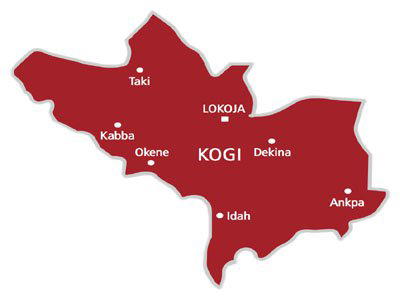
Commissioner for Health in Kogi State, Dr. Abdulazeez Adeiza, said the project, implemented by EngenderHealth with support from the European Union, recorded impressive uptake among women following extensive community sensitisation and provider training.
“We came into this in 2025 with a clear mission — to scale up hormonal IUD services in Kogi to improve maternal health and the socio-economic wellbeing of our women,” Adeiza said.
“From preliminary reports, the uptake has been impressive. Many women accepted the method after proper counselling, and we are optimistic that the numbers will continue to rise.”
He disclosed that the Kogi State Government has secured executive approval to procure family planning commodities, describing it as a significant milestone for the state’s health sector.
“If we sustain this momentum, we are confident that maternal and child mortality will reduce significantly,” he added, noting that the state, with support from partners, is strengthening a training-of-trainers model to ensure knowledge cascades to community level.
Project Manager of the HIUD Scale-Up Project at EngenderHealth, Mr. Afolabi Ahmed, revealed that 300 healthcare providers — 150 each in Kogi and Ebonyi — were trained across 50 health facilities under the third phase of the Catalytic Opportunity Fund (COF) initiative.
The training involved an initial five-day intensive session followed by six months of mentoring and on-site coaching to ensure competency in hormonal IUD service delivery.
“Hormonal IUD is a safe and effective family planning option, but nationwide, we have had very few skilled providers,” Ahmed explained.
“To expand contraceptive choices for women of reproductive age, we had to build provider capacity. Today, we have 300 trained providers offering quality services.”
Beyond training, Ahmed highlighted a critical breakthrough: increased financial commitment from participating states.
“In 2025, Kogi budgeted N51 million for family planning. In 2026, that figure rose to N129 million. Ebonyi moved from N5 million to N20 million,” he said.
“This shows ownership. For too long, many states had budgets on paper with zero releases. Now we are seeing real commitments.”
He stressed that sustained release and utilisation of these funds would enable states to procure not only commodities but also essential consumables, ensuring that family planning services — officially meant to be free — remain accessible without hidden costs.
Ahmed further noted that the project has contributed 882 trained providers nationwide toward the national target of 4,381 skilled hormonal IUD providers — nearly 20 per cent of the goal — since its rollout began in Bauchi and Sokoto, and later expanded to Kebbi and Plateau.
Kogi and Ebonyi were selected for Phase III due to high unmet family planning needs, low contraceptive prevalence and limited numbers of skilled providers, he said.
Head of the Family Planning Branch at the Federal Ministry of Health and Social Welfare, Pharmacist Alex Ugochukwu, described the dissemination meeting as critical to evaluating milestones and charting a sustainability roadmap as EngenderHealth exits the states.
“It is not enough to train providers and close the project,” Ugochukwu said.
“We must assess what has been achieved and ensure the states are ready to take ownership.”
He expressed optimism that the increased budgetary allocations signal genuine state buy-in.
“The states are expected to sustain and expand what has been started. Family planning is central to reducing maternal mortality and improving socio-economic outcomes,” he noted.
According to him, effective family planning enables families to have the number of children they can adequately cater for — improving child education, household stability and national development.
“When families plan properly, children are better cared for, women are healthier, and communities prosper. It is not just a health intervention; it is a socio-economic strategy,” he added.
Following the completion of Phase III in Kogi and Ebonyi, the programme is expected to expand to additional states, including Kwara and Anambra, as part of its phased national rollout.
Stakeholders at the meeting agreed that sustained political will, timely budget releases and continued provider mentoring will be crucial in consolidating the gains recorded so far.
With improved awareness, expanded provider capacity and rising state-level financial commitments, the HIUD Scale-Up Project is increasingly being viewed as a strategic lever in Nigeria’s broader fight against maternal and child mortality — and a template for strengthening reproductive health services nationwide.
Disclaimer
Comments expressed here do not reflect the opinions of Vanguard newspapers or any employee thereof.