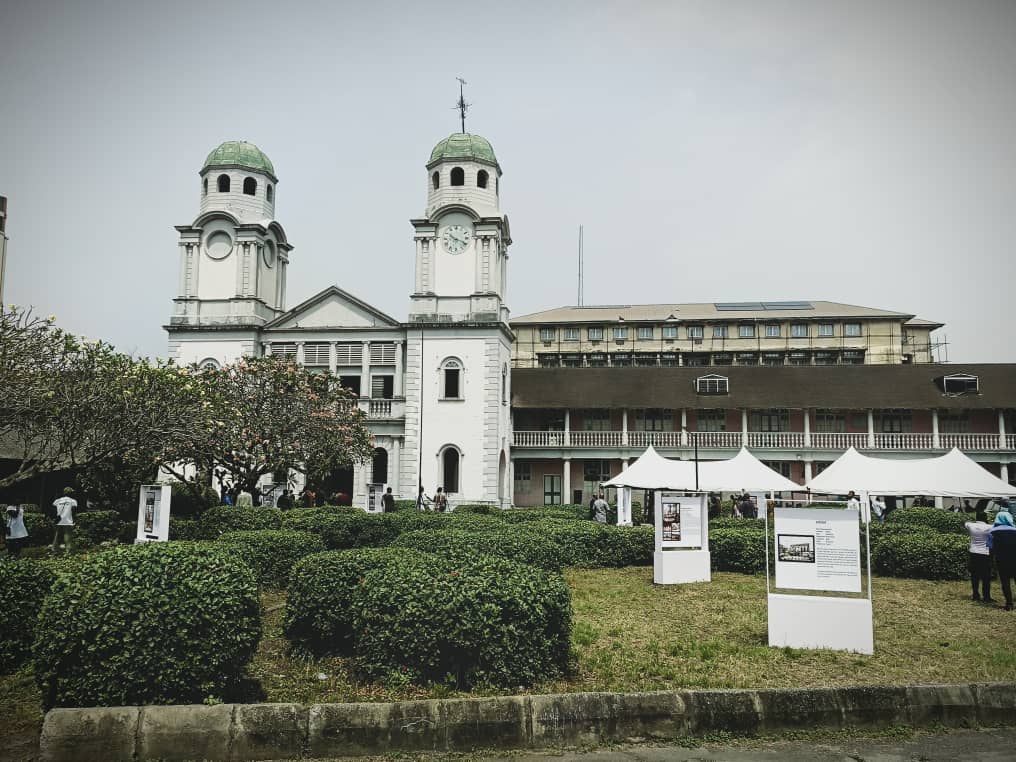
The 120-year-Old Secretariat Building, and one of the four National Monuments in Lagos under the custody of National Commission for Museums and Monuments.
By Osa Mbonu-Amadi
Professor of Anthropology, Aderemi Suleiman Ajala, of the Department of Archaeology and Anthropology, University of Ibadan, Wednesday called for the identification, promotion and preservation of our streams, trees, forests, wildlife, physical landscapes, historic architectures, and the general environment as alternative heritages.
Prof Ajala made the call while delivering a keynote lecture titled “Alternative Heritage: Uncovering Community Histories and Stories” during an exhibition on monuments and natural history titled “Reimagining Nigerian Alternative Heritage put together by National Commission for Museums and Monuments in collaboration with Institut Francais De Recherche En Afrique, (IFRA-Nigeria) held at the 120-year-Old Secretariat Building, Marina, Lagos.
Also delivering her welcome address, the Curator, Mrs. Nkechi Adedeji of the National Museum Onikan, Lagos, said the gathering was for the purpose of exploring the intricate relationship between our monumental heritage and the natural landscapes that define our nation. “This exhibition invites us to look beyond the conventional narratives of heritage and to reimagine the diverse stories that our monuments and natural history tell, ” Adedeji said, emphasising that the structures and environments are not merely remnants of the past, but “active participants in shaping our identity and understanding of who we are as Nigerians.”
Mrs Adedeji gave a hint of what guests will encounter at the event as they moved around — “a rich array of monumental treasures, each telling a unique story of our architectural ingenuity and cultural evolution. From the iconic Ilojo Bar, Iga Idunganran and CMS Grammar School to the sacred spaces of Shitta-Bey Mosque, Creek Town Church Calabar and Omo-ukwu Temple Abia State. “These monuments,” she said, “reflect the dynamic interplay of tradition, religion and modernity, illustrating how our heritage continues to evolve in response to changing times.
“In addition to our architectural marvels, we will also delve into the natural history that surrounds us. Nigeria’s landscapes—its lush forests, rivers, geological formation and wildlife are integral to our cultural identity. They provide not only ecological richness but also spiritual and historical significance, reminding us of our deep connection to the environment.”
Adedeji specially thanked the Director of IFRA-Nigeria, Dr Pauline Guinard, whose support for research and cultural initiatives, she said, enriches our understanding and appreciation of heritage. “Your presence here today reinforces the importance of collaboration in our shared mission to safeguard and promote Nigeria’s diverse cultural expressions.”
She also acknowledge the presence of the French Cultural Attaché, Emmanuelle Harang and others for honouring the invitation, urging all to “Get ready to be amazed by the wonders of our planet’s history…Let us use this opportunity to foster a deeper appreciation for our alternative heritage and the myriad ways it informs our identity.
“As we embark on this exploration of Reimagining Nigeria’s Alternative Heritage, I urge you to remember that our monuments and natural history are living narratives, calling upon us to honour and protect them for future generations, Together, we can ensure that these stories continue to inspire and educate, reflecting the richness and diversity of our cultural landscape.
In his paper, Prof Ajala explored case studies of uncovering community histories and narratives through alternative heritage, highlighting natural alternative heritages such as totemic animals, which, in many Yoruba communities for instance, speak about human migration and assistance from such animals, establishing human and community identities, and linking the past with the present. Examples of such totemic animals include Elephant in Ilobu; Dogs in Ara town; and Hammerkop (Odidere) in lwo town of Osun State, and Igbin (giant snails) in Ibadan.
The lecturer taught that trees and forests also form a significant part of our alternative heritage. In Ibadan, for instance, a great number of trees are associated with Ibadan settlement, establishing the spatial settlement patterns of Ibadan community. We often hear of Idi Ose, Idi Arere, Idi Ape, Idi Isin, Idi Ayunre, Idi Obi etc. These are the historic trees that have assumed community identity in Ibadan. Each of those trees served as market centre, place of power and place of relaxation in the early history of Ibadan, Ajala said..
He also spoke about streams and landscapes, saying a number of communities, especially the Yoruba of Southwest Nigeria, deitified streams that provide community security and defence. Examples include Erinle river in llobu and Esinminrin Stream in lle Ife.
“Mountains in Iresi, Otan, Imesille , Iba and Oyan in Osun State tell deeper history of Kiriji.”
Prof Ajala also spoke on the challenges facing alternative heritage such as power dynamics, where dominant objects may suppress or co-opt alternative heritage. Other challenges include poor documentation, preservation, and misappropiration of ownership.
In conclusion, the Professor of Anthropology said alternative heritages are marginalised and hidden cultural objects that express the core values, identity and history of the society. They speak out the untold stories and histories; and establish community-based cultural information.
“Alternative heritages must therefore be identified, promoted and preserved,” he said.
Disclaimer
Comments expressed here do not reflect the opinions of Vanguard newspapers or any employee thereof.