By Okhumeode Momodu
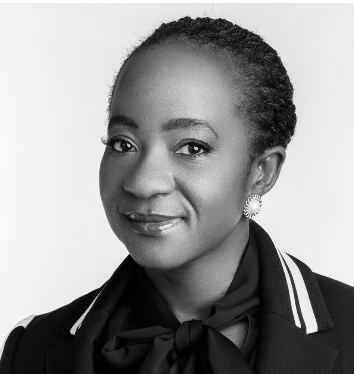
Dr Chichi Menakaya is a Trauma and Orthopaedic Surgeon, health systems leader, and CEO of Annomo Health.
Her work spans clinical care, leadership, and thought leadership across the UK, Canada, and Nigeria. In this interview, the medical expert speaks on how she is able to navigate multiple worlds, clinical medicine, health systems, business, philanthropy, and public discourse. Excepts:
You are widely known as a trauma and orthopaedic surgeon, but increasingly also as a health leader and thought leader. How did you move beyond the scalpel?
I didn’t move beyond the scalpel by leaving it behind. I moved beyond it by understanding what it represents.
Surgery teaches you discipline, precision, accountability, and respect for consequence. Those lessons don’t end at the operating table. Over time, I began to see that patients are not only harmed by disease or injury, but by what happens before and after they ever meet a surgeon. That realisation changed how I saw my role. Healing does not stop at the operating table and neither should responsibility.
Many clinicians remain within the confines of clinical practice. What pushed you into leadership and systems thinking?
Exposure, followed by frustration. I trained and worked across five countries and health systems and saw what was possible when care is intentionally designed. I also saw how much suffering is preventable when systems are fragmented. As a clinician, you often work at the end of a broken pipeline.
Leadership was never about ambition for me; it was about responsibility. Once you see the problem clearly, you either look away or you engage. I chose to engage.
You now operate across clinical medicine, health systems, business, philanthropy, and public discourse. How do you navigate these worlds without losing your core?
By refusing to fragment myself. I don’t experience these worlds as separate identities. They are connected expressions of the same purpose. Clinical work grounds me. Leadership stretches me. Thought leadership gives language to what many people experience but struggle to articulate.
The risk isn’t having multiple roles, it’s losing coherence across them. I carry one set of values into every room; that consistency is what allows trust to form.
I am a surgeon. I am a leader. I am disciplined, expressive, feminine, ambitious, and deeply human. These are not contradictions. They coexist.
How did you become recognised as a health authority beyond your clinical credentials?
Authority is not claimed, it’s earned. Clinical excellence is the foundation. Without credibility at the bedside, nothing else stands. Authority develops when you demonstrate understanding of the wider system; how policy, economics, workforce, infrastructure, and culture shape outcomes. I speak from lived experience, data, and delivery. I build, I listen, and I stay accountable to results. Silence protects no one therefore when professionals with experience remain quiet, systems don’t improve.
You operate across clinical, business, policy, and public spheres. How do you maintain credibility across such different spaces?
By staying anchored to evidence and outcomes. Credibility is sustained when thinking is grounded in real-world delivery. I remain clinically active, deeply engaged in systems work, and disciplined about results. I don’t enter rooms to perform expertise, I enter to solve problems. This consistency of values across contexts has built the trust I have to be called upon to make a change.
As a woman, did navigating these spaces come with unique challenges?
Of course. Medicine, leadership, and public authority were not designed with women especially multidimensional women in mind. There is an unspoken expectation that women should choose one lane: be clinical but quiet, visible but non-threatening, ambitious but apologetic. I rejected that early. Women are allowed to be complex, powerful, elegant, and authoritative at the same time. Navigating multiple worlds as a woman requires clarity, boundaries, and an unwillingness to shrink.
What role has thought leadership played in your journey?
It gave language to experiences many people live but rarely articulate. It allowed me to connect medicine with identity, leadership with womanhood, and health with power. Speaking publicly was never about visibility for its own sake. It was about expanding what leadership could look like for anyone watching quietly from the margins.
Where does Annomo Health fit into this journey?
Annomo Health is an extension of everything I believe. It sits at the intersection of clinical excellence, systems design, leadership, and humanity. It exists to bridge gaps between public and private care, local realities and global standards. At its core is the belief that healthcare should be intentional, connected, and centred on people, not silos.
What does leadership mean to you now?
Leadership now is stewardship.
Disclaimer
Comments expressed here do not reflect the opinions of Vanguard newspapers or any employee thereof.