By Kenneth Oboh
As the global race for dominance in the Fourth Industrial Revolution intensifies, robotics is undergoing a paradigm shift from rigid, heavy machinery to flexible systems ubiquitous in everyday life.
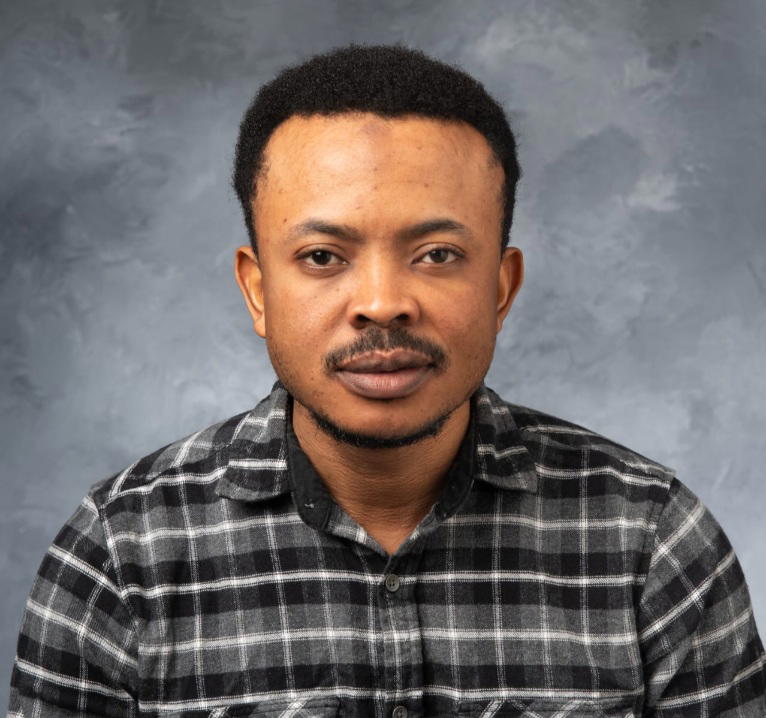
Rabiu Onoruoiza Mamman, a researcher in soft robotics at the University of Iowa, has called on Nigerian stakeholders to prioritize adopting soft robotics, citing its immense potential to transform sectors ranging from security to energy and healthcare. Mamman warns that failing to pivot toward these adaptive technologies could leave African industries reliant on outdated legacy systems.
With Nigeria grappling with insurgency, banditry, oil theft and deteriorating infrastructure in hard-to-reach terrain, attention is gradually shifting to technologies that can operate where humans and conventional machines struggle.
Rabiu Onoruoiza Mamman, in soft robotics at the University of Iowa in the United States, says the technology offers practical tools for security, infrastructure monitoring and emergency response, particularly in environments like forests, swamps, collapsed structures and underwater systems.
“Most of the robots people imagine are heavy, rigid and dangerous to deploy in close proximity to humans,” Mamman said. “Soft robots are fundamentally different. They are designed to bend, squeeze and adapt to their surroundings, which makes them useful in terrains that are currently inaccessible or unsafe for both security personnel and civilians.”
According to Mamman, one of the core advantages of soft robotics is its ability to function in confined and unstable environments, a recurring challenge in Nigeria’s security landscape “In many parts of the country affected by banditry or insurgency, access roads are poor, terrain is uneven, and visibility is limited,” he explained.
“Soft robotic systems can be deployed for reconnaissance, search-and-rescue or damage assessment without exposing personnel to unnecessary risk.” he added.
He noted that soft robotic crawlers and flexible aerial platforms can be equipped with basic sensors for visual, thermal, or acoustic data, allowing responders to gather information after attacks, ambushes or building collapses.
Mamman’s call for adoption carries the weight of a distinguished expert. He also described the relevance of one of his solutions to the persistent water pollution in Southern Nigeria.
“In the Niger Delta, for instance, we face challenges with pipeline maintenance and marine biofouling,” Mamman noted. “The ‘smart skin’ technology I developed, which uses artificial muscles to mechanically detach biofilms, offers an environmentally friendly alternative to toxic chemical coatings.
“It is a prime example of how advanced engineering can solve local environmental and economic problems.”
He further highlighted the potential for medical applications, noting that soft robotic actuators could lead to the development of affordable prosthetics and rehabilitation devices for millions of amputees and stroke survivors across Africa.
As Nigeria seeks solutions to complex security and environmental challenges, Mamman believes flexible technologies will increasingly play a role and calls for Federal Govrnment Investment in these solutions.
“As Nigeria continues to diversify its economy, integrating soft robotics into national science and technology policies is crucial,” he advuses.
He urges educational institutions to update engineering curricula to include smart materials and adaptive systems, ensuring the workforce is ready for the next wave of automation.”l
Mamman concluded: “The science of soft actuation can be applied tour unique challenges, whether that is remote monitoring of infrastructure or other areas. The future is flexible, and Nigeria must be ready to bend with it.”
Disclaimer
Comments expressed here do not reflect the opinions of Vanguard newspapers or any employee thereof.