By Prof Chuu Krydz Ikwuemesi
If I begin by saying that Gbolahan Olanipekun is a self-taught artist, then I would likely stir up the debate over that term. Is there a self-taught artist? Or should we go the middle route taken by trained “formally” and “non-formally” artists? But the great news about Olanipekun is that he did not study art at the University. He majored in Accounting Education at Ekiti State University between 2011 and 2017. Ellen Dissanayake writes that his artistic work comes from the biological nature of art. However, if art, as a biological prior, is a characteristic of the human species, few who do not receive formal art training can invoke, exploit, and enjoy that quality at any sustained scale.
So, the present exhibition speaks about Olanipekun’s creative industry and artistic adventure. He has worked most effectively with photography and digital darkroom, making intense graphic statements with nothing but everyday objects and forms. Though it is an excellent example of how he constructed his own forms and how he could use them to convey complex meanings that reflect different aspects of life and society, a glance at some of these works of art speaks for itself.
Indeed, a large part of Olanipekun’s works seems to draw its form and content from a deeply rooted interest in culture, heritage and identity. For instance, His Echoes of the Drum calls to mind the past, in which the drum is still a means of communication and an important instrument in many cultures around the world. Another, Natures Flow, captures, through a kaleidoscopic figure, the eminence of the female human body and the beauty of nature. This interest in the noble nude goes further in Midnight Muse and Undiluted Love, where the body is gathered as a tableau for multiple issues of culture, marriage, and other subjects to be addressed. Likewise, on the aesthetic power and value of nature, we have The Optimist, not only in allusion to human and natural resources and the opportunities they usually present for economic growth, but also in an appeal of hope through the calm waters and sublime skyscape.
Apart from the above group, Heritage Unveiled and Fierce Woman bring to life a variety of meanings. In addition to issues of identity, they also speak of femininity (or feminism, particularly as regards Fierce Woman?) and the inherent importance of the feminine aspect of the world. That’s not all. Olanipekun also thinks of those works as odes to “the women who have fought for change and continue to inspire others” in our society.
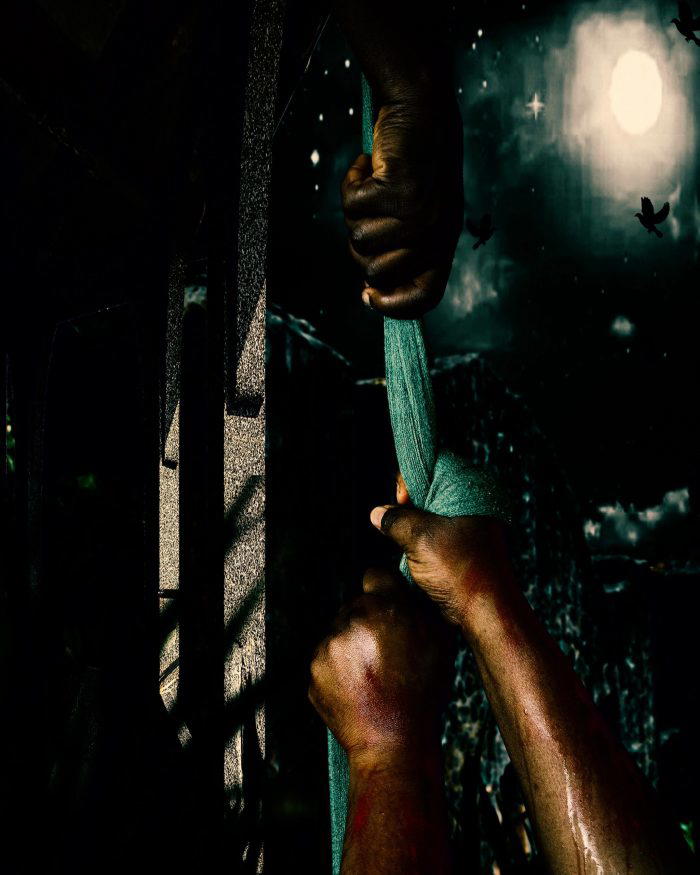
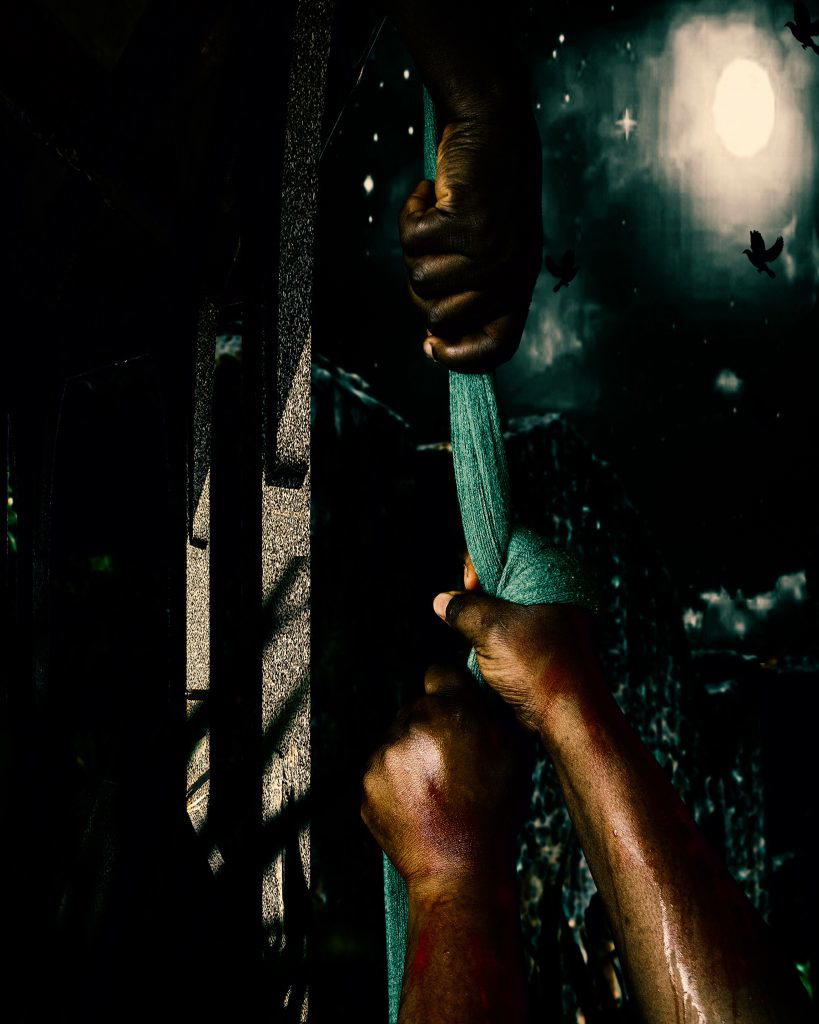
Another work, Redemption, captures the forever struggle of the human face with the flow of life, crowded with bumps and bumps, fears and obstacles. In between the binary experience is also spoken of the space between, where courage and desire can vanquish despair and triumph over humanity. Its relevance to modern Nigeria cannot be overstated, as Nigeria has become a space of hope and despair, of the have and the have-not, a space fueled and sustained by bread-and-butter leaders (or dealers?) to maintain their grip on power and the strangulation of its population. This works, then, appears to supplement Oju Aye, or “The Eye of the World”, where it refers to the permanence of truth, the laws of power and the invisible God who maintains the universe and its eternal beings.
The works above and others readily capture the artist as a deep thinker who can provide form and meaning to his dreams, thought and imagination using this medium, his materials, and the materiality that results. He is not a miserable hand-to-mouth artist, but one who has an enormous vision and the power to share that vision with his audience through the infinite possibilities of photography.
Chuu Krydz Ikwuemesi is a Professor of Painting and African Art History
Disclaimer
Comments expressed here do not reflect the opinions of Vanguard newspapers or any employee thereof.