By James Ogunnaike, Abeokuta
The Registrar, Joint Admissions and Matriculation Board (JAMB), Prof. Ishaq Oloyede, on Tuesday lamented the persistent disunity among Imams in Ogun State, warning that internal divisions have weakened the collective strength and influence of Muslims in the state.
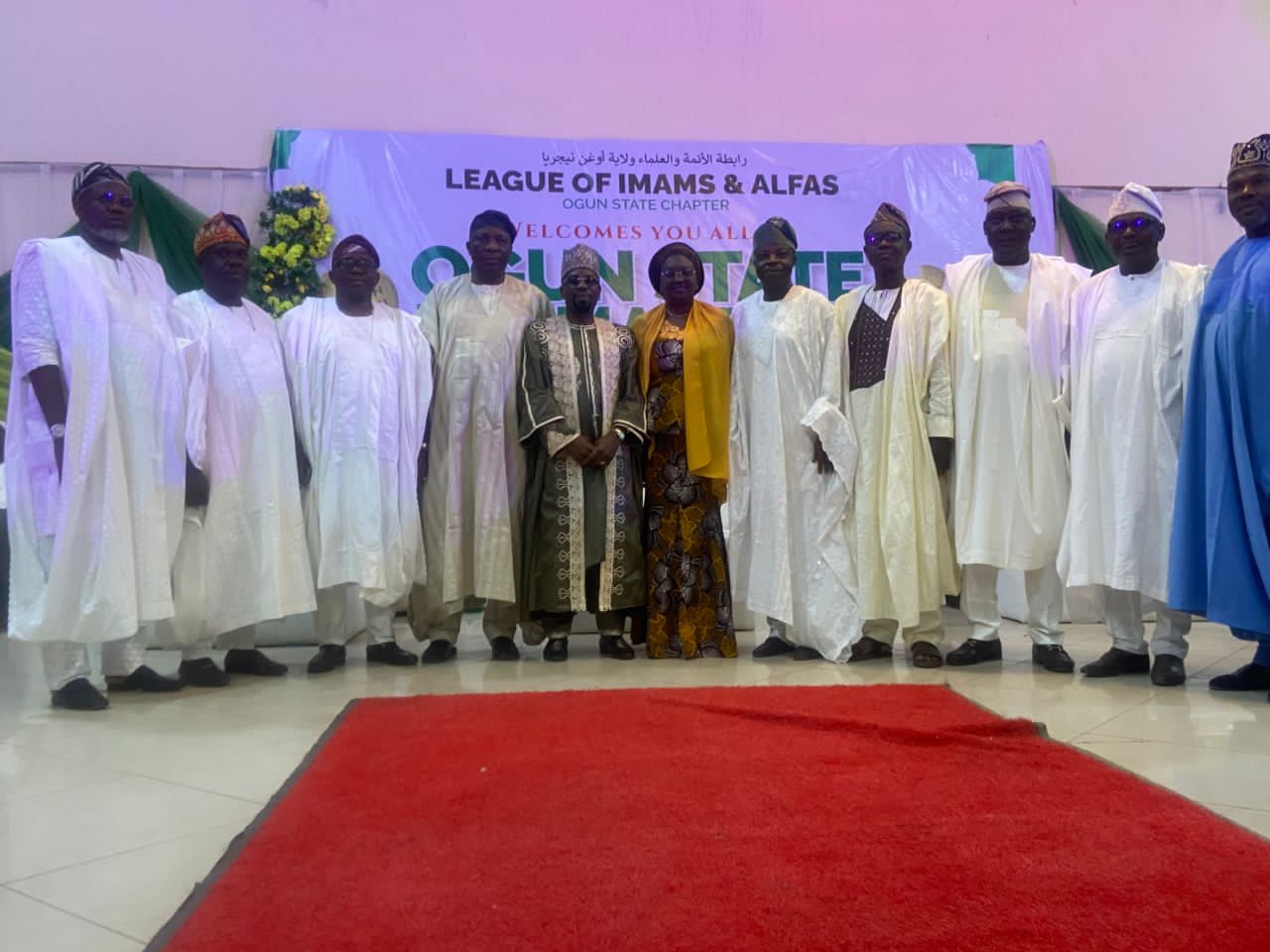
Oloyede spoke at the maiden edition of the Ogun State Muslims’ General Assembly held in Abeokuta, the state capital.
The high-level gathering, organised by the League of Imams and Alfas, Ogun State chapter, and powered by the Council of Muslim Titled Chiefs (COMTIC), brought together over 500 clerics, scholars, traditional rulers, politicians and community leaders.
The programme was held under the theme, “Synergy, Leadership and Development in the Muslim Ummah of Ogun State.”
The organisers described the assembly as a major initiative aimed at healing long-standing divisions within the Ummah and repositioning Islamic institutions for unity, social relevance and sustainable development.
Represented by a former Dean of the Faculty of Arts, University of Ibadan, Prof. Abdulafeez Oladosu, Oloyede openly queried the roots of the disunity among Islamic clerics in the state.
“Why are Imams in Ogun State not united?” he asked, urging Muslim leaders to embrace renewed cohesion and praying that the assembly would mark the beginning of a new era of greatness for the Ummah.
The forum provided a platform for frank introspection on challenges confronting Muslims in Ogun State, including weak institutions, economic marginalisation, declining social influence and leadership gaps.
Declaring the assembly open, the Ogun State Deputy Governor, Engr. Noimot Salako-Oyedele, called for inclusive leadership and stronger community ownership, stressing that spiritual authority alone could not deliver development without organisation and collective participation.
“You may have a brilliant business idea, but without customers, that business will not grow. Likewise, a political party may have strong ideas, but without followers, it cannot win elections,” she said.
She cited century-old religious organisations in Nigeria that successfully combined scholarship with active lay participation to establish schools, universities, pilgrimage boards, zakat foundations and welfare institutions.
“When engagement is limited to Friday prayers and ceremonial occasions, when leaders speak to people rather than with them, a dangerous gap develops,” Salako-Oyedele warned.
Recalling the foundation-laying of the League of Imams’ secretariat five years ago, she lamented that the project had stalled due to weak community ownership, contrasting it with the rapid growth of Covenant University driven by inclusive mobilisation.
“This is not about competition between the Ulama and the lay members of the community. Each of us has a role to play. Governments respond more to organised constituencies than to isolated voices,” she said.
On his part, former Ogun State Governor, Senator, Ibikunle Amosun, who was father of the day, described the assembly as timely, noting that divisions within Islam had weakened collective influence and distorted public perception of the Muslim Ummah.
“Over time, the practice and propagation of Islam have faced challenges, including differences among Islamic organisations and variations in Qur’anic interpretation arising from sectarian divisions,” Amosun said.
“These differences have sometimes portrayed the Ummah as fragmented rather than united.”
He urged Muslims to place their faith above affiliations and anchor their actions in Qur’anic wisdom and shared understanding.
“When the Muslim Ummah works in synergy — united in teachings and collective purpose — we are better positioned to raise leaders who will promote peaceful coexistence, social harmony and socio-economic development,” he added.
Earlier, the Secretary-General of the League of Imams and Alfas (Rabita), Ogun State, Sheikh Imam Tajudeen Adewunmi, said the assembly was convened in response to pressing realities facing Muslims, including challenges in education, healthcare, economic empowerment, social justice and socio-political integration.
“This Assembly is a deliberate effort to provide a structured platform for reflection on our collective journey, honest engagement on our challenges, and thoughtful consideration of pathways for unity, leadership renewal and sustainable development,” Adewunmi said.
He commended Governor Dapo Abiodun’s administration for sustaining engagement with religious bodies and promoting peaceful coexistence, while also praising the Federal Government for resolving the prolonged ASUU dispute, which he said reaffirmed the importance of education to national development.
The Baba Adeen of Yorubaland and former Nigerian High Commissioner to the United Kingdom also urged Muslims to live in greater harmony.
“The more united the people are, the better for society. The essence of this gathering is unity among Muslims. When we pray together, we learn to tolerate one another,” he said.
In his keynote address, Emeritus Prof. Kamaldeen Balogun, Chief Imam of Gbagura and Mufti of Egbaland, traced the challenges of the Muslim Ummah in Ogun State to internal negligence, fragmentation, education and welfare gaps, economic marginalization and leadership deficits.
Quoting Chinua Achebe on the strength of togetherness, Balogun cited Qur’anic injunctions against division and injustice, stressing that renewal must begin from within.
“The problems we face are neither inevitable nor insoluble, but they require us to move from reaction to structured planning,” he said.
He proposed the establishment of a standing consultative platform, a Muslim Development Blueprint, stronger education funding through zakat and waqf, economic cooperatives, inclusive leadership involving youths and women, strategic engagement with government and institutional accountability.
Other speakers, including Senator Shuaib Salis, echoed the call for unity and collective action.
Disclaimer
Comments expressed here do not reflect the opinions of Vanguard newspapers or any employee thereof.