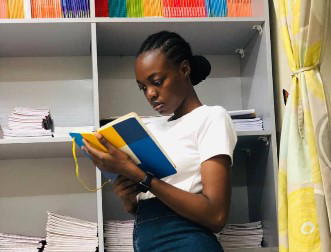
By Babatunde Rachel
As the world marks the International Day of Education in 2026, global conversation rightly centres on relevance. What kind of education truly prepares young people for life in the 21st century? For Nigeria, where over half of the population is under 19, this question is not abstract. It is urgent. And one answer deserves serious policy attention: the inclusion of Psychology as a core subject at all secondary school levels, from JS1 to SS3.
Education today can no longer be limited to the transmission of facts. In an age shaped by rapid technological change, artificial intelligence, social media pressure, economic uncertainty, and rising mental health challenges, innovative learning must go beyond cognition to include emotional intelligence, self-awareness, and social understanding. These are not soft skills; they are survival skills.
This is precisely where psychology belongs.
In Nigeria, psychology is still largely confined to tertiary institutions and treated as a specialised discipline rather than a foundational life subject. Yet the realities confronting Nigerian adolescents, including identity struggles, peer pressure, anxiety, trauma, violence, substance abuse, and digital overexposure, do not wait until university. They begin much earlier.
The question, therefore, is not whether psychology should be taught earlier, but why we have been delayed for so long.
As a counselling psychologist by training and a classroom teacher by practice, my insight is shaped not only by theory but by daily, close interaction with students. Through sustained one-on-one engagement with children and teenagers, I have observed that many behavioural and emotional challenges that surface in adolescence and adulthood can be traced to childhood experiences that were left unaddressed. Emotional gaps ignored early do not disappear; they often resurface later as more complex struggles that affect learning, relationships, and overall well-being.
Counselling, important as it is, frequently concentrates on managing outcomes such as habituated behaviours, emotional distress, and maladaptive coping mechanisms after they have already taken root. Education, however, holds a greater and more enduring power. When approached deliberately, it offers prevention rather than cure, equipping young people early with the awareness, language, and skills needed to understand themselves and navigate life more healthily.
Introducing psychology as a structured subject from JS1 to SS3 would fundamentally shift Nigeria’s educational approach from reaction to preparation. It would equip learners with the language and tools to understand themselves, regulate their emotions, make informed choices, and relate healthily with others. In doing so, it would reduce the long-term burden on school counsellors, healthcare systems, and even the justice system.
Critically, this proposal is neither radical nor impractical. A well-designed, age-appropriate psychology curriculum can be seamlessly aligned with existing educational goals.
At the junior secondary level, psychology would lay a foundation through the history of psychology, basic concepts of behaviour, biological influences, cognition, emotions, and social interaction. Students would learn why people think, feel, and act the way they do, starting with themselves. These concepts can be taught through relatable examples, storytelling, classroom activities, and culturally relevant scenarios that resonate with Nigerian realities.
At the senior secondary level, the curriculum can responsibly expand into more complex and applied areas such as mental health awareness, abnormal psychology, health psychology, forensic psychology, and the psychology of relationships, work, and society. Far from being abstract, these topics directly address issues Nigerian youths already encounter, including depression, addiction, trauma, crime, peer influence, and stress, often without guidance or the vocabulary to process them.
Some may argue that Nigeria already teaches Civic Education and Social Studies, which address moral values and citizenship. While these subjects are important, they are limited in scope and increasingly marginalised. They often prescribe what is right or wrong without equipping students to understand why people behave the way they do or how to manage internal conflicts. Psychology fills this gap by offering evidence-based insight into human behaviour, mental processes, and emotional development.
In an era where technology and artificial intelligence increasingly shape attention, identity, and decision-making, psychology becomes even more indispensable. No other subject systematically teaches students about cognitive biases, emotional regulation, resilience, empathy, mental health, and social behaviour. Without this knowledge, young people are left vulnerable, technologically connected but psychologically unprepared.
Beyond individual benefit, the societal implications are profound. A psychology-informed student body fosters more empathetic, inclusive, and emotionally literate school environments. Students learn to respect differences, understand diverse perspectives, and recognise the importance of mental well-being, not as a stigma, but as a shared human concern. This directly contributes to safer schools, reduced bullying, healthier peer relationships, and stronger communities.
For Nigeria, where education is often seen as the primary engine of national development, integrating psychology into secondary education aligns with broader goals of nation-building. A society that understands human behaviour is better equipped to manage conflict, promote social cohesion, and raise citizens who are not only knowledgeable but emotionally intelligent and ethically grounded.
As the International Day of Education reminds us, education must evolve with the needs of humanity. For Nigeria, embracing psychology at the secondary school level is not a luxury; it is a necessity. It is an investment in prevention over cure, understanding over punishment, and preparation over improvisation.
If we truly aim to raise a generation capable of thriving in an ever-evolving world, then we must teach them not only how to pass exams, but how to understand themselves and others. Psychology offers that bridge. The time to build it is now.
Babatunde Rachel a certified Teenage Counsellor/ Teacher
Disclaimer
Comments expressed here do not reflect the opinions of Vanguard newspapers or any employee thereof.