By Adeola Badru
A non-governmental organisation, HACEY, has urged women leaders across Oyo State to take proactive roles in preventing and responding to gender-based violence (GBV), describing them as crucial agents of change within their communities.
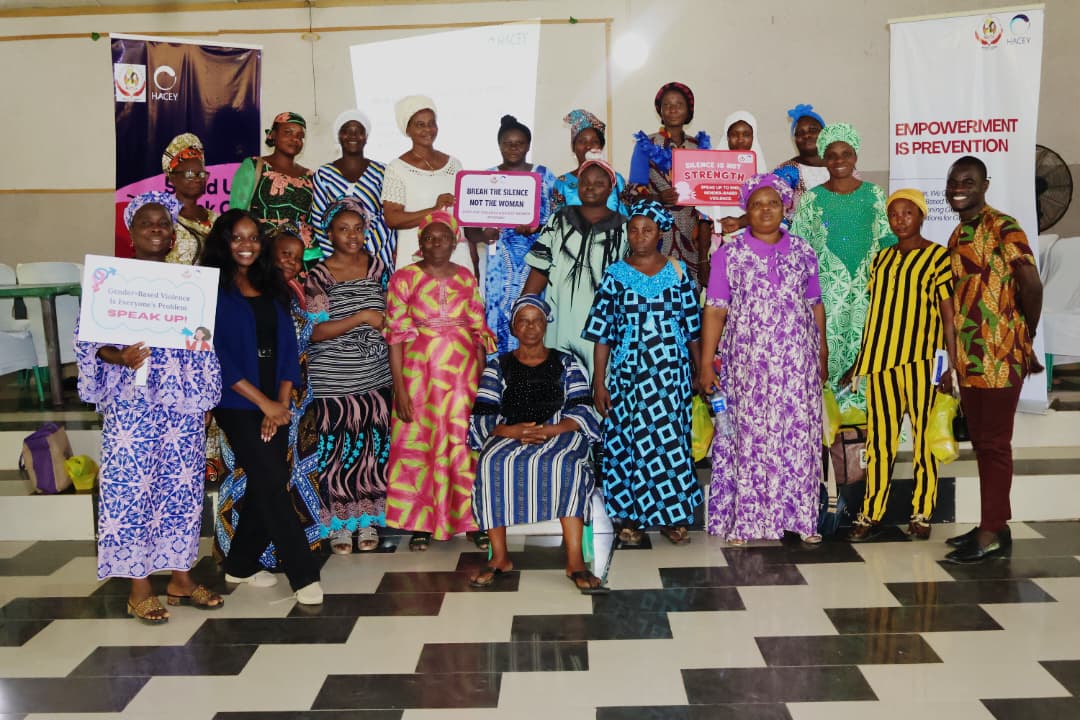
The advocacy workshop, held at Atiba, Oyo, in collaboration with Women Aid Collective (WACOL), brought together Christian women and cultural leaders to develop practical skills, community advocacy strategies, and survivor-centred approaches to tackling GBV.
The initiative is part of HACEY and WACOL’s broader strategy to empower women leaders to challenge harmful social, cultural, and religious norms that perpetuate gender-based violence in Nigeria.
Participants engaged in interactive sessions designed to build capacity in prevention, response, and advocacy. Activities included role-plays, case studies, group discussions, and the development of community action plans.
Delivering a lecture at the workshop, gender advocate Mrs. Funmilayo Adebukola Akinpelu highlighted the pivotal role women leaders play in driving change.
“Women occupy unique positions of influence in families, churches, and cultural spaces. When empowered with knowledge and strategies, they can challenge harmful norms, provide safe spaces for survivors, and lead advocacy efforts that create lasting impact,” she said.
Mrs. Akinpelu emphasised culturally sensitive and faith-based approaches, adding, “To effectively address gender-based violence, interventions must be tailored to the cultural and faith contexts of each community. Women leaders are key to ensuring these strategies are both accepted and sustainable.”
She also stressed the importance of practical action, stating, “Awareness alone will not end gender-based violence. Women leaders need tools, strategies, and guidance to implement prevention and response measures effectively in their communities.”
Encouraging participants to take the lead locally, she added, “Your responsibility does not end with this workshop. You are now equipped to return to your communities as advocates, mentors, and protectors. Influence your peers, challenge harmful practices, and ensure survivors are supported, heard, and safe.”
She further highlighted survivor-centred approaches, noting, “Every survivor deserves dignity, timely support, and an environment free from stigma. As women leaders, you can champion interventions that prioritise healing and empowerment.”
At the workshop, participants developed community advocacy action plans focused on awareness campaigns, referral networks, and strategies to engage local cultural and faith leaders in GBV prevention.
Disclaimer
Comments expressed here do not reflect the opinions of Vanguard newspapers or any employee thereof.