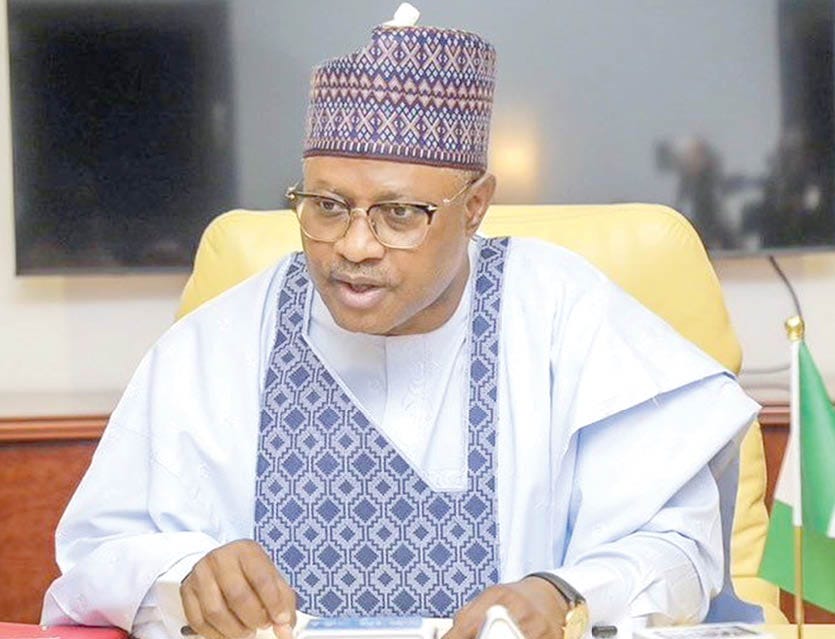
Governor Uba Sani of Kaduna State
By Abiodun Oluwadare
Economic development in contemporary Nigeria is increasingly shaped at the subnational level. As federal revenues tighten and competition for private capital intensifies, states that succeed are those able to project stability, policy coherence, and credible leadership. In this emerging landscape, Kaduna State under Governor Uba Sani has begun to reposition itself as a serious investment destination, not only within the Northwest but nationally.
Over the past two years, the administration has pursued a development strategy anchored in confidence-building, social, political, and economic. This approach marks a notable shift in tone and emphasis, with implications that extend beyond Kaduna’s borders. At a time when several states in the Northwest continue to struggle with insecurity, fiscal fragility, and investor hesitation, Kaduna is increasingly presenting an alternative narrative: that stability, dialogue, and strategic engagement can unlock capital and catalyse growth.
From Social Stability to Economic Signal
Investment rarely responds to policy documents alone; it responds to signals. One of the strongest signals a government can send is social stability. Kaduna’s history of ethno-religious tension once placed it at a disadvantage relative to other states competing for investment. Under Governor Uba Sani, however, the political environment has become noticeably calmer, more inclusive, and less confrontational.
Through sustained engagement with traditional rulers, religious leaders, labour unions, and community stakeholders, the administration has lowered social friction and political hostility. This stability has functioned as a form of economic infrastructure, less visible than roads or power lines, but just as consequential. For investors, predictability matters, and Kaduna has increasingly projected itself as a space where governance risks are manageable.
Within the Northwest, this distinction is significant. While states such as Zamfara, Katsina, and parts of Sokoto continue to face persistent security pressures that limit investor confidence, Kaduna has begun to differentiate itself as a relatively safer and more governable environment for long-term capital deployment.
FDI as Strategy, Not Symbolism
Governor Uba Sani’s recent engagement in China, aimed at advancing discussions around a reported $200 million mega poultry project, reflects a deliberate turn toward foreign direct investment as a development strategy rather than a symbolic gesture. According to official briefings, the project, scheduled to commence in January 2026, is expected to generate an estimated 350,000 direct and indirect jobs across the agricultural value chain.
Beyond the scale of the investment, its strategic value lies in sector choice. Poultry production is labour-intensive, demand-driven, and deeply embedded in local economies. Unlike extractive ventures that often operate as enclaves, poultry investment integrates directly with farming communities, small businesses, logistics providers, and consumer markets.
In a region where agriculture remains the backbone of livelihoods, this orientation aligns development ambition with social reality.
Spillover Effects and the Industrial Ecosystem
The economic significance of a mega poultry investment extends well beyond poultry farms themselves. Such a project operates as a hub within a broad industrial ecosystem, with multiplier effects capable of reshaping Kaduna’s economy and strengthening its competitive position in the Northwest.
The feed and crop production sector stands to benefit first. Poultry farming depends heavily on maize, soybeans, groundnut cake, and other feed inputs, crops already cultivated extensively across Kaduna and neighbouring states. Increased demand would stimulate expanded cultivation, contract farming arrangements, agro-processing, and improved storage facilities, directly raising rural incomes and strengthening food supply chains.
Closely linked is the agro-processing and light manufacturing sector. Feed mills, hatcheries, meat processing plants, cold storage facilities, and packaging units are essential complements to modern poultry operations. These facilities deepen industrial capacity, create skilled and semi-skilled employment, and attract secondary investors seeking proximity to reliable raw materials.
The transportation and logistics industry would also experience growth. Efficient movement of feed inputs, live birds, and processed products requires haulage services, refrigerated transport, warehousing, and distribution networks. This reinforces Kaduna’s role as a logistics corridor linking northern producers with southern consumer markets.
Equally important is the potential expansion of the veterinary, pharmaceutical, and biotechnology sectors. Large-scale poultry operations demand vaccines, animal health services, quality control laboratories, and biosecurity systems. These requirements open space for specialised service providers and research partnerships, areas that remain underdeveloped across much of the Northwest.
The energy and utilities sector, particularly renewable energy, is another beneficiary. Poultry farms and processing facilities require reliable power and water supply, creating opportunities for off-grid solar solutions, water treatment services, and waste-to-energy initiatives. Poultry waste can be converted into biogas or organic fertiliser, aligning investment with sustainability and climate-smart development priorities.
Downstream, the retail, hospitality, and food services sector gains from expanded protein supply. Increased availability of poultry products supports restaurants, hotels, supermarkets, food vendors, and institutional buyers such as schools and hospitals. This strengthens food security while stimulating small and medium enterprises across urban centres.
Finally, the financial services and insurance sector benefits from increased economic activity. Large agribusiness ecosystems require credit facilities, asset financing, insurance coverage, and risk management instruments. As investment deepens, banks and microfinance institutions expand their footprint, integrating Kaduna more firmly into formal economic circuits.
Taken together, these spillover effects point toward the possibility of agro-industrial clustering, where interconnected firms locate around a core investment to reduce costs and improve efficiency. If strategically managed, the proposed poultry project could anchor such a cluster, with long-term implications for exports, food security, and regional competitiveness.
Kaduna and the Northwest Investment Race
The Northwest has long been regarded as Nigeria’s food basket, yet it has struggled to translate agricultural potential into industrial growth. Insecurity, weak infrastructure, and policy inconsistency have constrained large-scale investment across the region.
The Uba Sani Kaduna’s emerging strategy therefore carries regional significance. Compared to neighbouring states, Kaduna benefits from relatively stronger infrastructure, proximity to Abuja, improving security conditions, and an increasingly investor-friendly governance posture. While Kano retains commercial depth and other states possess agricultural abundance, Uba sani is positioning Kaduna as the convergence point, where stability, infrastructure, and policy intent intersect.
Jobs, Youth, and Regional Stability
With one of the largest youth populations in the Northwest, employment generation is both an economic and security imperative. Labour-intensive investments such as poultry production provide structured employment pathways, skills development, and supply-chain participation.
In a region where youth unemployment has often fed criminality and instability, job-rich investments become instruments of both development and peacebuilding. Kaduna’s emphasis on employment-linked investment therefore reflects a strategic understanding of the political economy of security.
From Promise to Performance
Being pro-investment ultimately requires more than announcements and memoranda of understanding; it requires disciplined execution. For Kaduna State, the transition from promise to performance will hinge on a few critical governance variables. Land governance remains central, as large-scale investments depend on transparent land acquisition processes, secure titles, and predictable compensation frameworks that reduce disputes and delays. Progress in this area will determine how quickly projects move from negotiation to construction.
Equally important is infrastructure readiness. Reliable access roads, power supply, water resources, and logistics corridors are not ancillary concerns but core investment enablers. While incremental improvements have been made, sustaining investor confidence will require continuous alignment between investment locations and infrastructure planning, ensuring that production zones are not isolated from markets or utilities.
Regulatory efficiency and institutional coordination also shape outcomes. Investors seek clarity, clear timelines, defined approval processes, and consistent enforcement across ministries and agencies. Kaduna’s evolving governance style, which emphasises inter-agency consultation and stakeholder engagement, suggests an awareness of these demands. Translating this approach into streamlined procedures and predictable regulatory outcomes will be critical for maintaining momentum.
Finally, policy continuity and administrative discipline will determine credibility. Long-term investments, particularly in agriculture and manufacturing, extend beyond electoral cycles. The extent to which Kaduna can institutionalise its investment commitments, through legal frameworks, investment protection mechanisms, and transparent monitoring, will signal seriousness to both domestic and foreign partners.
Direction, therefore, matters as much as speed. Kaduna’s trajectory so far points to intentional planning rather than reactive improvisation. The challenge ahead is to convert this intentionality into measurable outputs, completed projects, functioning facilities, and sustained employment, thereby validating the state’s emerging reputation as a dependable destination for investment.
Conclusion: Kaduna as a Regional Investment Anchor
In the evolving contest for capital within Nigeria’s Northwest, Kaduna is emerging as a credible investment anchor. By combining social stability with strategic outreach and sector-focused planning, the state is signalling readiness for long-term partnerships.
If initiatives such as the proposed mega poultry investment materialise as planned, they will do more than create jobs; they will demonstrate how subnational leadership can reshape regional development trajectories. In a Northwest long defined by unrealised promise, Kaduna’s experience suggests that confidence, coherence, and investment-friendly governance can still change the story.
Abiodun Oluwadare
Professor of Political Science
Nigerian Defence Academy
Kaduna
Disclaimer
Comments expressed here do not reflect the opinions of Vanguard newspapers or any employee thereof.