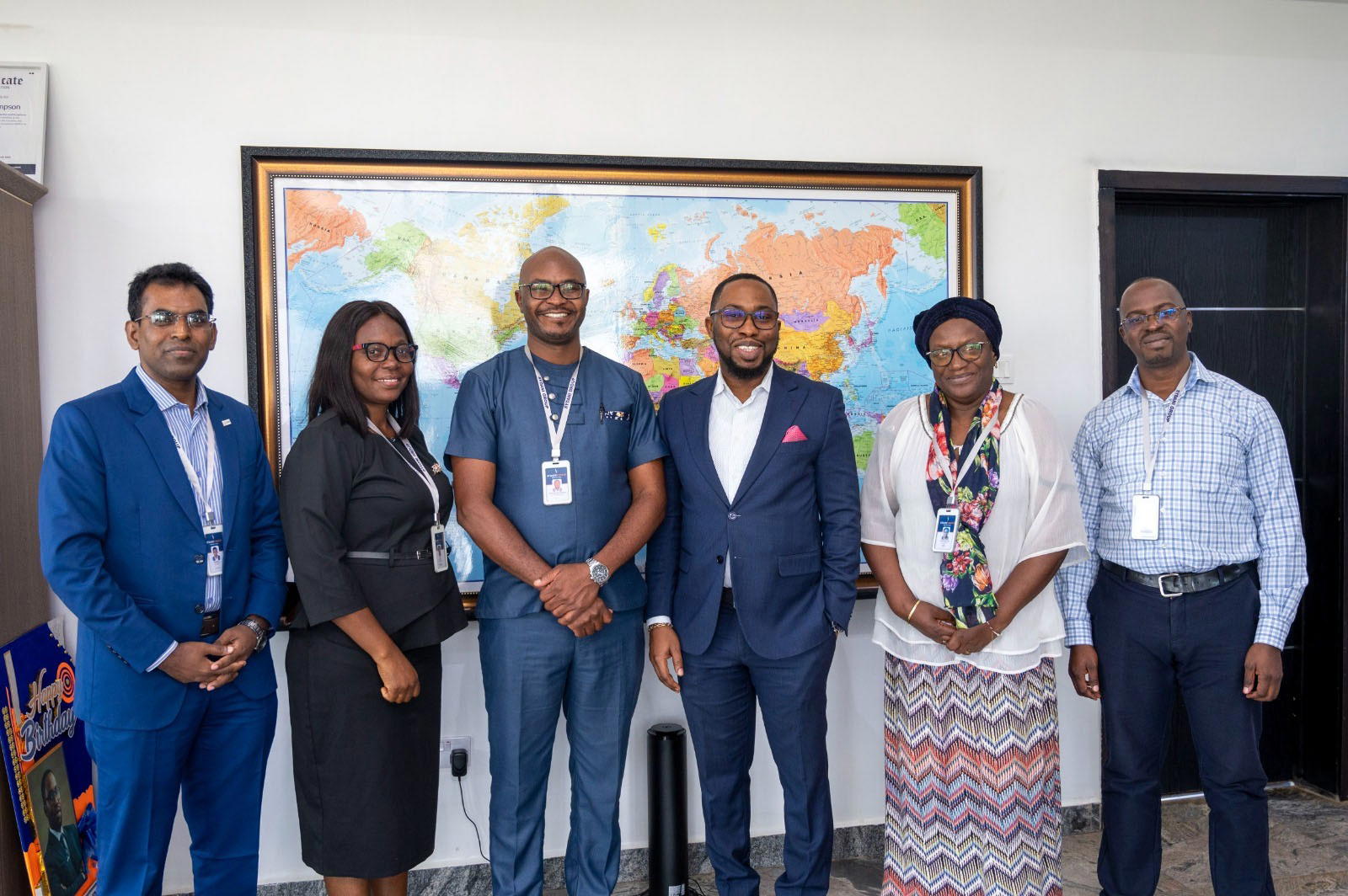
From left: Bangladesh Country Lead, Sohel Rana; Midwife Consultant, MEA project, Ejura Ochala; Uganda Country Lead, Amos Getanda; GMP Sydani Group, Sidney Sampson; Senegal Country Lead, Elisabeth Benga-De; Kenya Country Lead, Aloysius Ssennyonjo, after a workshop on midwife-led Enterprise Assessment, in Abuja, FCT.
By Tunde Oso
A Nigerian consultancy firm, Sydani Group, is leading a Gates Foundation–funded, multi-country research initiative aimed at strengthening maternal and newborn health systems through evidence on midwife-led enterprises.
The study, known as the Midwife Led Enterprises Assessment (MEA), is being implemented in partnership with the Nikao Support Initiative (NSI) and will examine midwife-led practices in Nigeria, Kenya, Senegal, Uganda and Bangladesh, with findings expected to inform policies that support improved maternal and neonatal care delivery.
“Maternal and neonatal mortality continue to pose significant health challenges globally, with low- and middle-income countries carrying a disproportionate burden,” said Adaugo Chidubem, Project Lead of the Midwife-Led Enterprise Assessment (MEA) at Sydani Group.
“In many of these contexts, midwives form the backbone of maternal care delivery, yet the systems that support or limit their effectiveness—particularly within independent or semi-autonomous midwife-led enterprises—remain insufficiently understood.”
Chidubem said the Gates Foundation–funded initiative was designed to close this gap, noting that “the Midwife Led Enterprises Assessment is set to address this evidence gap, with Sydani Group, working alongside Nikao Support Initiative, leading the coordination of this multi-country research effort.”
“The study will examine midwife-led practices across Nigeria, Kenya, Senegal, Uganda and Bangladesh to inform policies that strengthen maternal and newborn health systems,” she added.
As part of the project’s preparatory phase, the coordinating organisations recently convened a technical engagement in Abuja involving research leads from participating countries.
“As part of the project’s preparatory phase, Sydani and NSI convened a technical engagement in Abuja with research leads from the participating countries,” Chidubem said.
“The three-day meeting focused on reviewing and contextualizing the global study protocol to ensure specificity and relevance to each country, including data collection tools, and aligning teams on country-specific strategies for the assessment.”
Participants at the meeting identified key methodological and ethical priorities for the research.
“The global team aligned on the importance of streamlining research instruments, ensuring coherence across qualitative and quantitative modules, and refining consent procedures to better address sensitive areas such as financial and operational data that midwife-led facilities may be hesitant to share,” Chidubem said.
Regulatory and institutional barriers were also highlighted during discussions.
“Concerns about regulatory environments, taxation and licensing surfaced as potential barriers to data access,” she said.
“To address these issues, the team emphasised building strong relationships with midwifery professional associations and engaging credible institutional entry points.”
She added that “participants also underscored the need for an introductory letter from the Gates Foundation to strengthen legitimacy during stakeholder engagement.”
Ethical approval processes across countries were identified as another critical issue.
“The workshop outlined requirements and pathways for ethical approvals in each country, acknowledging that national review processes differ significantly and may affect the study timeline,” Chidubem said.
“A consolidated ethics guide is being developed to support teams in navigating documentation requirements, timelines and responsible authorities.”
“For Nigeria, the MEA presents an opportunity to generate policy-relevant insights that could strengthen midwife-led service delivery, especially in underserved communities where access to skilled birth attendants remains limited,” Chidubem said.
“With Sydani Group at the helm, Nigeria is playing a central role in coordinating this global evidence generation effort.”
Looking ahead, she said outcomes from the Abuja engagement will guide the next phase of the study, noting that, “The outcomes of the Abuja engagement have laid the groundwork for the next phase of the study, including refining tools, developing stakeholder engagement plans and preparing ethical submissions across countries.”
“As global attention remains fixed on reducing preventable maternal and neonatal deaths, the MEA project is positioned to contribute crucial evidence to support more resilient and responsive maternal health systems,” she added.
Disclaimer
Comments expressed here do not reflect the opinions of Vanguard newspapers or any employee thereof.