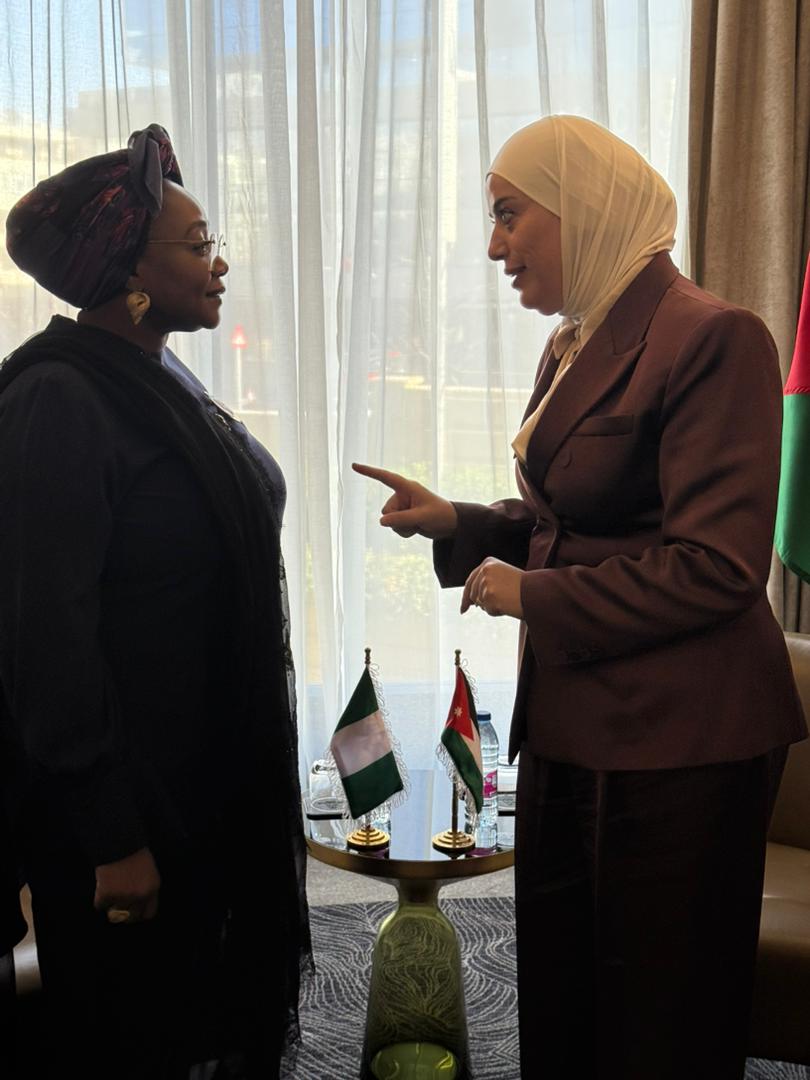
Nigeria’s sweeping social reforms under the Renewed Hope Agenda took centre stage in Amman, Jordan, as the country showcased its people-centred development model at the Arab Ministerial Conference on the Implementation of the Doha Declaration 2025. Represented by the Honourable Minister of Women Affairs and Social Development, Imaan Sulaiman-Ibrahim, Nigeria presented its evolving social protection and empowerment framework as a practical pathway for inclusive growth and regional cooperation.
Addressing a distinguished audience of Arab ministers, development partners and multilateral institutions, the Minister conveyed President Bola Ahmed Tinubu’s commitment to advancing social justice and inclusive development, while expressing gratitude to Jordan for hosting what she described as a critical forum for shared learning and collective action.
According to a statement released by her Special Adviser on Media and Publicity, Mr Jonathan Eze, Sulaiman-Ibrahim described the conference as a reaffirmation that social development is inseparable from peace, stability and sustainable prosperity. She stressed that Nigeria’s alignment with the Doha Political Declaration 2025 reflects a broader national resolve to embed social inclusion at the core of governance.
The Minister explained that Nigeria Agenda 2050 and the Renewed Hope Agenda provide the policy backbone for ongoing reforms, ensuring that development strategies focus squarely on poverty reduction, human capital development and equitable opportunities for women, children and vulnerable groups. She highlighted institutional innovations such as Regional Development Ministries and Agencies and Ward Development Initiatives, designed to drive balanced growth and bring governance closer to the people.
She further noted that the creation of a dedicated agency for National Social Investment Programmes has strengthened delivery mechanisms for cash transfers, youth employment, school feeding and enterprise support, all anchored on a robust National Social Register. Complementing these efforts, Nigeria’s enhanced National Digital Identity Portal has improved service access, accountability and precision in social protection targeting.
Sulaiman-Ibrahim underscored Nigeria’s growing investments in youth and women as engines of national transformation, citing initiatives like the Nigeria Youth Investment Fund, the Creative Economy Development Fund and expanded technical, vocational and STEM education programmes. She said these interventions are deliberately structured to equip young Nigerians, especially women, with the tools to innovate, create wealth and contribute meaningfully to national development.
The Minister also spotlighted the Renewed Hope Social Impact Intervention 774 and the Nigeria for Women Programme Scale-Up as flagship platforms driving large-scale women’s empowerment, community resilience and institutional care reforms. She added that Nigeria continues to scale investments in healthcare, education, climate resilience and clean energy, while strengthening data governance and social protection systems.
Emphasising the importance of collaboration, Sulaiman-Ibrahim called for sustained regional and international partnerships to address shared social and economic challenges. She noted that Nigeria’s expanding engagement with foreign governments and development partners has already yielded stronger cooperation in advancing women’s empowerment, protecting the girl child and supporting vulnerable populations.
She concluded by reaffirming Nigeria’s commitment to the Doha Declaration 2025 and to deeper cooperation with Jordan and Arab League partners, urging participants to translate policy commitments into measurable impact that transforms lives and communities across the region.
Disclaimer
Comments expressed here do not reflect the opinions of Vanguard newspapers or any employee thereof.