Health experts have underscored the importance of implementation research (IR) in strengthening health systems and improving the real-world impact of health interventions across Africa.
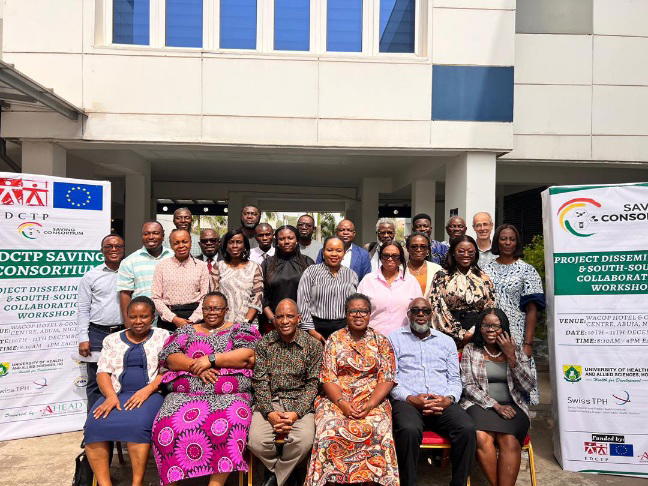
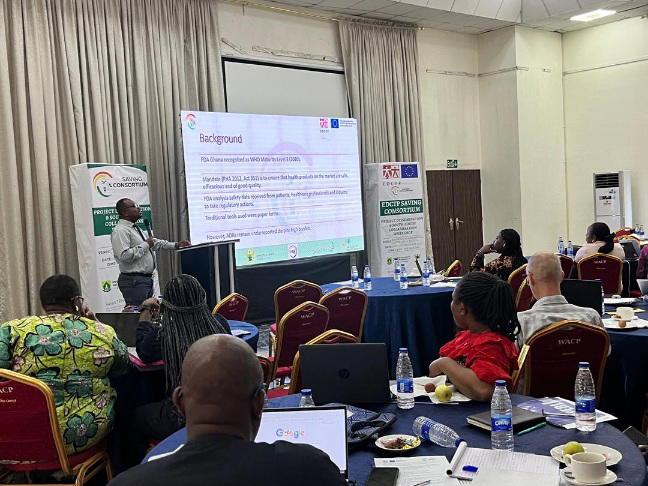
This was the focus of discussions at the EDCTP-supported SAVING (Sustainable Access and Delivery of New Vaccines in Ghana) Consortium dissemination and South–South collaboration workshop on implementation research, organised by the Academy for Health Development (AHEAD) in Abuja.
The one-and-a-half-day event brought together stakeholders from Nigeria and Ghana, including representatives of ministries of health, regulatory agencies, academic institutions, and research organisations, to share findings and lessons from the SAVING project.
Speaking at the event, the Principal Investigator and Chair of the SAVING Consortium, Prof. Margaret Gyapong, emphasised that implementation research is critical to understanding why effective health interventions often underperform when scaled within routine health systems.
Gyapong, a Professor of Applied Health Social Science, noted that although effective disease control tools, strategies, and policies exist, their expected health impact is frequently not achieved in practice.
“In practice, when effective disease control tools, strategies, or policies are expanded and implemented across entire systems, their health impact often does not meet expectations. Implementation research can identify and address the bottlenecks and barriers responsible,” she said.
She added that implementation research improves programme effectiveness by responding to context, optimising resource use, and enhancing equity across different populations.
Presentations at the meeting highlighted how implementation research differs from traditional research conducted in controlled environments. Speakers explained that IR operates within real-life health system settings, where policy shifts, logistical constraints, and workforce challenges influence outcomes.
In a joint presentation titled Overview of Implementation Research, Prof. Olumide Ogundahunsi and Prof. Tuoyo Okorosobo, members of the SAVING Consortium, described IR as “a systematic approach to understanding and addressing barriers to effective and quality implementation of health interventions, strategies, and policies.”
Discussions also stressed the importance of stakeholder engagement. Participants noted that IR is most effective when researchers, implementers, policymakers, regulators, and community stakeholders jointly frame research questions and adapt interventions to local needs.
Another recurring theme was the slow transfer of research evidence into routine practice. Experts at the workshop observed that implementation research helps bridge this gap by generating context-specific evidence that supports timely decision-making within health systems.
The need for continuous knowledge translation was also emphasised, with speakers noting that lessons from implementation should be communicated to decision-makers in real time rather than waiting until the end of project cycles.
Also speaking, the President of the Academy for Health Development (AHEAD), Prof. Adesegun Fatusi, announced that the next implementation research training workshop is scheduled for the first quarter of 2026. He said the programme would provide a platform for interdisciplinary dialogue and encourage participants to share practical implementation challenges.
Fatusi, a Professor of Community Medicine, added that special attention would be given to tailoring health interventions to local cultural and health system contexts.
Organisers said the dissemination meeting aimed to strengthen South–South collaboration between Nigeria and Ghana, promote evidence-based decision-making, and develop an actionable roadmap for sustaining the gains of the SAVING project beyond its funding period.
They concluded by calling for increased investment in implementation research and capacity building to ensure that proven health interventions achieve sustainable impact within African health systems.
Disclaimer
Comments expressed here do not reflect the opinions of Vanguard newspapers or any employee thereof.