By Peter Duru, Makurdi
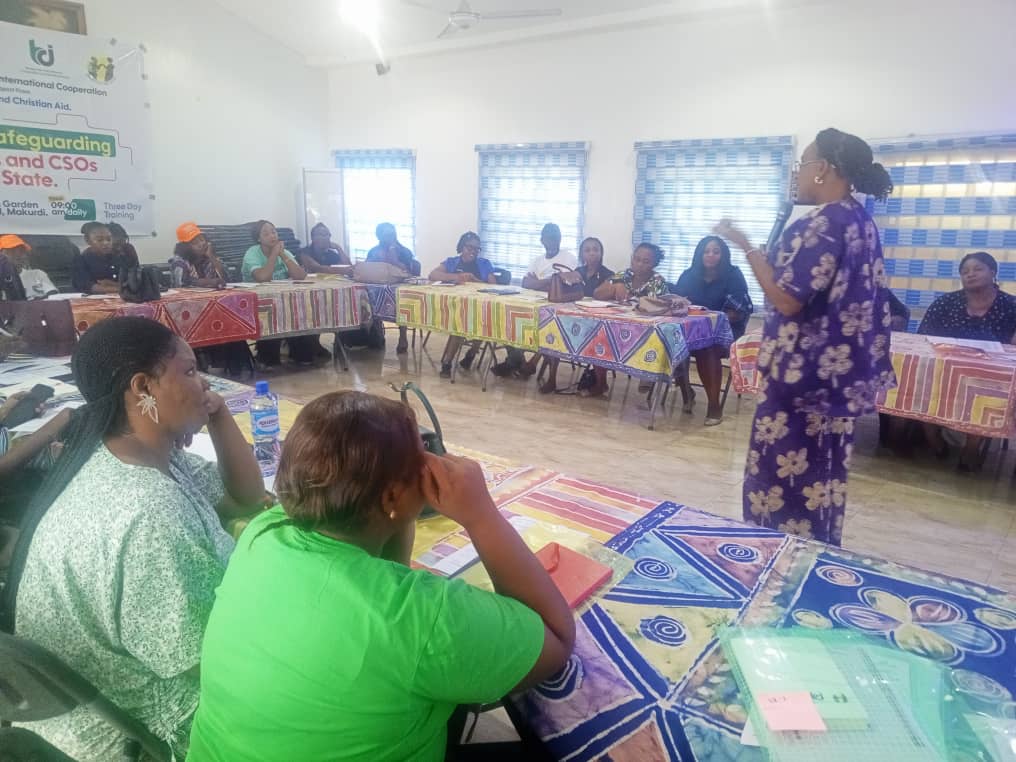
The Benue State Bureau for International Cooperation and Development (BICD), in collaboration with Ohonyeta Caregivers and Christian Aid, has launched a three-day capacity-building training aimed at improving the state’s response to Gender-Based Violence (GBV) and safeguarding.
The workshop brought together Ministries, Departments and Agencies (MDAs) as well as women-led Civil Society Organisations (CSOs) to deepen their expertise in handling gender-sensitive cases.
Speaking at the opening session, Daniel Oyigoga, Project Manager at Ohonyeta Caregivers, said the initiative was one of several joint efforts to strengthen institutional mechanisms for protecting vulnerable groups across Benue.
“This training will help participants better understand how to address gender-sensitive issues. It will strengthen their programming skills and improve proposal writing because they will gain a clearer understanding of project implementation on GBV and safeguarding, including internal organisational policies,” Oyigoga said.
Day one featured expert presentations on the nature of GBV as a public health and human rights concern, the role of service providers, and the lived experiences of survivors. Facilitators also examined how provider attitudes, including stigma, blame or lack of confidentiality, could worsen trauma or expose survivors to further harm.
Using findings from the Nigeria Demographic and Health Survey (DHS) 2018, presenters highlighted the scale of the crisis in Benue.
According to the data, 77.4 percent of women aged 15-49 experienced physical violence, while 27.81 percent suffered emotional abuse from intimate partners in the state.
The training also referenced reports documenting alarming levels of sexual violence in displacement settlements.
The experts warned that lapses by service providers, such as dismissiveness, stigma, or breaches of confidentiality, could expose survivors to deeper trauma or even greater danger.
They emphasised that many victims do not openly disclose abuse but often present with health complications that attentive health workers and social service providers can detect.
Key messages from the session underscored the importance of self-awareness, active listening, non-judgmental communication and respect for survivors’ autonomy, dignity and safety.
Participants were also educated on vulnerable groups most at risk of GBV, including women living alone, those in abusive relationships, persons with disabilities, rural women and girls, individuals in conflict-affected communities, and women who challenge social norms.
The facilitators outlined globally accepted principles for responding to GBV, including a survivor-centred approach, confidentiality, informed consent, and ensuring the safety and security of victims.
Other technical sessions focused on legal support, the provision of dignity kits and emergency material assistance, and the necessity of multisectoral collaboration.
Stakeholders were urged to strengthen referral pathways, adopt standard operating procedures across agencies, and ensure safe data collection and storage using tools such as the GBV Information Management System (GBVIMS).
On prevention, the training stressed the role of community engagement, especially involving men and boys, and the importance of economic empowerment programmes such as livelihood training, financial literacy and initiatives that support women’s leadership.
Disclaimer
Comments expressed here do not reflect the opinions of Vanguard newspapers or any employee thereof.