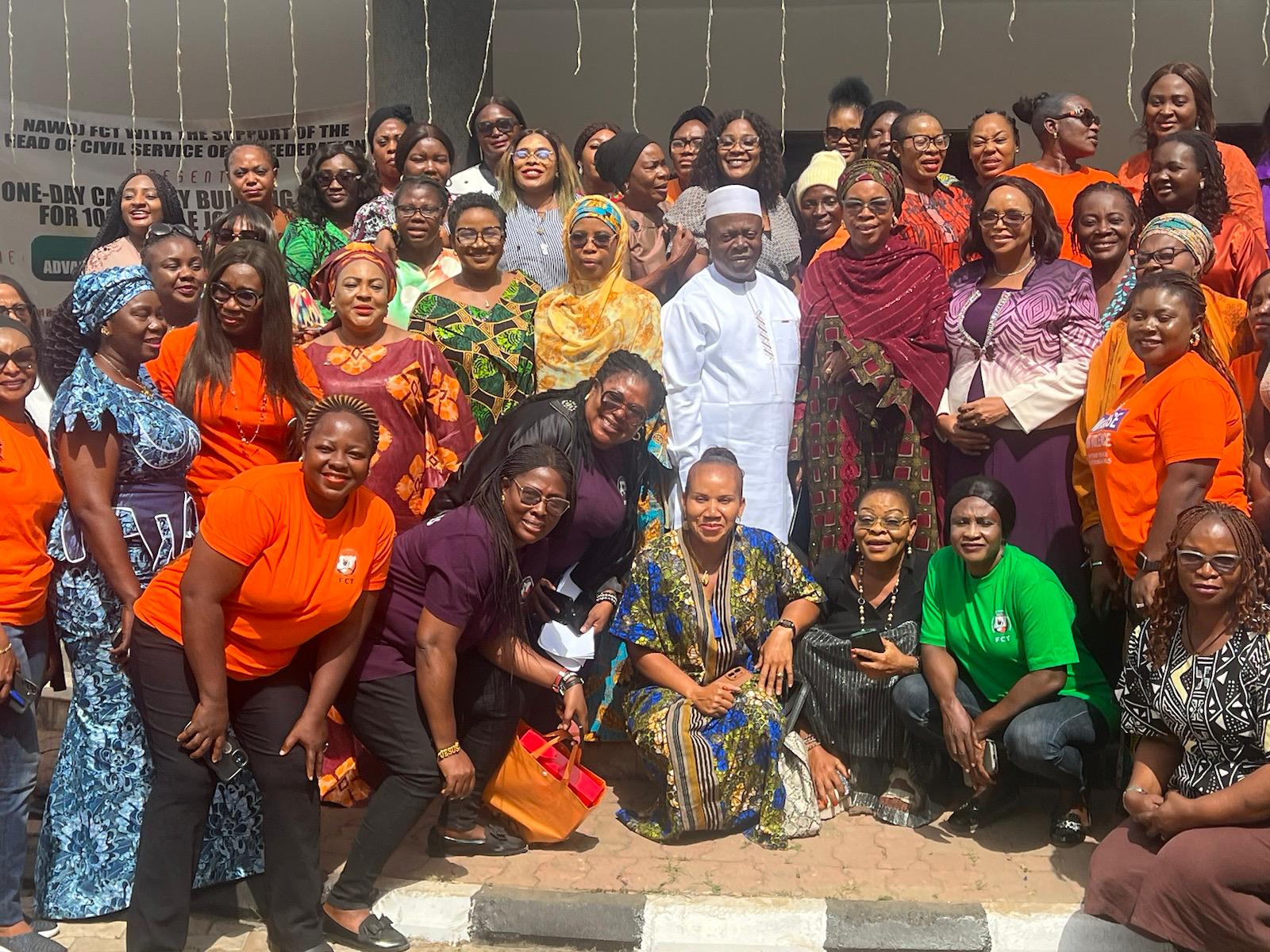
Capacity building for 100 journalists
…as Head of Civil Service backs capacity building for 100 female Journalists
By Gift ChapiOdekina, Abuja
The Office of the Head of the Civil Service of the Federation (OHCSF) on Tuesday restated the Federal Government’s commitment to promoting gender inclusion, professional development, and workplace diversification in the media and public service sectors.
Represented at a one-day Capacity Building Training for 100 Female Journalists in Abuja, the Head of the Civil Service of the Federation, Mrs. Didi Esther Walson-Jack, said the administration remains focused on empowering women through skills development, digital literacy, and improved access to leadership opportunities.
The programme, organised by the Nigeria Association of Women Journalists (NAWOJ), FCT Chapter, in partnership with the OHCSF, was themed “Workplace Diversification: Advancing Female Journalists’ Role in the Newsroom.”
Speaking on behalf of the Head of Service, the Director of Press and Public Relations in the OHCSF, Mrs. Eno Olotu, emphasised the central role of female journalists in shaping narratives and promoting women’s visibility in leadership.
In her presentation titled “Amplifying Women’s Voices in Leadership,” Olotu noted that despite women constituting nearly half of Nigeria’s population, they hold less than ten percent of top decision-making roles.
“The imbalance is not a reflection of competence or ambition, but of underrepresentation,” she said.
“The media sets the agenda for society. When we highlight women’s leadership stories, we normalize women in power. Female journalists are uniquely placed to drive this change.”
She charged women in the media to become “narrative shapers, agenda setters, mentors, and advocates for gender equity,” urging them to use their platforms to spotlight women breaking barriers across governance, business, and innovation.
Chairman of the NUJ FCT Council, Comrade Grace Ike, said the gathering represented more than a training — it was a bold statement about the value and power of women in the newsroom.
She said many female journalists work twice as hard to be recognized while also facing harassment, discrimination, and limited opportunities.
“Women are not the future of journalism; women are the present — and the present must be respected,” Ike declared.
“NAWOJ is a shield and a movement. As NUJ, we stand firmly with you in the fight for fair, safe, and inclusive newsrooms.”
National Chairperson of NAWOJ, Hajiya Aisha Ibrahim, urged women journalists to embrace new skills, challenge biases, and demand equitable representation in editorial decisions.
She praised the OHCSF for supporting the initiative, noting that workplace diversification enriches storytelling and strengthens democratic accountability.
“Diversification means more than numbers. It means equitable influence, inclusivity in decision-making, and recognition of women’s talents,” she noted.
Earlier, Chairperson of NAWOJ FCT, Bassey Ita-Ikpang, declared the training open, describing it as a major step toward strengthening the capacity and visibility of women journalists.
She stressed that the challenges faced by female journalists — including deadline pressure, limited visibility, home-front burdens, and leadership barriers — demand targeted interventions.
“This training is born out of our collective desire to see women take their rightful place in the newsroom, embrace digital transformation, and thrive in leadership,” she stated.
“We sincerely appreciate the Head of Civil Service of the Federation for supporting this vision and demonstrating commitment to workplace diversity.”
The event featured sessions on digital transformation, leadership visibility, data-driven storytelling, and gender-sensitive reporting led by media experts and senior newsroom leaders.
Participants described the training as timely and transformative, coming at a moment when conversations about gender equity in Nigerian media are gaining momentum.
The programme is expected to equip participants with new strategies to assert influence, strengthen advocacy for gender-balanced newsrooms, and amplify the voices of women leaders across all sectors.
Disclaimer
Comments expressed here do not reflect the opinions of Vanguard newspapers or any employee thereof.