By Ebunoluwa Sessou
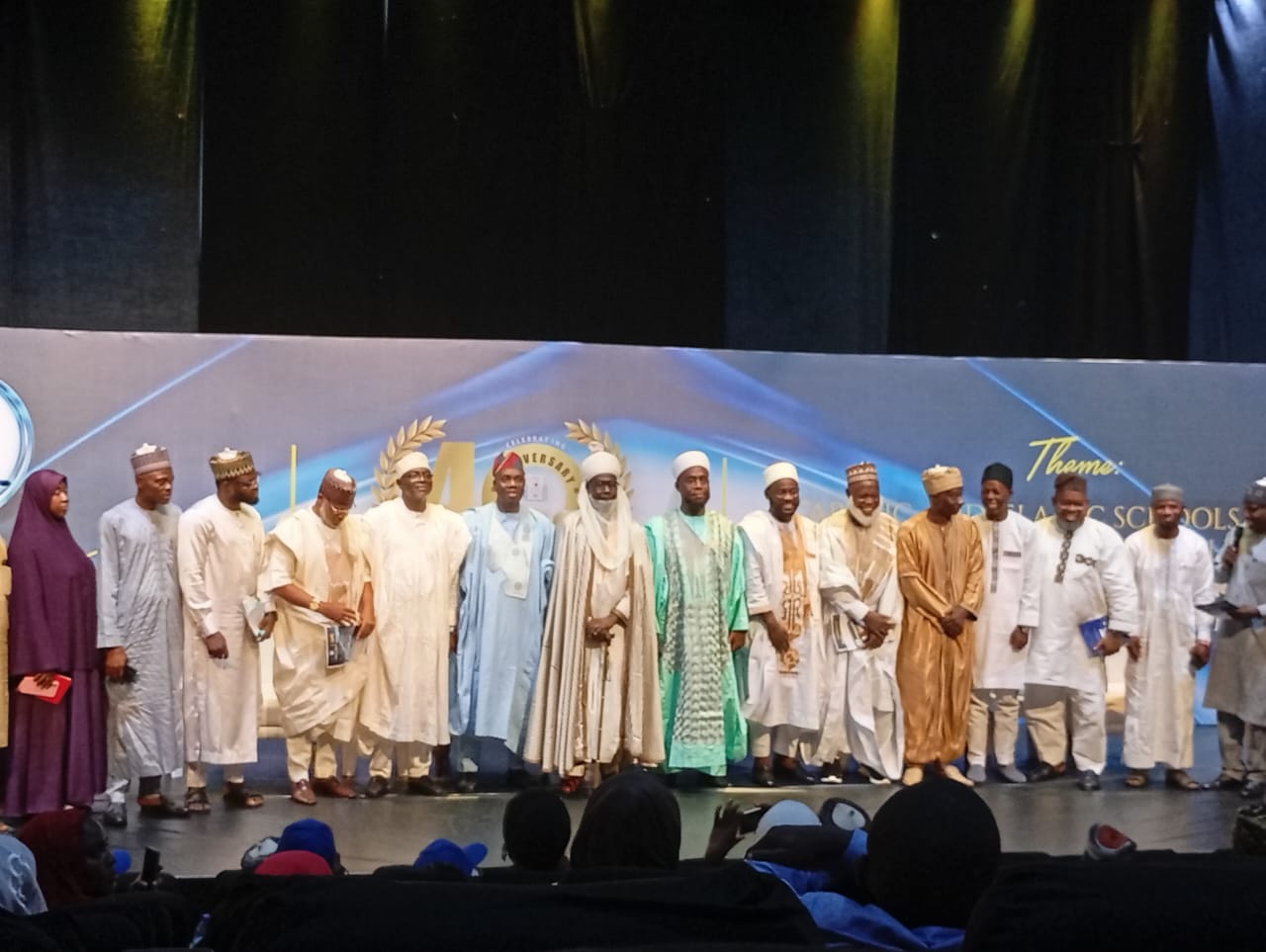
The 40th anniversary of Markaz-ul-Uloom School of Arabic and Islamic Studies drew leading scholars, clerics, academics and stakeholders to Lagos, where urgent calls were made for curriculum reform, institutional collaboration, and stronger economic pathways for graduates of Arabic and Islamic schools in Southwest Nigeria.
The symposium, themed “Arabic and Islamic Schools in the Contemporary World: Achieving Synergy through Diverse Mechanisms,” was chaired by the Emir of Kano, His Royal Highness Muhammad Sanusi Lamido Sanusi II, who was represented at the event.
Speakers highlighted widening gaps between graduates of Arabic/Islamic institutions and their contemporaries in other academic fields, as many trained clerics struggle to remain economically competitive without compromising religious values.
The Emir, in his message, noted that the challenge is twofold: graduates with additional Western-style education often drift away from Dawah work due to intellectual tensions within the clerical space, while others without such exposure face low income, underemployment, or resort to unethical and illegal means of survival.
He warned that incidents involving clerics engaging in fraudulent or criminal activities reflect deep social and economic vulnerabilities, not failures of Islamic education itself. He urged stakeholders to address both employability and the moral crisis emerging within the system.
Also, Professor Amidu Olalekan Sanni of Lagos State University, in his keynote paper, situated Arabic and Islamic learning within centuries of West African intellectual culture.
Describing Arabic as the “Latin of Africa,” he explained that the language historically enabled trade, administration, scholarship, and religious literacy across the region. He argued that the sector now stands at a critical transition point requiring a fresh 40-year vision.
Sanni called for the integration of traditional learning systems with modern digital tools, including artificial intelligence and digital humanities.
He noted that distinguished figures such as Prof. Is-haq Oloyede succeeded partly because they combined madrasa training with opportunities in the wider academic world.
According to him, even conventional university degrees are becoming insufficient without added digital skills, entrepreneurship, and innovation.
Meanwhile, the Founder and Director of Markaz-ul-Uloom, Sheikh Dr. Tunde Abdulazeez, celebrated the school’s four-decade journey from modest beginnings to one of the region’s leading Arabic institutions. He emphasised that synergy among Islamic schools is now a survival strategy, not a luxury, warning that no institution can operate in isolation in a rapidly digital world.
Abdulazeez praised the intellectual legacy of Sheikh Adam Abdullah Al-Ilory, who championed collaboration long before it became a modern educational ideal. He argued that Arabic and Islamic schools must now produce graduates who are spiritually grounded yet technologically literate, capable of opening the Qur’an with one hand and a laptop with the other.
At the event, participants were charged to understand that, strengthening the ecosystem, harmonising curricula, expanding digital literacy, and fostering institutional partnerships are essential to repositioning Arabic and Islamic education in Southwestern Nigeria.
Disclaimer
Comments expressed here do not reflect the opinions of Vanguard newspapers or any employee thereof.