…Nigeria records over 24,000 violent incidents a year — House Leader
…Current security situation deeply concerning — Doguwa
By Gift Chapi-Odekina, Abuja
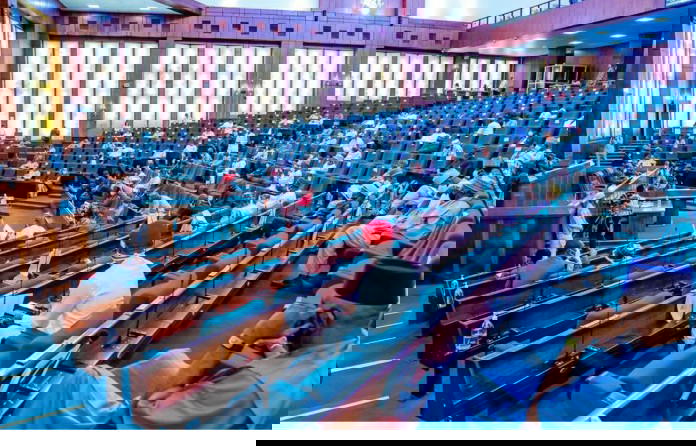
The House of Representatives on Tuesday held a special plenary session on Nigeria’s escalating insecurity, with lawmakers raising concerns over rising violent incidents across the country and calling for urgent reforms in the nation’s security architecture.
Minority Leader, Hon. Kingsley Chinda, said insecurity cannot be effectively addressed without national unity and sincerity of purpose.
He noted that many Nigerians feel unsafe while travelling and urged Parliament to re-evaluate its role in strengthening public safety.
“We cannot fight this battle without unity,” he said, while identifying political tensions, porous borders, economic hardship and extremist influences as contributing factors. He urged Parliament to consider establishing a National Border Force and to advance discussions on state or community policing.
He also called for a closed-door meeting with security chiefs to communicate public concerns and expectations.
Deputy Speaker, Rep. Benjamin Kalu, said the country’s security challenges require legislative interventions alongside security operations.
According to him, existing laws provide strong deterrence, but institutional weaknesses and limited resources have hindered effective implementation.
Kalu outlined a five-point framework for addressing security gaps, citing issues such as banditry, kidnapping, and the rise of illegal armed groups.
He also spoke against informal or unregulated ransom negotiations, proposing legislation to ensure more structured and transparent responses to abductions.
“A police force that cannot plan long-term cannot protect this nation,” he warned, while supporting the consideration of decentralised policing as part of a broader reform strategy.
House Leader, Rep. Julius Ihonvbere, provided statistical insights, noting that Nigeria recorded over 24,000 violent incidents between December 2023 and November 2024, based on national security data.
He said multiple regions face unique security threats and that over 1.5 million Nigerians remain in internally displaced persons (IDP) camps.
While acknowledging ongoing government efforts—including troop deployments, technology investments and air operations—he said more emphasis is needed on preventive and community-focused strategies.
He added that insecurity in Nigeria has implications for stability across the West African region.
Rep. Ado Doguwa expressed deep concern about the situation, particularly in parts of the North, saying many communities are under severe pressure.
While recognising the efforts of security agencies, he stressed that more coordinated and robust action is required to restore public confidence.
He warned that insecurity could affect preparations for the 2027 elections if not urgently addressed.
Rep. Victor Nwokolo, representing the South-South, said many communities across Delta and neighbouring states are facing serious challenges, including kidnappings and attacks on highways.
He said police logistics limitations hamper rapid response and called for strengthened community-level vigilance and value-orientation programmes.
He also recommended that local governments support community security initiatives and that private sector participation be encouraged in road rehabilitation to reduce vulnerability to attacks.
Responding to Doguwa’s call for a temporary legislative shutdown, Deputy Speaker Kalu cautioned that such a step could be misinterpreted by the public.
“No problem is too big for Parliament to address,” he said. “We will not shut the parliament. We are part of the solution.”
He added that insecurity affects all regions to varying degrees and requires a united, comprehensive approach.
Disclaimer
Comments expressed here do not reflect the opinions of Vanguard newspapers or any employee thereof.