By Gabriel Ewepu
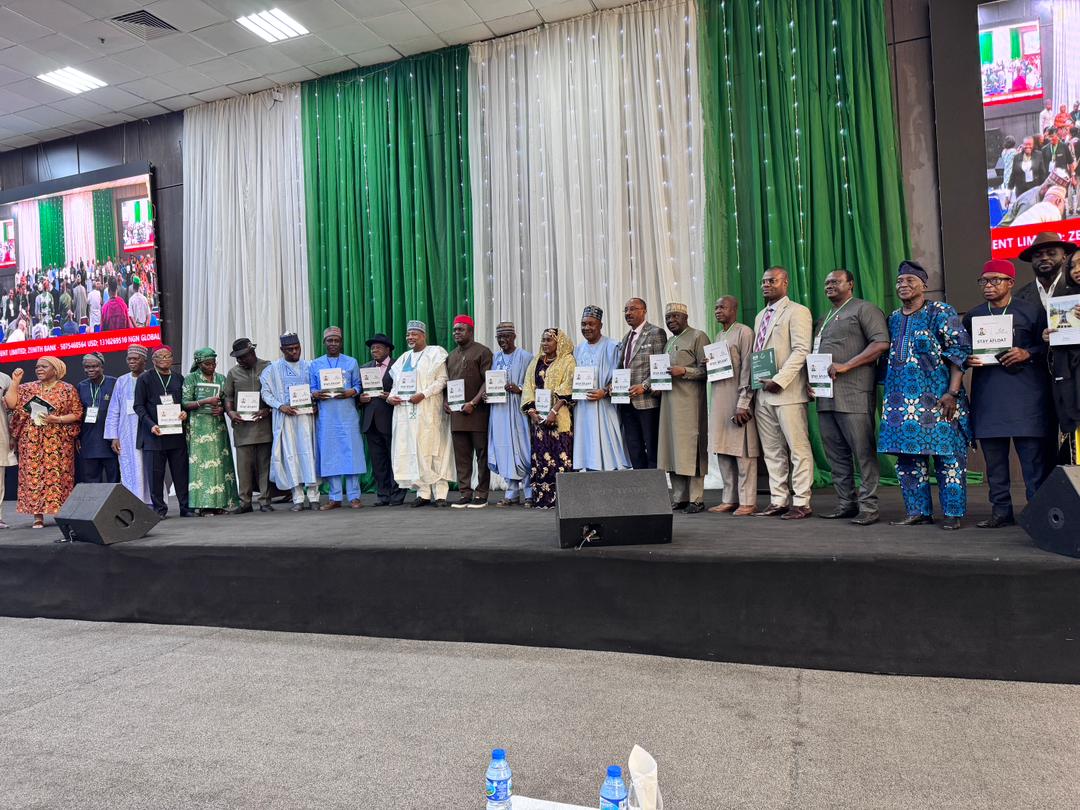
ABUJA – THE Nigerian Hydrological Services Agency, NiHSA, and partners, Monday, kicked started $500 million fundraising as part of flood disaster preparedness under the Global Flood Disaster Management Project, GFDMP.
President Bola Tinubu said the move for the fundraising is very important in order to mitigate impacts of flooding while noting that Nigeria had lost large expanse of farmlands, having critical infrastructure destroyed, and high displacement of people.
Tinubu who was represented by the Minister of Agriculture and Food Security, Sen Abubakar Kyari noted that with the GFDMP in place there would be a lot of improvement in terms of modern forecasting tools, real-time monitoring networks and digital alert systems to give communities adequate preparation time during emergencies.
Meanwhile, the ‘Stay Afloat’ project is basically, to strengthen early-warning systems, expand resilient infrastructure, build technical capacity and enhance community engagement in flood-prone communities.
He said: “Nigeria has prioritised early warning systems, improved disaster-response coordination and environmental protection.
“The GFDMP will accelerate these efforts by providing global expertise and technological support
“These systems will give governments and citizens the precious gift of time to prepare, respond and save lives.”
Meanwhile, the Director-General, NiHSA, Umar Mohammed, expressed deep concern over the devasting impact of flood disaster on Nigerians as most families have become vulnerable, businesses have gone down, houses reduced to rubbles, hence the seriousness about preparedness, which is less costly instead of waiting for disaster to strike and the people are affected.
“Today’s fundraising drive focuses on areas that are critical: Early warning systems, and Community preparedness and resilient infrastructure
“We must move from reacting to disasters to predicting, planning, and preventing them. Achieving this requires bold investment—not only from government but also from the private sector, development partners, and philanthropists who understand that national resilience is everyone’s responsibility.
“To our partners and donors, let me assure you: the National Assembly will continue to provide legislative support, oversight, and policy guidance to ensure every contribution is used with accountability, transparency, and strategic focus”, Mohammed said.
He further stated that, “Today, we have the chance to build a Nigeria where communities are not endlessly recovering from floods, but confidently living above the threat of disaster.”
In a keynote address, former Federal Permanent Secretary,
Amb Godknows Igali, noted that flood is not just a Nigerian challenge but a natural disaster that affects even the advanced countries, but the preparation before it happens is not taken lightly by them.
“For people who live in floodplains, wetlands, and coastal areas, floods are a part of life. Where I come from, we grew up expecting annual floods that covered our farmlands and communities.
“But today, the real problem is not ordinary flooding—it is the monster floods: floods that overwhelm entire villages, farmlands, towns, and tragically lead to loss of lives. That is the danger we now face.
“This is why preparation is essential, and this is why NiHSA deserves commendation for focusing on preparedness.
“What we are doing today is preparing for a natural reality. It is like the author who wrote a book titled “Preparing for Death”—meaning that some events are inevitable, and wise societies prepare ahead. As a country and as an institution, NiHSA must help Nigeria prepare”, he added.
Also, in a remark, the Chairman, NIHSA Board, Prof Salihu Mustapha, while commending NiHSA for the initiative, still reiterated that flood preparedness and prevention is all citizens’ responsibility and not the government alone.
“I believe NIHSA has recognized this reality. Floods cannot be stopped entirely, but their impacts can be ameliorated. That is the essence of today’s event: preparing for floods before they strike.
“I commend the DG NiHSA for understanding that flood management is not the government’s duty alone. Globally, stakeholders recognize their responsibility.
“Yet, in Nigeria, we tend to blame the government for problems—even for local issues such as a blocked street, poor drainage, or traffic congestion. While the government plays a role, it is not the sole beneficiary of a clean, safe environment.
“The innovation here is the recognition that flood management is a shared responsibility between government and stakeholders.
“We must believe that we all have a stake in flood prevention and in mitigating its adverse effects”, Mustapha added.
Disclaimer
Comments expressed here do not reflect the opinions of Vanguard newspapers or any employee thereof.