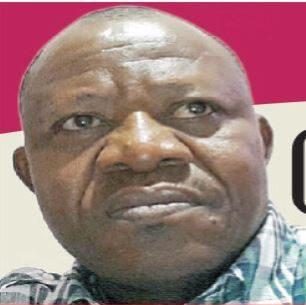
Ochereome Nnanna
Nigeria is subtly being subjected to a sort of change that many of us could never have imagined in our wildest dreams. If we do not wake up now and smell this coffee, it may become too late. Those pursuing this change are armed to the teeth, sumptuously funded by local and international facilitators in the Muslim world.
Nigeria is a multi-religious, multi-cultural entity forcefully forged into a country without consultation by the former British colonial authorities. Nobody sought our consent in the 1914 amalgamation of the Southern and Northen Protectorates along with the Colony of Lagos. When the colonialists split the country into three administrative units – the Eastern, Western and Northern Regions in 1952, it was done for the convenience of the colonisers. But by 1958 when the drive for independence had gathered great force throughout the world, Britain decided to involve Nigeria’s indigenous leaders in a series of dialogues aimed at agreeing on the country template we were to operate after independence.
At the London and Ibadan talks, Nigerians agreed to live together under the constitution in a diverse, equitable, democratically-administered federal republic where there would be no state religion. Post-independence Nigeria was built on the existing regional tripod – East controlled by the Igbo majority, West under the charge of Yoruba majority and the North under a Muslim ethnic hybrid referred to as “Hausa-Fulani” which in effect is Fulani-dominated. It was only in the North that a Minority ethnic group called the shots over the much larger Hausa, which had been reduced to a vassal status after 1804 jihads that established the Sokoto Caliphate, long before the British came.
Because the North was geographically and demographically much larger than the East and West, the Minority Fulani of the North gained power over the Federation of Nigeria when the British colonialists left in October 1960. The post-independence crises in the West eventually sparked the January 15, 1966 first coup. Because of the pattern of killings of the Northern and Western political and military leaderships, with those of the East virtually untouched, it was dubbed an “Igbo coup”. The anti-Igbo pogroms in the North followed and culminated in the revenge, counter- coup of July 29, 1966, where the Igbo-born military Head of State, General Aguiyi-Ironsi, was assassinated. Efforts to broker peace collapsed. General Yakubu Gowon’s arbitrary creation of 12 States which reduced Igboland to a tiny, landlocked enclave in the East, prompted the declaration of an independent Biafra Republic by Colonel Odumegwu Ojukwu, Military Governor of the Eastern Region.
After the civil war which forced Biafra back into Nigeria with false promises of reconciliation, reconstruction and rehabilitation under the “No victor, no vanquished” mantra, the country resumed its march to nationhood. But by then, the Tripod arrangement had been altered. The North, which led the pan-Nigerian and international coalition of military forces to abort Biafra, took charge, with the West as a very strong sidekick. Power was shared, with the West given the economy and a lion’s share of the federal bureaucracy, while the Fulani (the North) took hold of political and military powers. The Igbo were sidelined, and remain so, 55 years after.
The June 12, 1993 election won by Moshood Abiola but annulled by the Fulani-led military, became a turning point after the Yoruba-led struggle to reverse the annulment. To prevent a possible South-West secession bid, the Fulani (North) had to resort to Yoruba appeasement. General Olusegun Obasanjo, whom General Sani had dumped in jail over an alleged coup plot, was brought out and made president to compensate for Abiola’s election annulment and murder in detention. Since then, the North (Fulani) and the West (Yoruba) have produced two elected presidents – Obasanjo and Bola Tinubu for the Yoruba, and Umaru Yar’Adua and Muhammadu Buhari for the Fulani (North).
Since the All Progressives Congress, APC, started plotting for power after the 2011 general elections, what appeared like a tag-team power sharing arrangement between Fulani and Yoruba is gradually giving way to something sinister. If the post-independence Nigerian dream was miscarried, what is unfolding, if not nipped in the bud, will result in the Fulani conquest and Islamisation of all Nigeria. The Nigeria military, Police, Security and civil defence forces have curiously lost their capacity to protect the nation and its territorial integrity from forces of Fulani jihadist insurrections – Boko Harm, herdsmen “Janjaweed” terrorists, bandits, Lakurawa, Mahmudi, Ansaru and ISWAP. Many of these groups were imported by Northern politicians to destabilise the country if they failed to achieve their political objective in 2015.
The most insidious reality is that the Federal Government and its organs of state have refused to tag the herdsmen “Janjaweed” as terrorists. Excuses are made for their atrocities, and many useless “peace committees” are organised, yet their genocides and displacements of hapless Christian communities are allowed to continue. International jihadist terror networks like Al Qaeda and ISIS, which have been routed on several Middle Eastern fronts, have become involved in the Fulani jihadist efforts to reconquer Nigeria. They want to turn Nigeria into a caliphate possibly to be known as Nigerianistan, a full-blown sharia state.
If this happens, the fate of the Hausa ethnic group will be a child’s play. Even those who are already Muslims in the South-West will still be trampled as “unbelievers” because the basis of the military subjugation is not really religion but ethnic supremacy. If it were about religion, the Hausa would have been as much in power in the North as the Fulani.
I am a citizen of Nigeria. I will never go to Nigerianistan. I still believe that if Nigeria is run as originally agreed in 1958, it will still fulfill its potentials as Africa’s giant.
If not, I will fight for my freedom.
Disclaimer
Comments expressed here do not reflect the opinions of Vanguard newspapers or any employee thereof.