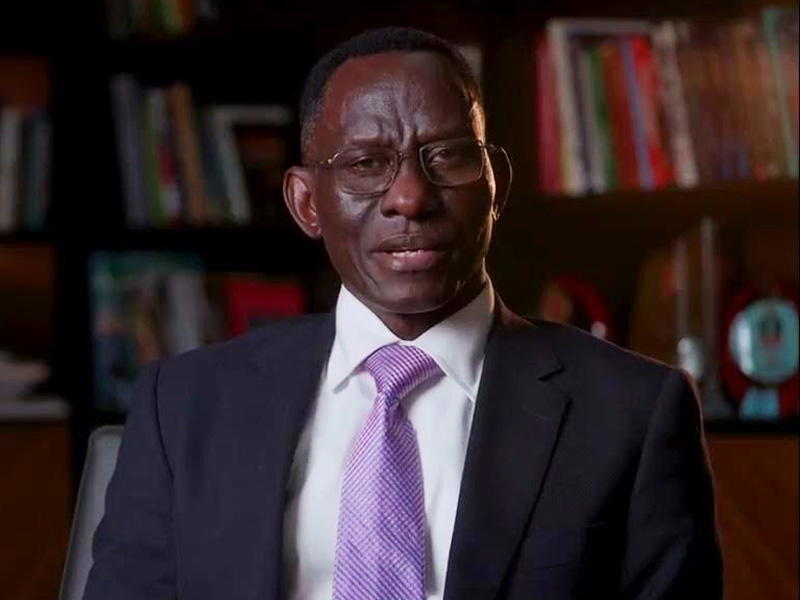
Lucky Irabor
By General Lucky Irabor
It is evident that information management and national stability are inseparable. The media’s responsibility in balancing reportage with sensitivity during security threats cannot be overstated, especially as public perception often determines the resilience of our national fabric. In this respect, Editors, as gatekeepers of truth, hold a sacred responsibility in preventing fearmongering and misinformation from weakening our social cohesion. Our discussion thus invites sober reflection on how journalistic ethics can reinforce both public confidence and national resilience. This conversation is not only essential but timely, considering the evolving nature of insecurity and public communication in the country.
INTRODUCTION
The media, across the world, has evolved into a strategic actor in shaping perceptions of global peace, conflict, and collective security. In recent decades, the role of media in influencing terrorist narratives, recruitment, and counter-terrorism strategies has gained unprecedented attention from international institutions. As terrorism continues to adapt across continents, media reportage and framing have become powerful tools capable of either mitigating or magnifying security threats, depending on the accuracy, tone, and ethical responsibility of coverage. It is therefore evident that media practices have far-reaching consequences on how societies interpret and respond to terror incidents, thereby influencing the strength and resilience of state security systems. Moreover, as transnational terrorism becomes more networked, the power of communication technologies in shaping public sentiment and governmental response has grown profoundly. According to the United Nations Office of Counter-Terrorism (UNOCT, 2024), over 80 per cent of extremist propaganda circulates through mainstream and alternative media outlets, reinforcing the urgency for responsible reporting. Therefore, understanding the dynamic interplay between media influence and terrorist communication strategies provides a compelling foundation for advancing collective security and strengthening national security.
Remarkably, contemporary global realities have underscored how terrorism strategically exploits media channels to amplify fear and influence public perception. The United Nations Educational, Scientific and Cultural Organisation, UNESCO, observes that distorted news dissemination intensifies public anxiety and destabilises cooperative security efforts among states. Similarly, the World Economic Forum (2024) notes that coordinated misinformation campaigns have escalated radical narratives, thereby complicating counter-terrorism coordination. In response, nations have progressively strengthened professional media reportage through collaborative policy reforms and inter-agency information protocols aimed at enhancing counter-terrorism and national security. In democratic societies, the legitimacy of national protection rests on the ability to defend life and order without undermining justice, freedom, or the public’s right to know. This is so because, when courage gives way to silence, and any perceived danger is used as justification for stifling critique, the very safeguard intended to protect society can become a threat. Hence, national security is viewed as the strategies, institutions, laws, and practices by which a state seeks to protect its territory, citizens, and institutions from internal and external threats.
The relevance of today’s discourse cannot be overemphasised. Nigeria’s security challenges are deeply intertwined with the dynamics of media representation and the public’s access to credible information. According to the National Security Strategy, NSS, 2019, effective security management depends not only on intelligence gathering and military response but also on how the media interprets and disseminates information about such operations to the citizenry. Scholars such as Nwabueze (2020) and Asemah (2024) have also argued that partnership between journalists and security operatives could reduce terrorist propaganda by over 40 per cent when properly institutionalised. I therefore wish to stress that, the media remains a vital pillar in counter-terrorism communication, capable of strengthening or weakening public trust in governance depending on how reports are structured. Indeed, the National Broadcasting Commission, NBC, has continuously emphasised responsible journalism in conflict-sensitive reporting, as misinformation or sensational coverage has often exacerbated public fear and hindered military operations in counter-insurgency zones. This situation demands urgent reflection and ethical reorientation among media professionals on how best to report issues of national security without compromising state strategy or public confidence. Hence, it becomes imperative that we collectively explore strategic mechanisms that would promote responsible media engagement in the national security architecture.
CONCEPTUAL CLARIFICATIONS MEDIA
In this wise, it is necessary to keep in mind the National Broadcasting Commission, NBC, view on media. It sees the media as the institutionalised means of mass communication used to inform, educate, and influence public perception toward societal stability and development. This definition is particularly relevant for our discourse, as it highlights the media’s responsibility in fostering social order and ensuring that national narratives support peace and security.
Therefore, it is important to stress that the media in Nigeria operates not merely as an information channel but as a national stabilising instrument. Furthermore, one must recognise that the manner in which the media reports acts of terrorism significantly shapes public perception and governmental response. Hence, for the purpose of this lecture, media shall be operationally defined as the organised system of communication and information dissemination employed to shape public understanding, guide national discourse, and support the coordinated defence of state security interests. Accordingly, it becomes crucial to understand the media not only as a societal mirror but as a vital instrument in sustaining national resilience and promoting collective security consciousness.
TERRORISM
The intention here is not to give a scholarly treatise on terrorism but to curate a common understanding as we explore the complexities within the context of media, terrorism and national security matters. Various scholars and establishments define terrorism based on its motives, strategies, and security implications. According to the United Nations Office on Drugs and Crime (UNODC, 2023), terrorism refers to acts intended to cause death or serious harm to civilians with the purpose of intimidating a population or compelling a government or international organisation to act or abstain from acting. While this definition is globally recognised, it overlooks the specific socio-political realities and evolving patterns of terrorism within fragile national security systems such as Nigeria’s. From a domestic outlook, the Terrorism (Prevention and Prohibition) Act (Federal Republic of Nigeria, 2022) conceptualises terrorism as any act that involves violence or the threat of violence against persons or property intended to intimidate, coerce, or destabilise the government or society. This definition reflects the contextual realities of Nigeria’s security environment, including insurgency, banditry, and extremist propaganda that exploit societal vulnerabilities and media narratives to achieve destructive objectives.
In deference to the foregoing therefore, it is important to note that terrorism in Nigeria today transcends physical attacks; it also encompasses psychological warfare and media manipulation aimed at undermining public trust in state institutions. Consequently, for the purpose of this lecture, terrorism shall be operationally understood as the deliberate orchestration of fear-driven violence and information distortion by non-state or ideological actors to weaken national unity, disrupt governance processes, and challenge the authority of the state. Therefore, as we proceed, it becomes imperative to understand terrorism not only as an act of violence but as a calculated strategy that exploits media exposure, manipulates emotions, and threatens the very foundation of national security and societal cohesion.
NATIONAL SECURITY
One fundamental purpose of government is to ensure security of the state, territory and its people. This simple statement is laden with diverse interpretations, enormous responsibilities, and innumerable strategic choices. No matter its scope, national security remains one of the most essential obligations that every government must uphold using all legitimate instruments of power and persuasion. In essence, national security transcends the protection of the nation-state. It is in this vein that the UNDP advocates that governments should view national security from a human security perspective. The totality being that policies should seek to focus attention on the human person as the object of the existence of states. This multidimensional approach makes security more enduring, conferring immense value to the human person through poverty reduction and elimination of social inequality, fear, anxiety, and their associated impacts.
•To be concluded
•Being a paper delivered by General Lucky Irabor (rtd) at the just concluded Nigerian Guild of Editors Conference in Abuja.
Disclaimer
Comments expressed here do not reflect the opinions of Vanguard newspapers or any employee thereof.