By CHINENYE NWAOGU
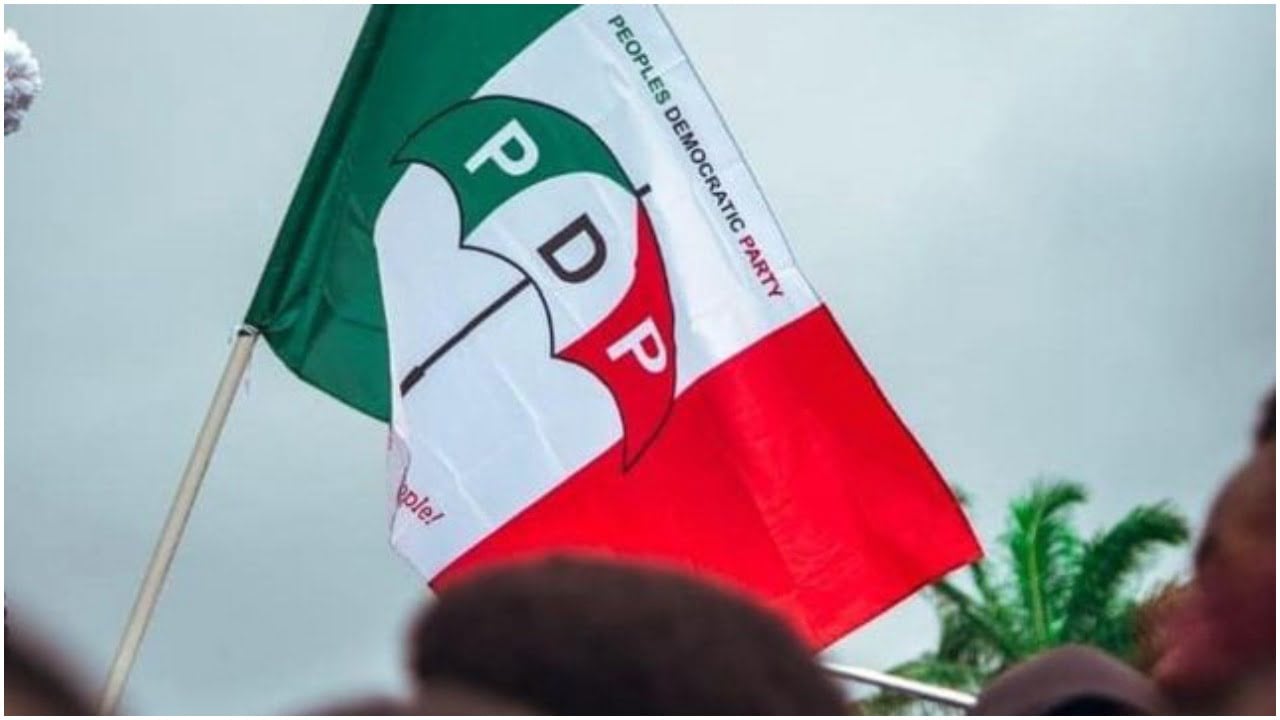
The Peoples Democratic Party once styled itself as the largest political party in Africa. It governed Nigeria for 16 uninterrupted years and boasted confidently that it would rule for 60 years. Its national spread, electoral dominance, and financial muscle created the illusion that it was untouchable. Yet the seeds of its decline were already sprouting beneath the surface. Today the PDP ship appears to be drifting steadily toward a long predicted collapse, fulfilling a doomsday prophecy the party never believed could come true.
The party grew too big too quickly. Victory came in waves, and with each electoral win came layers of comfort and arrogance. Rather than anchor its operations on enforceable rules, internal democracy, and strong institutions, the PDP built a culture of strongmen. These powerful individuals commanded regional empires within the party, controlled state structures, and negotiated national leadership as personal territory. Over time, their interests diverged and their ambitions clashed violently.
As these cracks widened, the party leadership ignored the early warning signs. The fall of 2015 did not happen overnight. It was a long process of internal sabotage, indiscipline, zoning violations, exclusions, and a growing disconnect from its base. The party that once prided itself on being the custodian of Nigeria’s democratic tradition collapsed like Humpty Dumpty, and unlike the nursery rhyme, all the king’s men have struggled to put it back together again.
One of the most damaging habits of the PDP has been its refusal to obey its own rules on zoning and inclusion. Nowhere is this more evident than in its treatment of the South-East. The region has been loyal to the PDP since 1999, delivering overwhelming votes in election after election. Yet when the time came to apply the zoning principle fairly, the South-East was sidelined. This opened deep wounds and fed resentment that pushed many loyal supporters away.
The party is now paying heavily for those missteps. By treating zoning as optional, PDP weakened its moral compass. What emerged was a power play where blocs pursued personal bargains rather than collective survival. Into this chaos stepped former allies of the party who had once been its loudest critics. Many of them, now positioned within the ruling establishment, are quietly pulling strings to keep the PDP disoriented and fractured.
When Nyesom Wike felt betrayed by the party, he aligned with forces that had no interest in PDP’s survival. His rebellion was a direct response to the party’s inability to resolve zoning, internal trust, and power rotation. What he may not have realised initially is that he became part of a broader strategy to push the PDP into paralysis. The plan was simple: keep the party embroiled in endless legal battles, internal litigation, factional disputes, and leadership controversies until the 2027 election cycle arrived. The goal was to leave PDP too weak to mount any serious challenge to the ruling party.
The real targets were Atiku Abubakar and Peter Obi along with their supporters. These two men represented the wings of PDP that could rally national momentum. Their eventual exit from the party was a survival move, but even outside the PDP, they remain entangled in the same political forces determined to keep the opposition fragmented.
Today, many within the PDP leadership admit privately that the party is in the political intensive care unit. The irony is that neither the ruling APC nor the smaller opposition parties are interested in reviving it. A weakened PDP benefits them all. What is even more troubling is that many of those who profited the most from PDP’s dominance now maintain one leg in APC and the other in PDP. These cross carpet politicians, whose loyalties are fluid and transactional, are among those tightening the lid on PDP’s political coffin.
Despite this grim picture there is a paradox. PDP remains the most geographically spread, most diverse, and most rooted political organisation in Nigeria. At the grassroots, the party is still strong. Local chapters across all zones still hold meetings, mobilise members, and maintain party loyalty. PDP’s voter base is large and deeply embedded in communities. What the party lacks is credible national leadership, unity of purpose, and alignment of interests at the top.
The truth is that the PDP crisis is not ideological. It is not structural. It is not even about electoral strategy. It is a crisis of ambitions, personal fiefdoms, and irreconcilable interests among its senior stakeholders. Until those interests are realigned or until a new generation of leaders emerges without old baggage, the PDP may continue its slow descent.
Yet Nigeria’s political system still needs a strong opposition party. A democracy without healthy competition drifts toward authoritarian tendencies. If the PDP collapses completely, the nation risks a dangerous imbalance of power.
The question now is whether the party can reinvent itself or whether it will complete its downward slide into political irrelevance.
What is clear is that the PDP’s journey from dominance to fragility is not accidental. It is the consequence of years of neglecting internal rules, sidelining loyal regions, empowering strongmen over institutions, and ignoring the storms gathering on its horizon.
Unless a radical reset happens soon, the PDP ship may not only be fulfilling the doomsday prophecy, it may already be sailing into it.
•Nwaogu, a political commentator, wrote from Umuahia, Abia State.
Disclaimer
Comments expressed here do not reflect the opinions of Vanguard newspapers or any employee thereof.