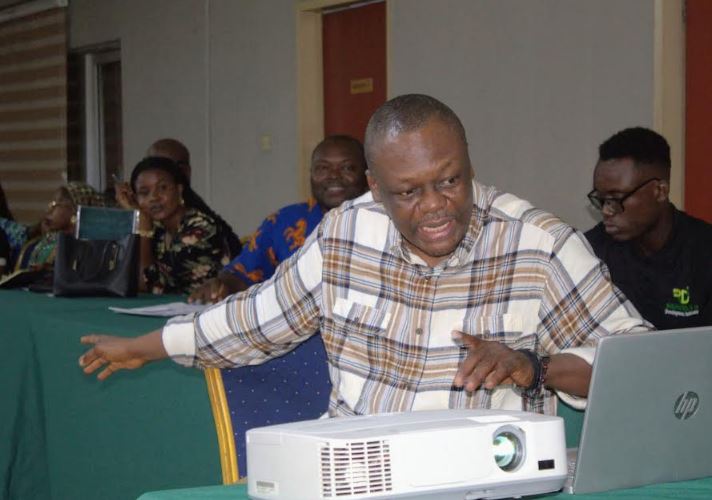
File image of Philip Jakpor
Nigeria’s precarious mental health situation and how it affects young people was the thrust of discussion at the third edition of Renevlyn Development Initiative ( RDI) Youth and Resilience Series which held Thursday 14 November 2025.
The virtual event which had a theme Confronting Mental Health Issues dwelt on the growing numbers of young people battling anxiety, depression and burnout and the abysmal number of practising psychiatrists which the Association of Psychiatrists in Nigeria puts at only 200 serving a population of over 250 million, a ratio of 1 psychiatrist per 1 million citizens.
In her welcome address, Dominion Amupitan, Project Support Staff at RDI, said the event was designed to confront a crisis affecting millions of young Nigerians.
“Mental health affects how we think, feel and handle life’s challenges. Nigeria is currently battling a mental health emergency,” she said.
WHO data
She cited WHO data which notes that 20% of Nigerians or about 40 million people live with mental disorders such as anxiety, depression and ADHD.
She pointed out that many young people face a crippling mix of unemployment, financial anxiety and constant societal pressure.
“These burdens are a lot to bear. Mental health conversations are often brushed aside due to misconceptions and lack of access to professionals.”
Amupitan stressed that RDI created the forum to deepen understanding and promote practical coping strategies.
The first presentation on Understanding Mental Health Challenges was delivered by Dr. Lola Mojoyinola (MB.ChB, FWACS, Dip.IBLM), who defined mental wellbeing as a state of emotional, psychological and social wellness central to how people think, feel and act essential for balanced, fulfilling living.
She urged young people to prioritise self-care and seek support early, even as she added that anxiety becomes a disorder when persistent and overwhelming.
Symptoms
Some of the common symptoms include restlessness, fatigue, and constant worry.
She distinguished eustress (positive stress) from distress, and said lifestyle changes in sleep, exercise, diet help manage anxiety.
She also urged victims to seek professional help early for diagnosis and proper management.
On depression, which she described as persistent sadness and loss of interest, she said it comes with warning signs such as sleep changes, appetite changes, low energy and withdrawal.
She stressed that depression affects both mental and physical health, adding that lifestyle interventions and professional support are crucial for recovery.
She introduced lifestyle medicine as a preventive, whole-body approach involving a healthy diet, regular exercise, restful sleep, avoiding harmful substances, mental focus and presence and healthy habits that promote long-term mental wellness.
Survival
In her presentation on ‘Survival Over Sanity?’ — Dr. Chioma Okonkwo — an Environmental Health Scientist, academic coach, and digital mental health advocate pointed out that millions of young Nigerians are living in “survival mode,” not true wellbeing.
Sharing her personal experience, she said academic excellence once masked severe emotional distress.
Using herself as case study, she revealed that “I was a straight-A student dealing with constant anxiety. I cried often, felt enormous pressure and feared disappointing others. I had no language for what I felt,” she said.
She later discovered she had been living with performance anxiety, one of the most under-diagnosed conditions among Nigerian youth.
Dr. Okonkwo highlighted alarming figures showing that 20–30% of Nigerians suffer a mental health disorder. Another 3.9% suffer from depression while anxiety disorders account for 2.7%. There are also 80–90% of severe cases that receive no treatment.
She revealed that Nigeria has one of the highest depression caseloads in Africa while suicide rates have reportedly doubled in recent years.
She also insisted that the crisis thrives because of stigma, poor funding, and minimal mental health education.
Tying the issue to young people she said young Nigerians endure multiple systemic pressures including unemployment and economic instability a cost-of-living crisis, schools that prioritise grades over wellbeing and families and faith spaces that dismiss emotional distress, among others even as therapy and counselling remain “unavailable or unaffordable”.
Because of these, many young Nigerians operate permanently in “survival mode,” triggering biological stress systems meant for emergencies.
Conclusively she advocated for science-backed coping mechanisms like naming your emotions, taking micro-pauses, building support systems, setting boundaries and the practice of 3Rs – Recognise early distress → Respond with grounding → Reach Out for help.
In his intervention on the need to speak up, Abayomi Francis, executive director of Peace and Development Project said that the mental health challenges of the current generation of youth is worse than the older generations.
Francis explained that the issues that the youths face today include the academics, the homefront, emotional, and even insecurity.
He advocated for strengthening of support systems and networks that will make it easy for the young people to speak up and overcome their challenges.
In his closing words, RDI Executive Director, Philip Jakpor thanked the resource persons and reiterated that the engagement was central to the organisations belief that only healthy minds can shape a dysfunctional society hence the focus on the young people.
Disclaimer
Comments expressed here do not reflect the opinions of Vanguard newspapers or any employee thereof.